Description
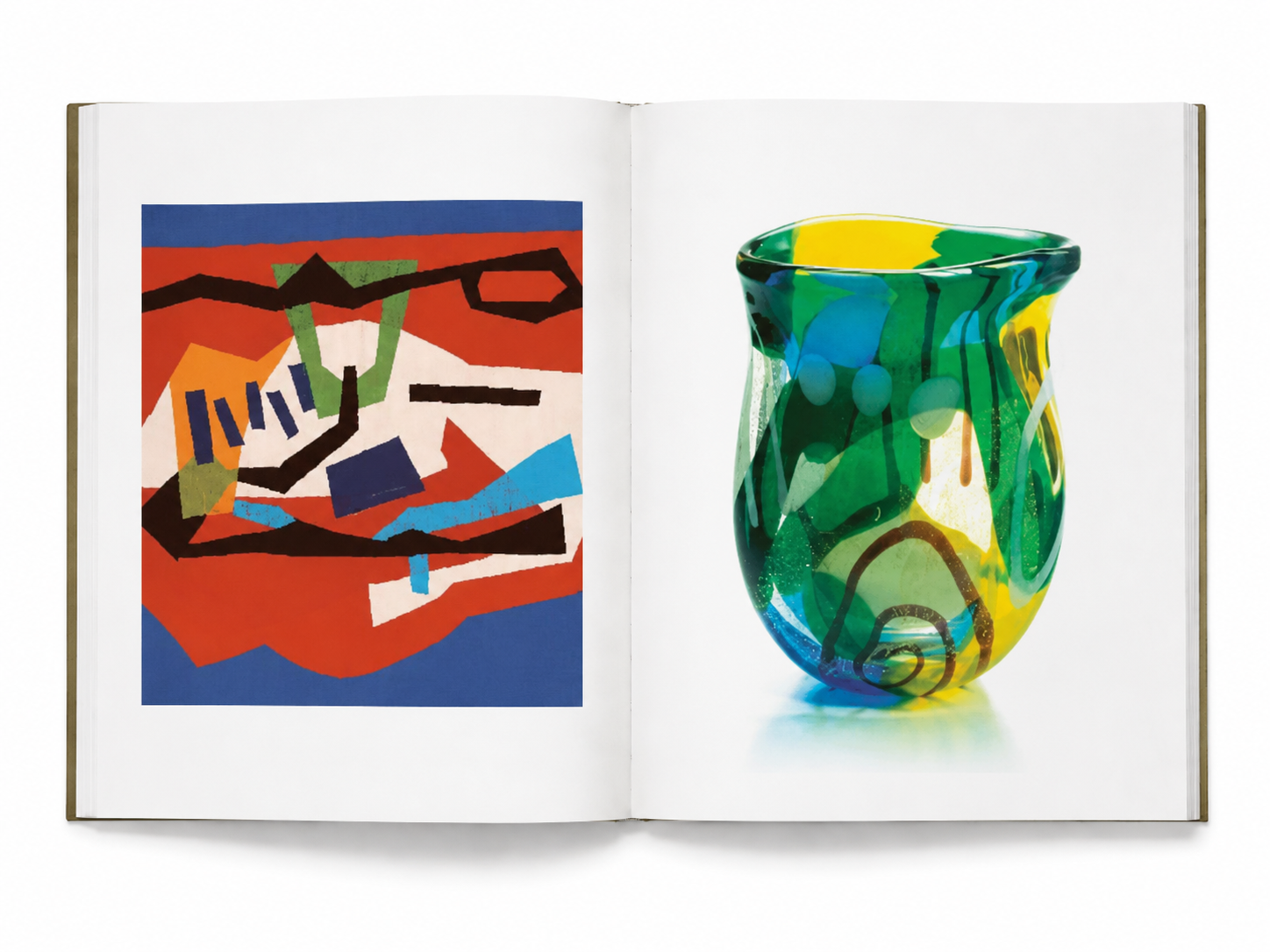
A field of yellow rises between deep blue and green, while short, forceful lines cut across the surface. The composition seems to remain in motion, as though its boundaries have not yet settled. Bruno Pedrosa’s works often occupy this unresolved state: forms move toward one another, overlap, and then begin to separate. Colour is not simply placed inside predetermined contours; it gradually finds its position through the act of painting. What first emerges is less a subject than a temporary order formed among competing elements.
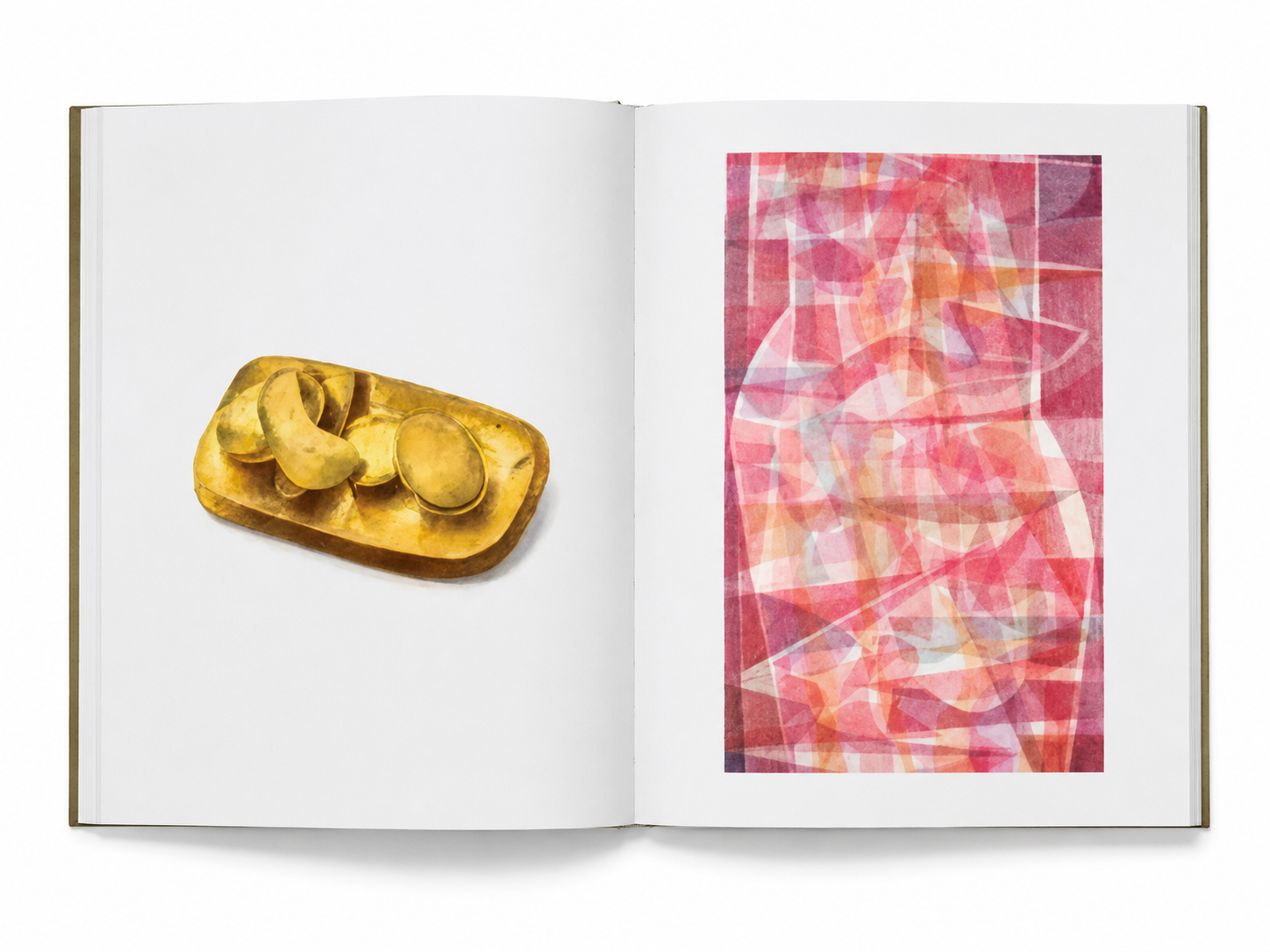
Bruno Pedrosa: Between Worlds brings together more than four hundred works spanning over five decades of the artist’s practice. Painting and drawing provide the foundation, while Murano glass, sculpture, jewellery, carpets, and textiles carry the same formal thinking into different scales. Lines once drawn on canvas become the edges of objects; layers of pigment move inside glass as suspended, refracted fields of colour; flat shapes acquire weight in sculpture and jewellery. As the medium changes, the visual language does not disappear. It begins to operate through another material logic.
Pedrosa studied art in Brazil and also engaged with archaeology, philosophy, and art history. His lines sometimes suggest figures, masks, or ancient signs, though these images rarely settle into a clear narrative. They appear more like outlines left by memory, repeatedly emerging and changing within colour and gesture. His years in a monastery during the late 1970s introduced another rhythm into the work. The resulting stillness is not emptiness, but a measured distance maintained between forms.
After moving to Italy in the 1990s, Pedrosa entered a new material environment. His proximity to Venice and Murano made glass an increasingly important medium. Transparency altered the way colour could be seen: it no longer existed only on the surface, but could be held inside an object, changing with light and the viewer’s position. Working with glassmakers, Pedrosa translated painterly gestures into processes of blowing, cutting, and shaping. These works are not three-dimensional reproductions of paintings. They use the instability and luminosity of glass to reconsider how colour occupies space.
The title Between Worlds therefore refers to more than a movement between Brazil and Italy. It also describes the position his work repeatedly occupies: between figuration and abstraction, surface and volume, individual authorship and artisanal collaboration. Pedrosa does not depend on a fixed formal system to maintain recognisability. Works from different periods may appear dense and forceful, or restrained and contemplative. Certain forms migrate from paintings into glass, then reappear in jewellery, textiles, or sculpture. Continuity lies in this process of transformation rather than in a uniform appearance.
Edited by Thereza Pedrosa, the book includes contributions by Manlio Brusatin, Ferreira Gullar, and Venetian glass historian Rosa Barovier Mentasti. Their essays approach the work through colour, Brazilian art, biography, and glassmaking, allowing readers to connect the images with broader cultural and material histories. Across 304 pages and 431 colour illustrations, the publication brings together paintings, drawings, glass, jewellery, sculpture, and textiles. Its trilingual format—Portuguese, Italian, and English—also mirrors the artist’s life between South America and Europe.
Details
Author: Thereza Pedrosa
Publisher: Arnoldsche Art Publishers
Publication Year: 2025
Size: 29×22 cm
Binding: Hardcover
Pages: 304 pages