Description
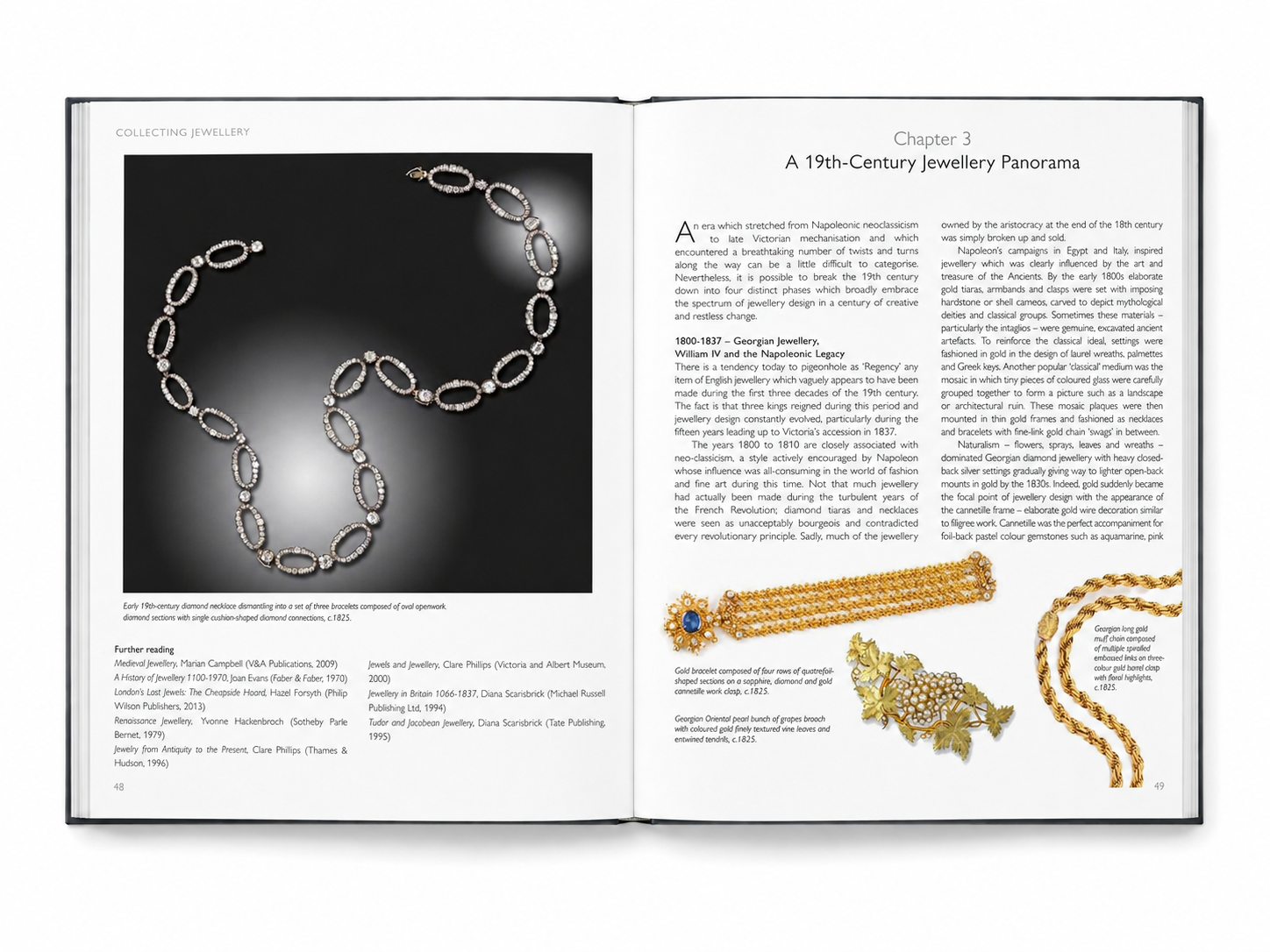
The first step in collecting jewellery is often not learning to recognize brands or pursuing the largest gemstones, but learning to read the clues an object leaves behind. Wear on a metal surface, the way a gemstone has been cut, the construction of its setting, whether a clasp has been replaced, and even how a brooch was originally worn may all reveal its period and history of use. Written by British jewellery expert John Benjamin, Collecting Jewellery draws on gemstones, craftsmanship, style, and practical market knowledge to establish a method for understanding the history and collectible value of jewellery.
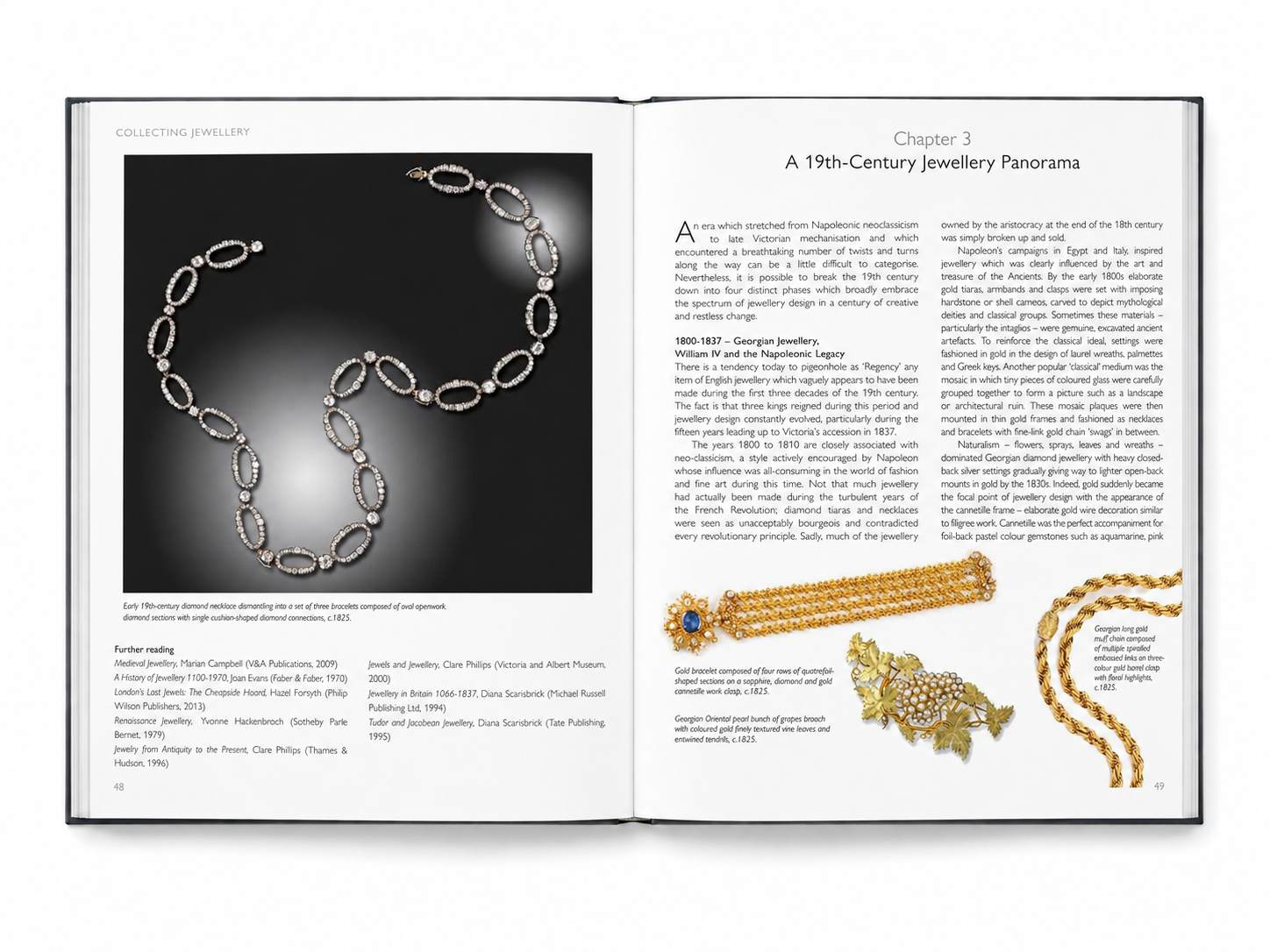
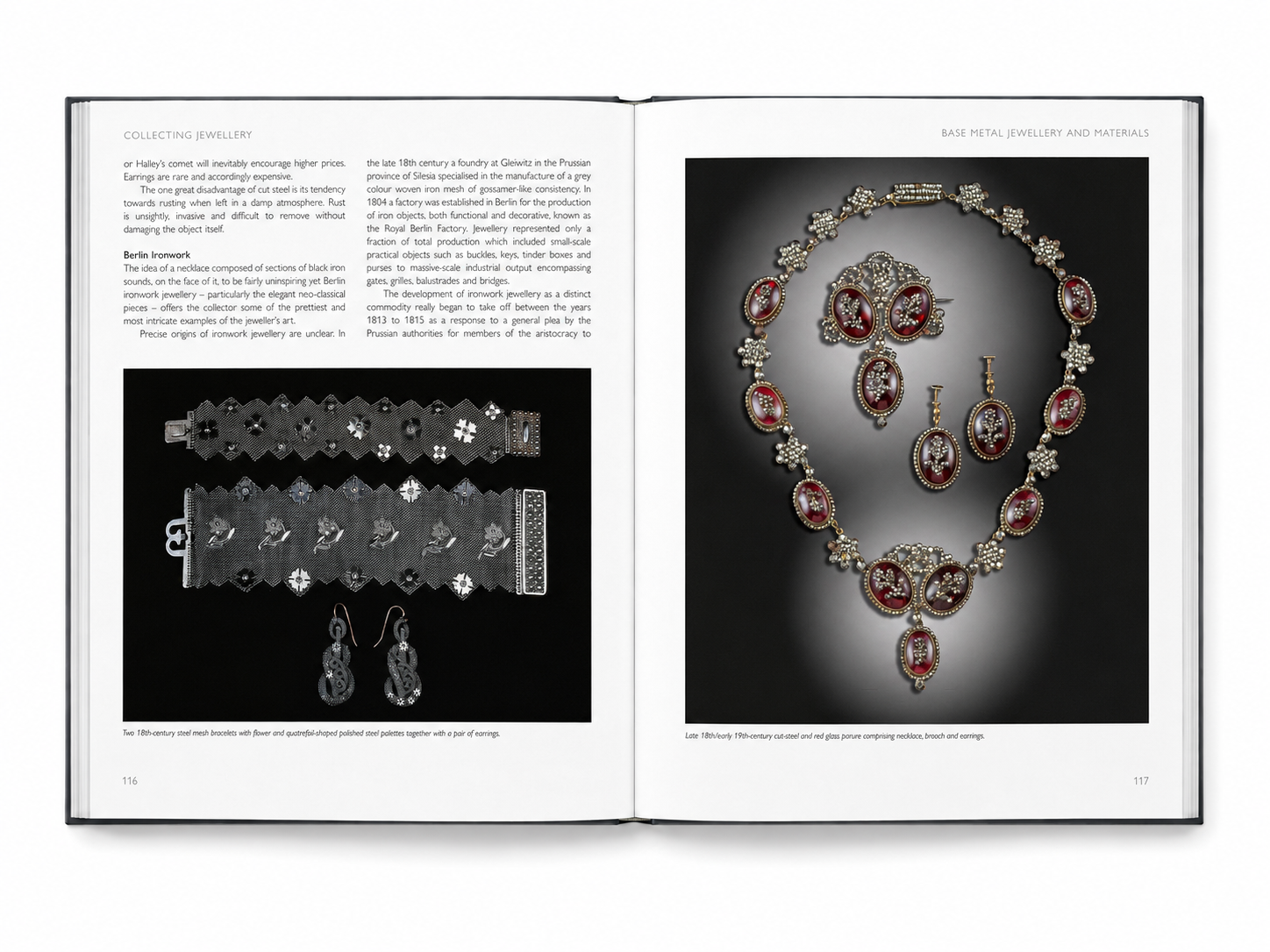
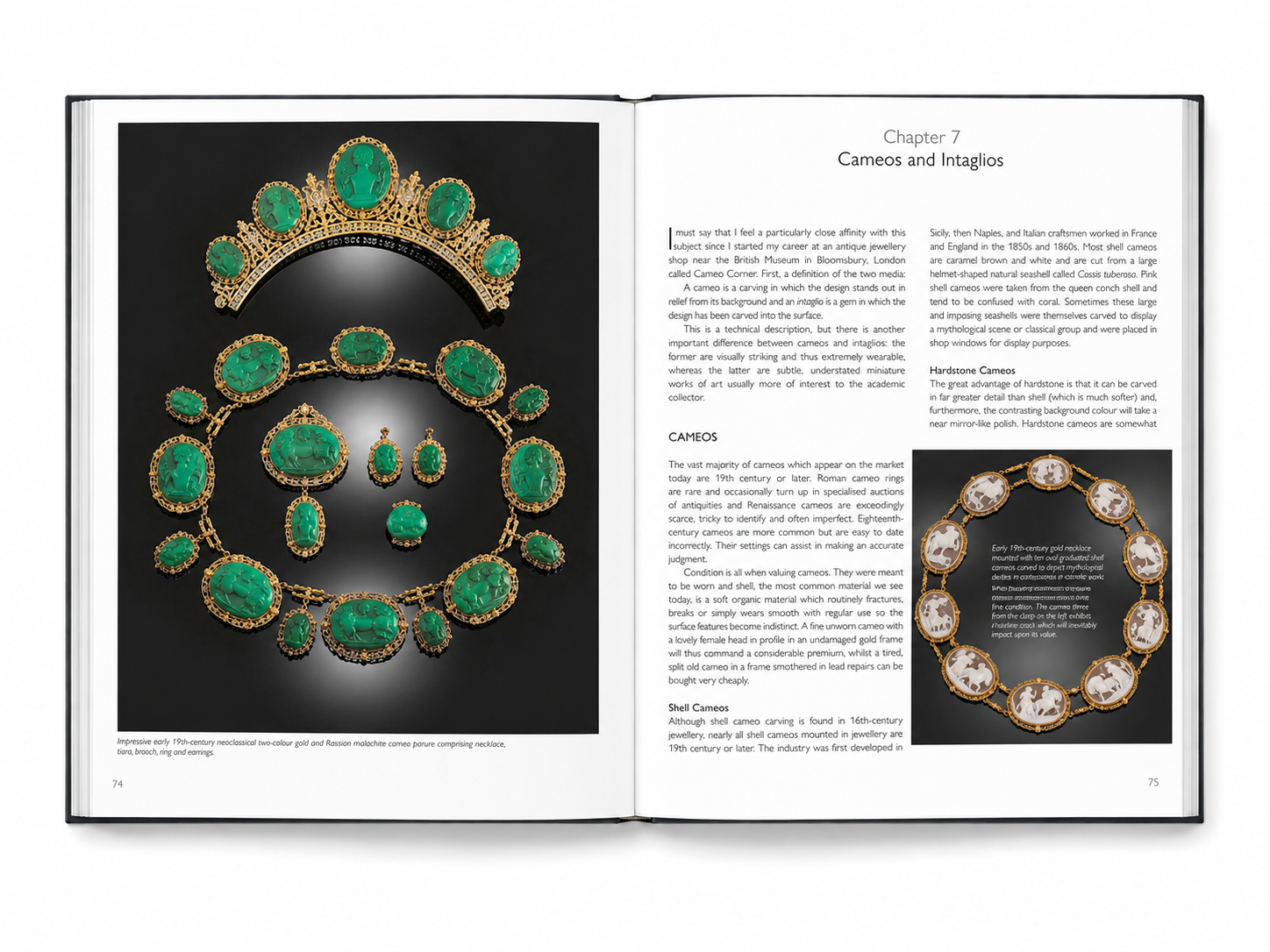
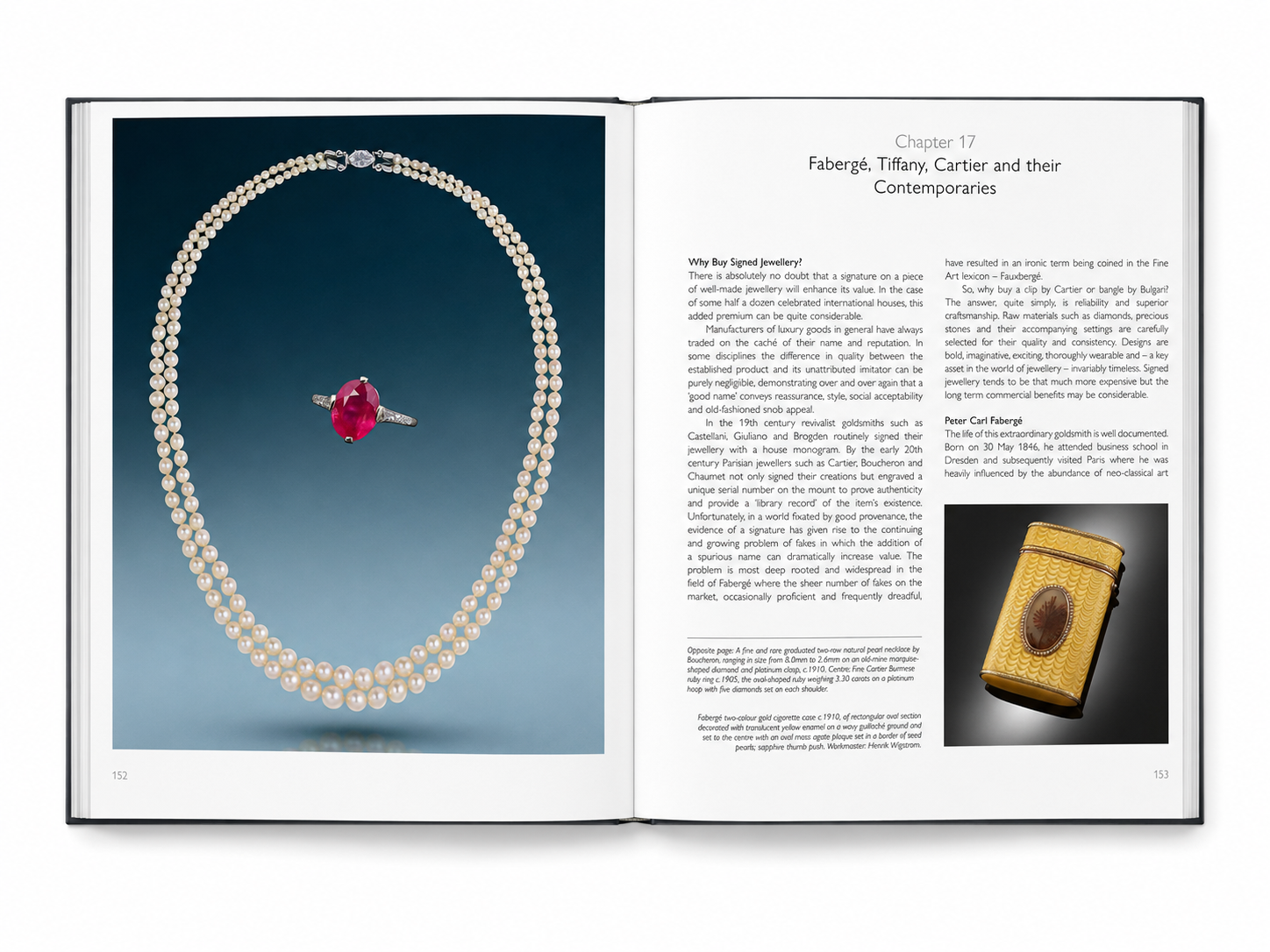
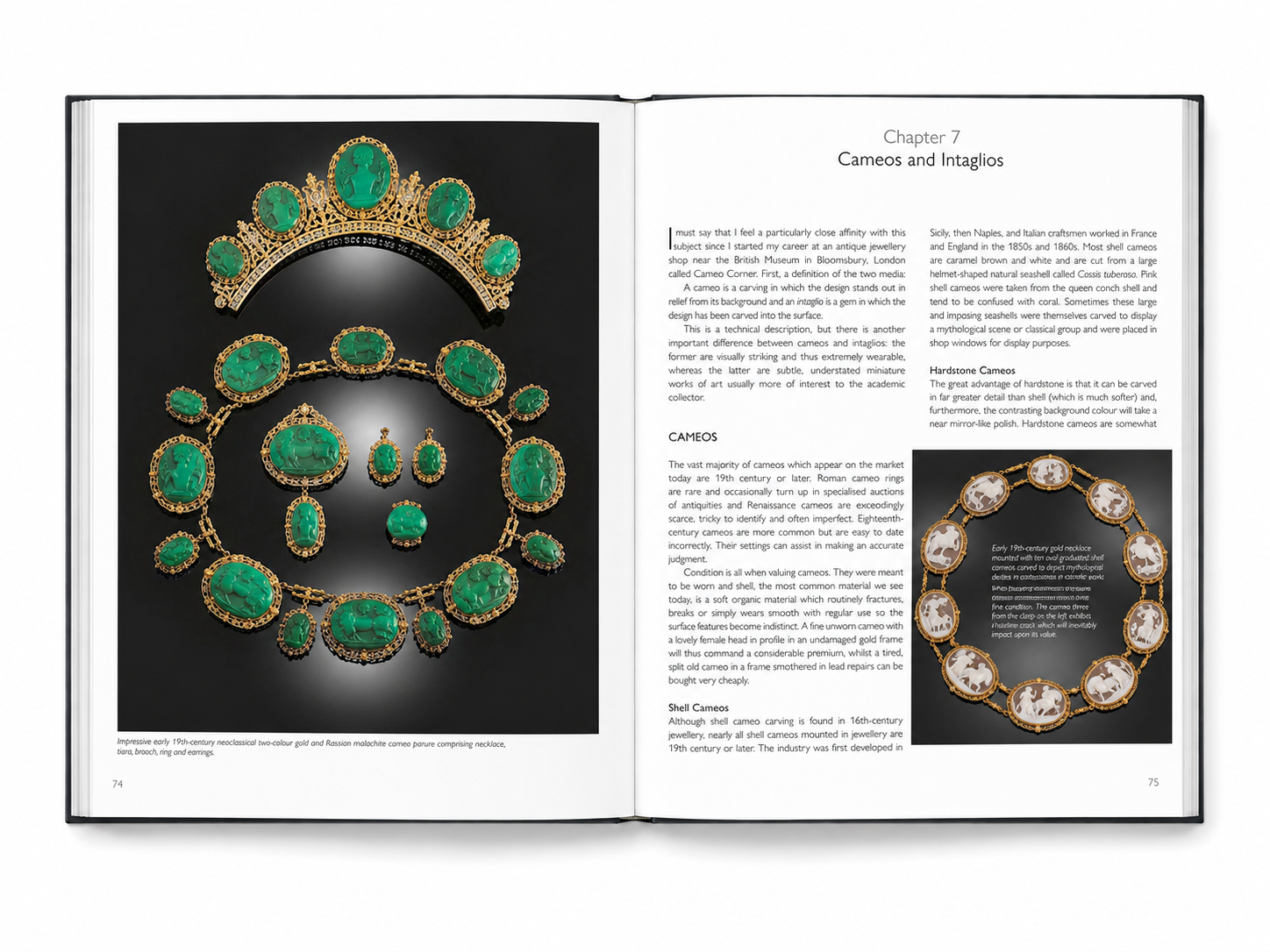
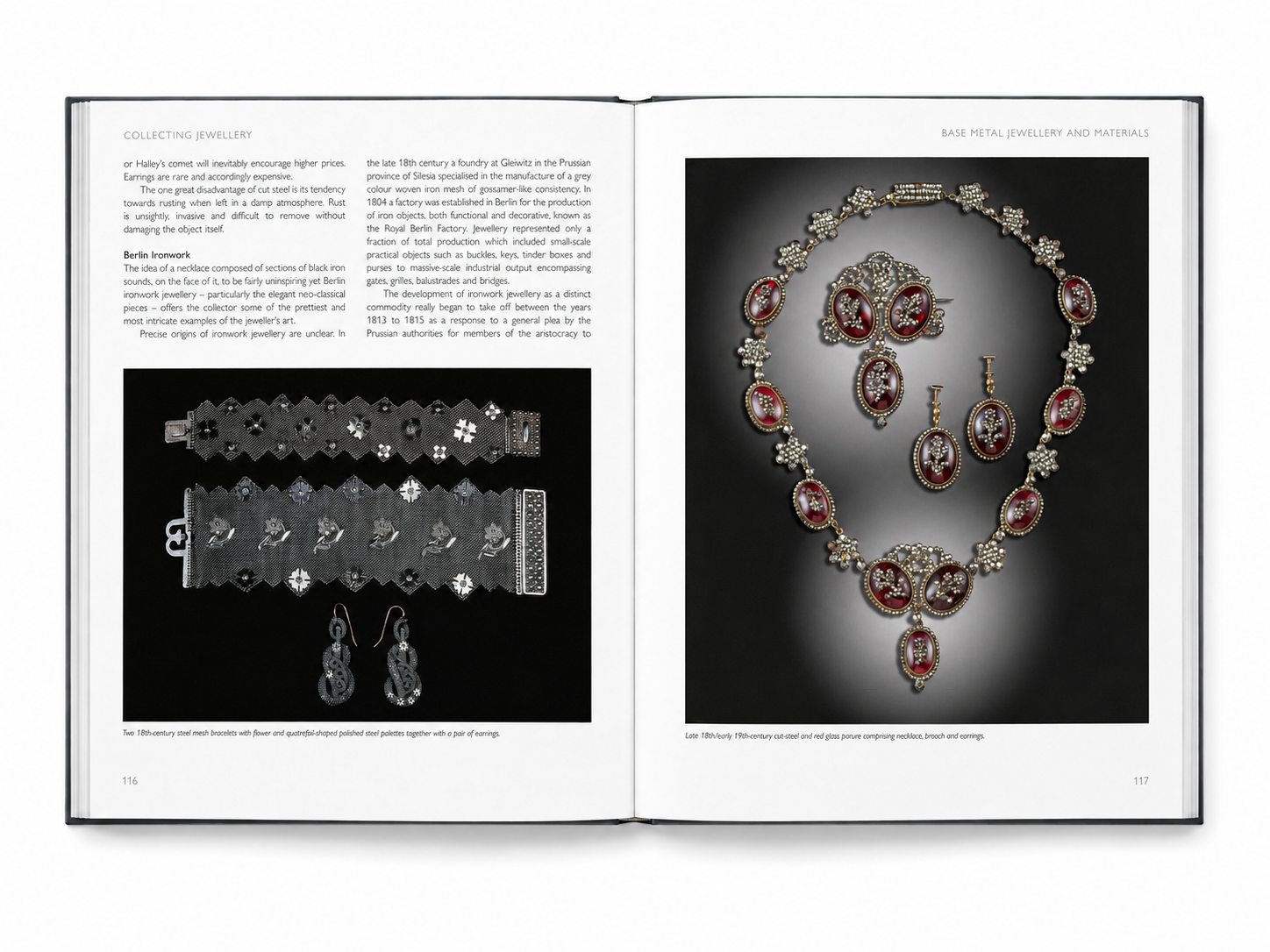
The book spans a broad chronology, beginning with ancient and eighteenth-century jewellery and continuing through the Victorian era, Art Nouveau, Art Deco, postwar modernism, and designer works created after the turn of the millennium. While names such as Fabergé, Tiffany, and Cartier receive significant attention, the discussion also encompasses enamel, paste jewellery, mosaics, cut steel, mourning jewellery, and functional accessories. This approach broadens the scope of collecting: value is determined not only by the cost of materials, but may also arise from exceptional craftsmanship, cultural context, emotional purpose, or a way of life that has since disappeared.
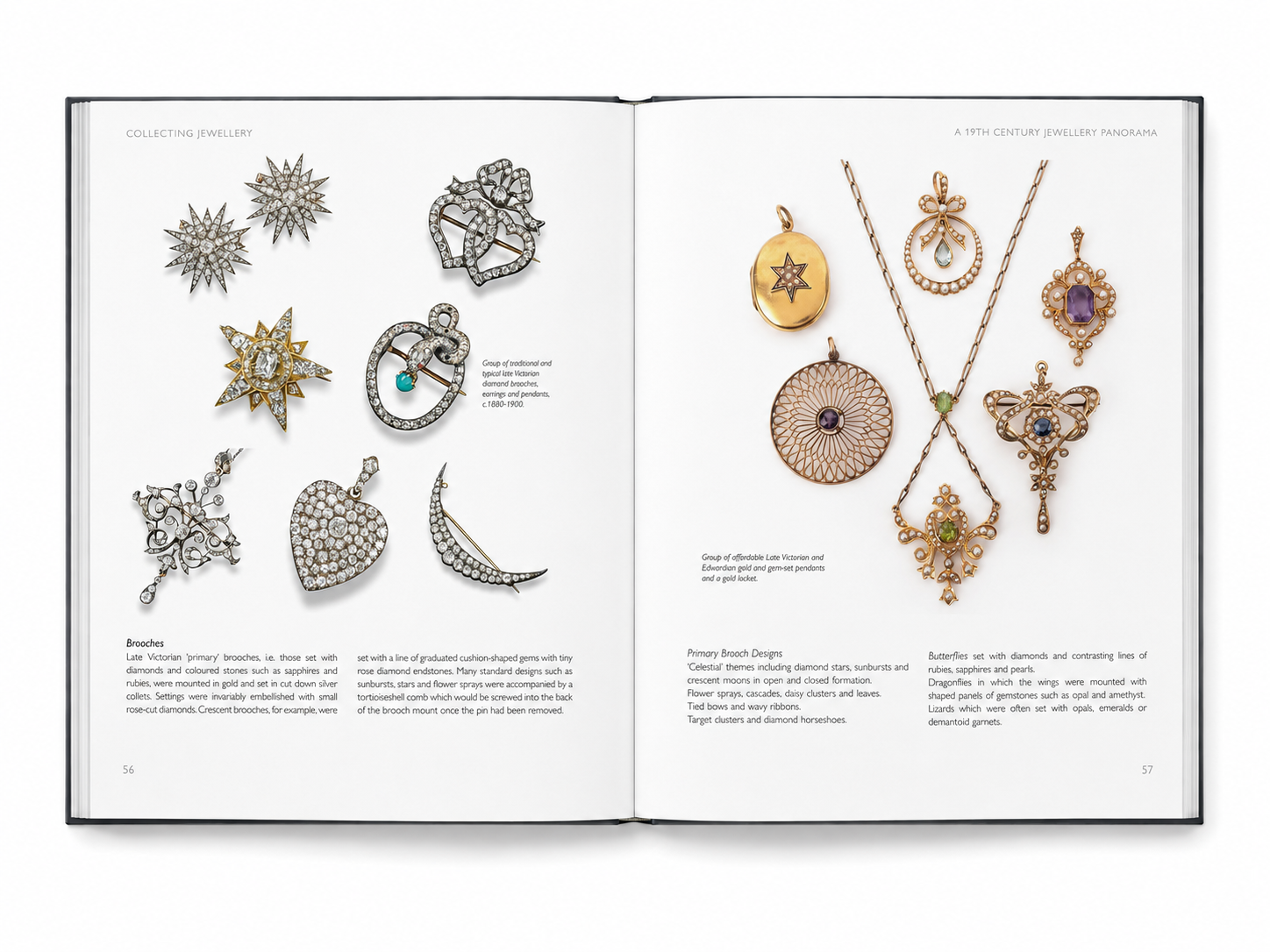
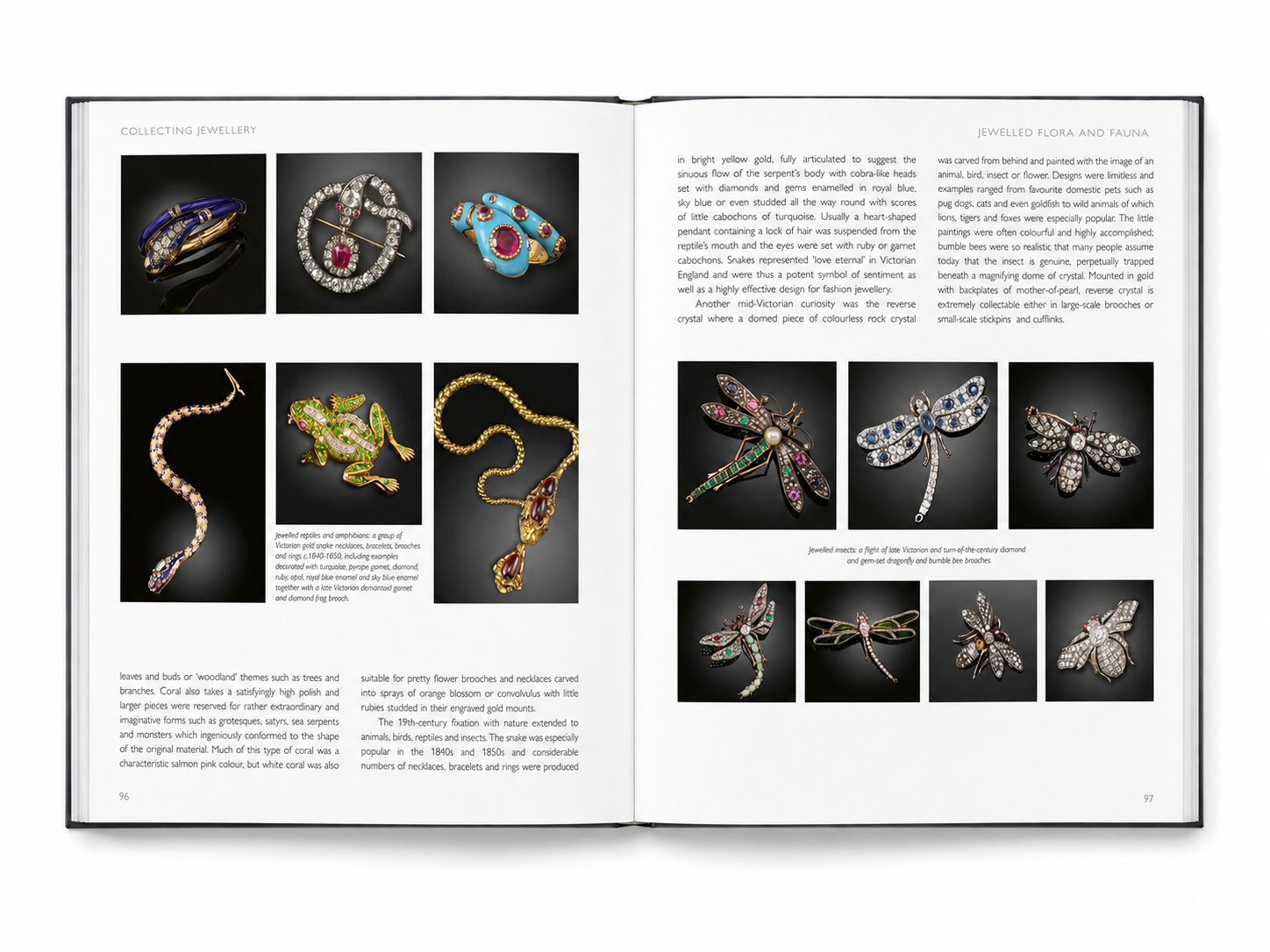
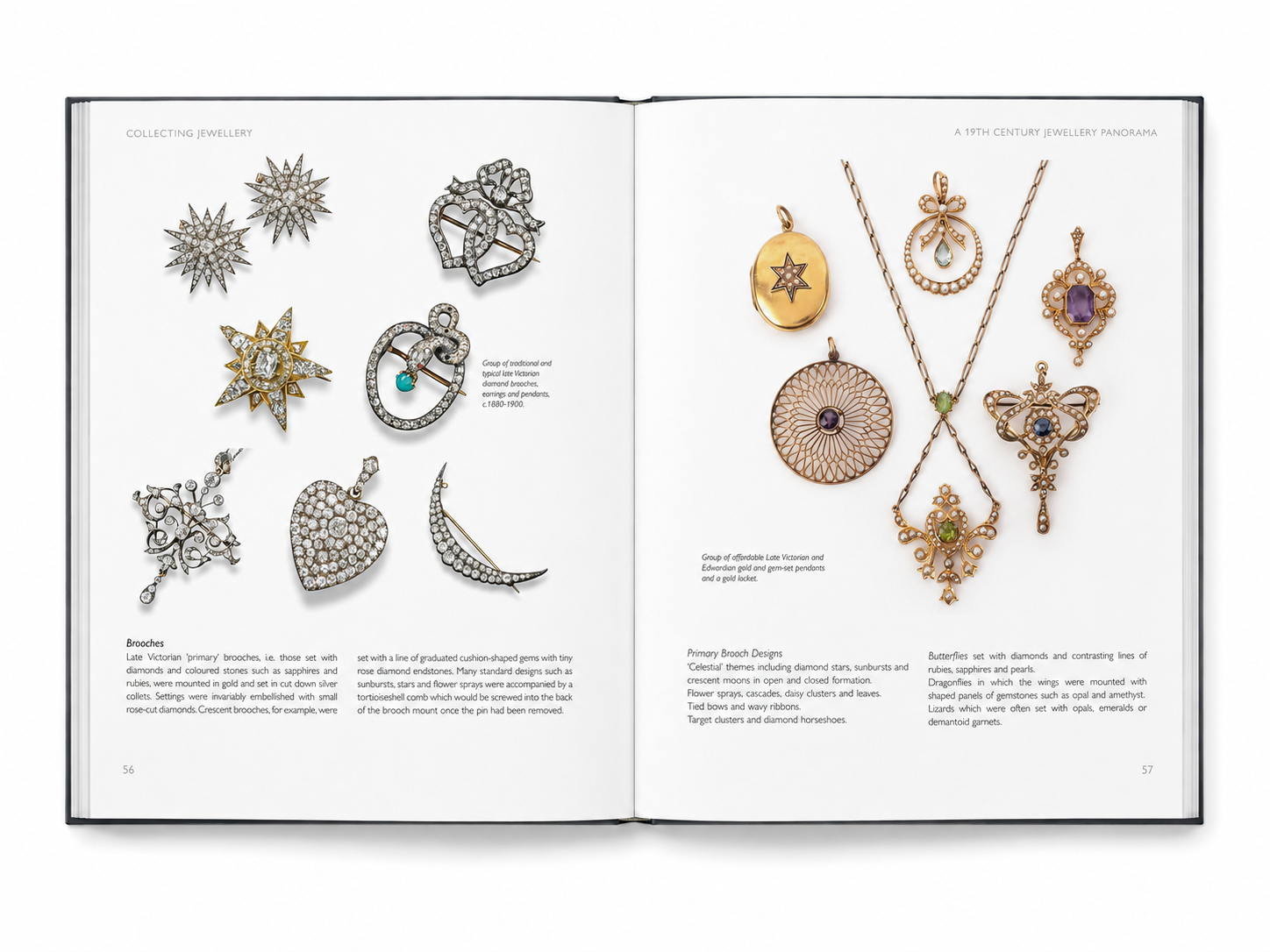
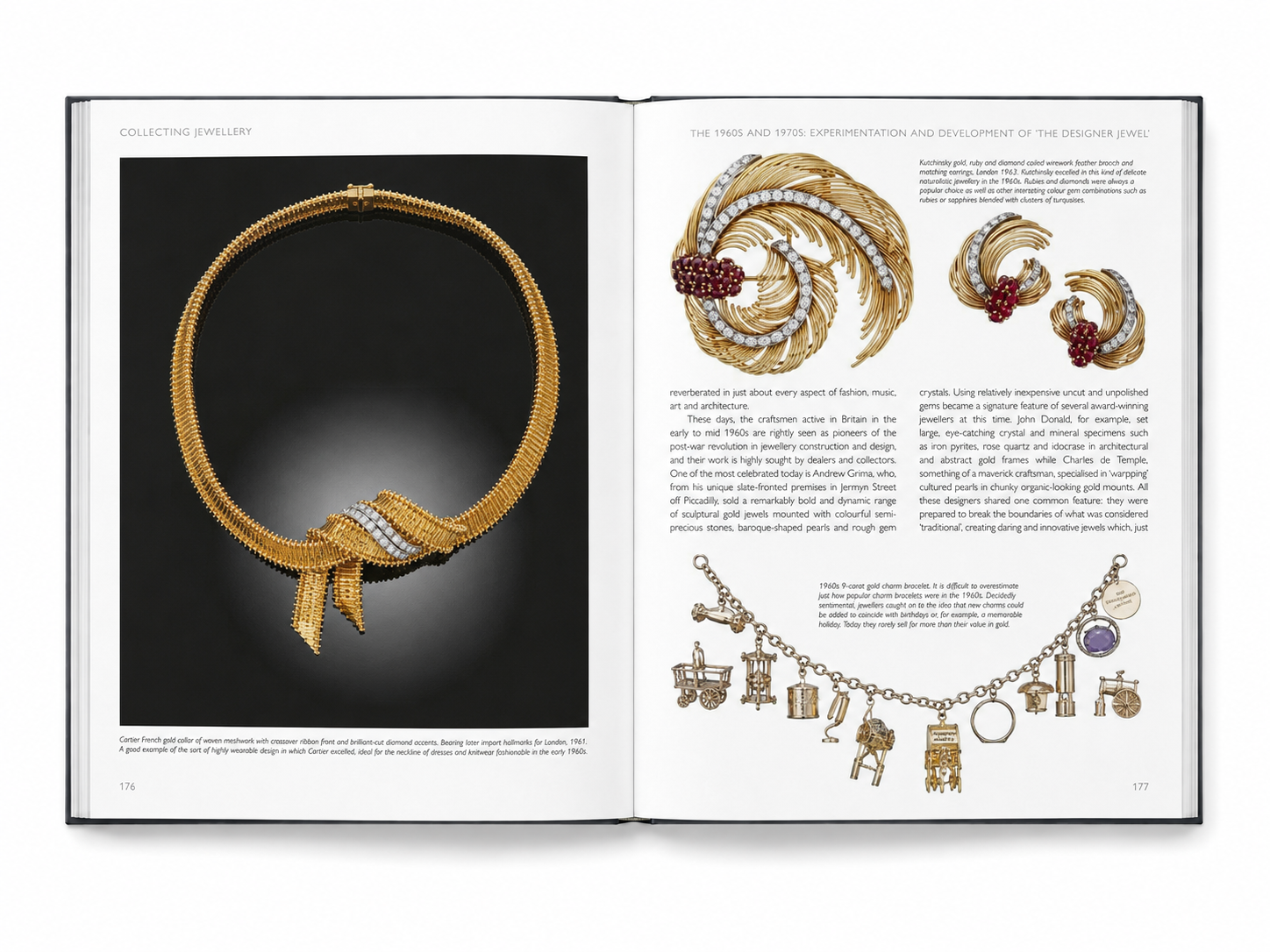
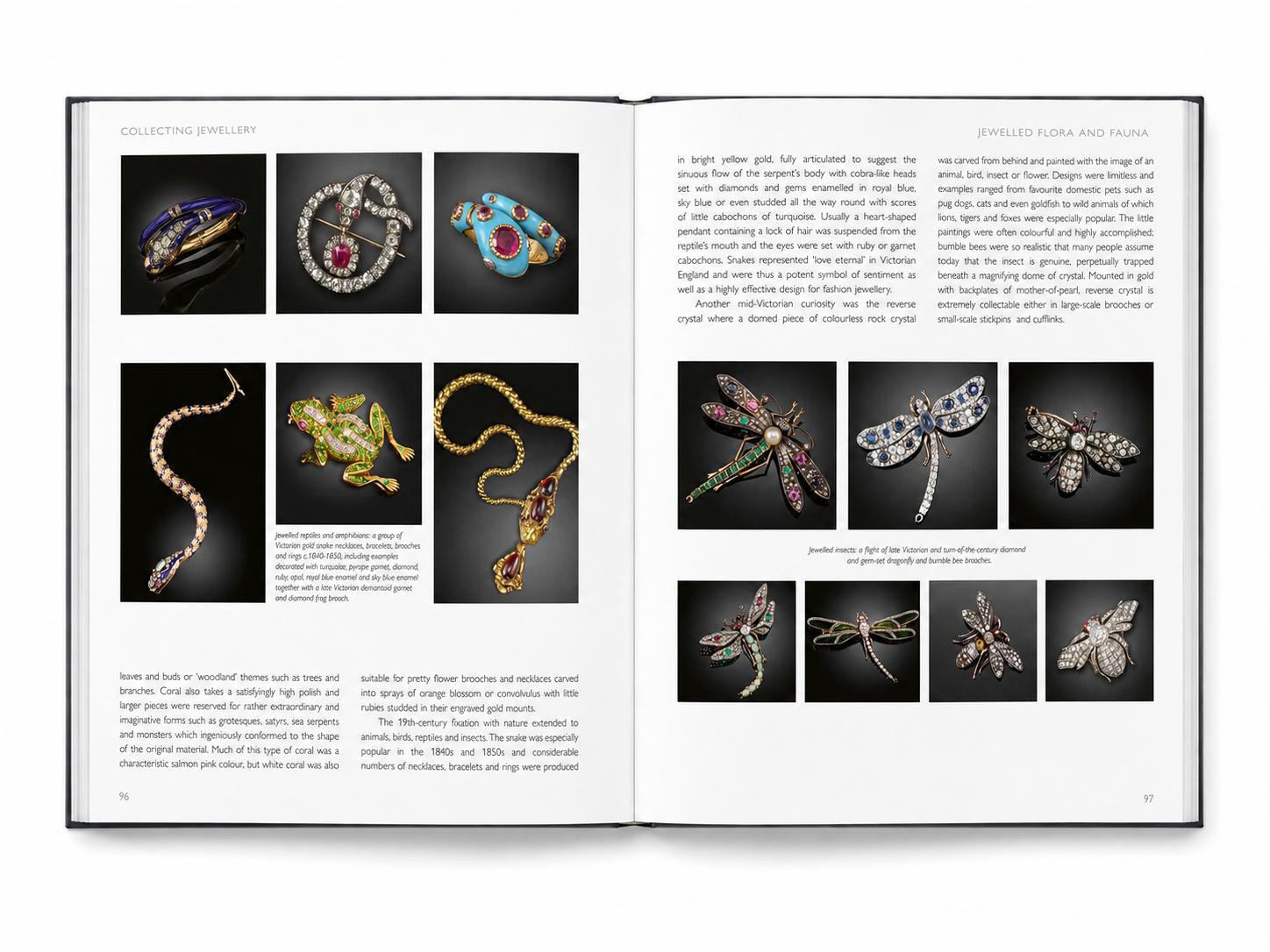
Jewellery from different periods responds to different ideas of the body and society. Nineteenth-century mourning jewellery preserved memories of love, loss, and death; snakes, bees, flowers, and symbols of affection became intimate codes worn close to the body; Art Nouveau designers reimagined nature through enamel, moonstones, and organic curves; and Art Deco absorbed the skyscraper, geometric order, and the speed of the machine age. By the 1960s and 1970s, irregular gemstones, textured gold surfaces, and sculptural structures had gained prominence, while the individual language of the jewellery designer increasingly became an important part of a work’s value.
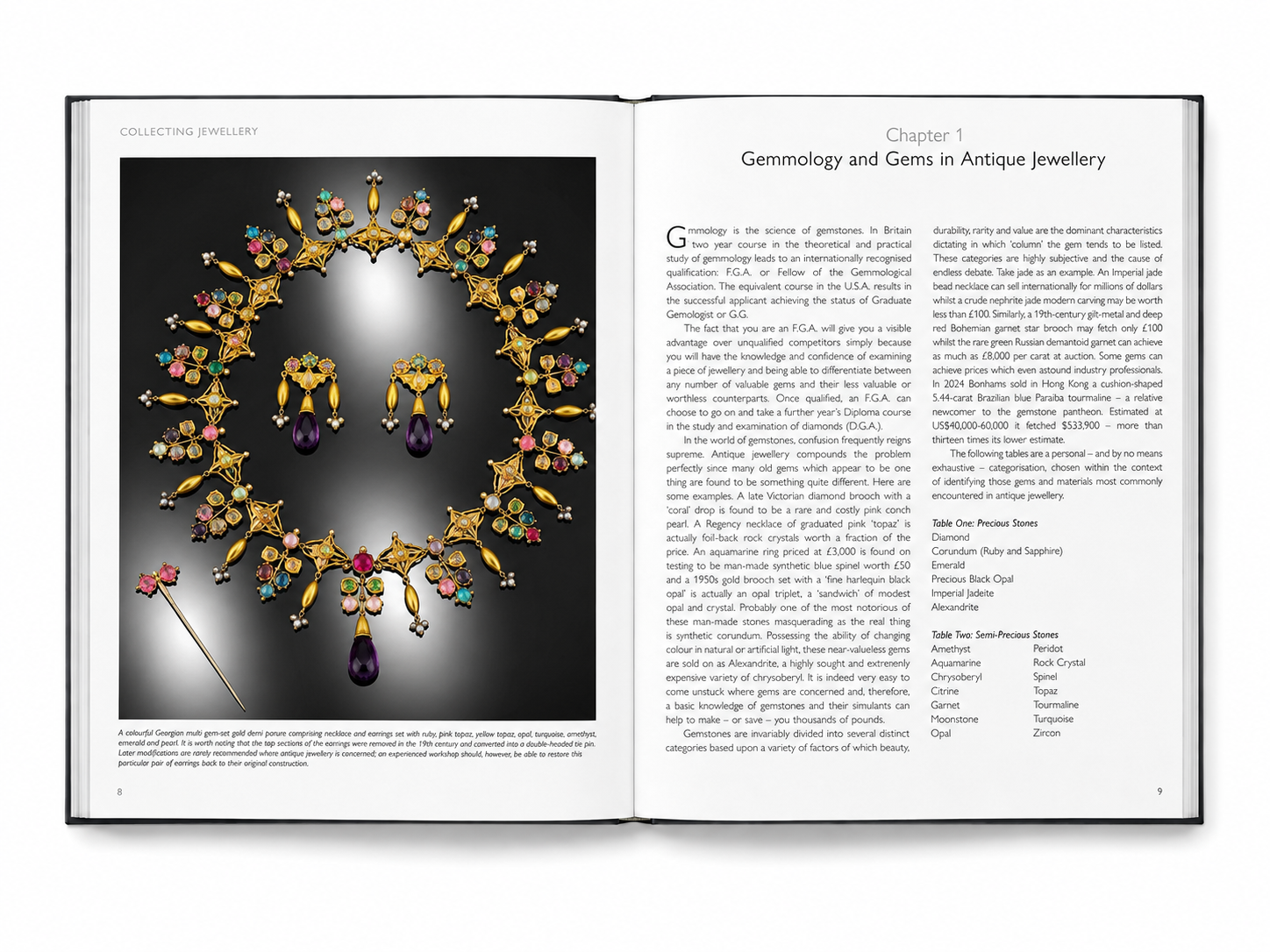
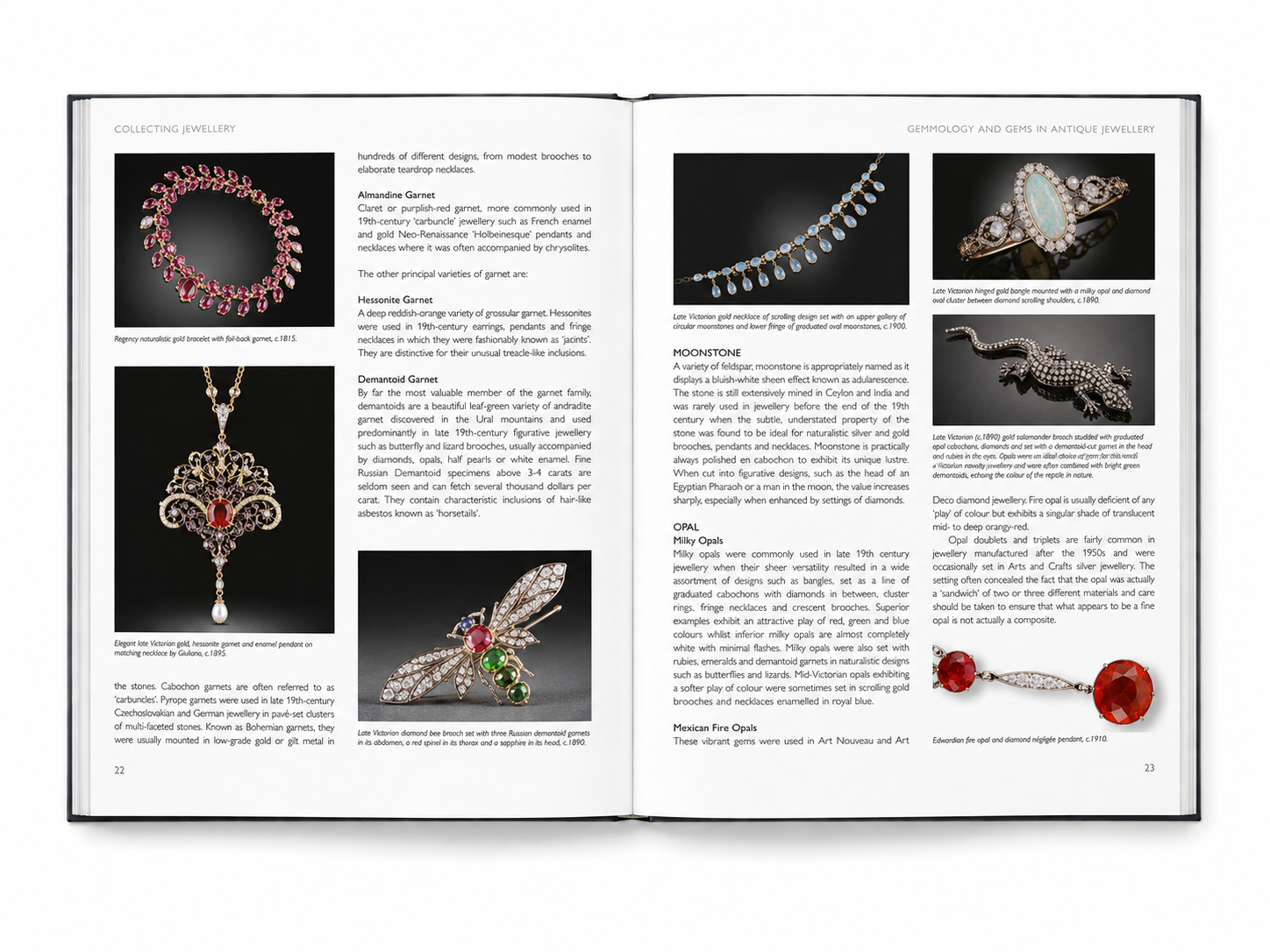
John Benjamin brings decades of experience in auctions, valuation, and authentication to the book, encouraging readers to form judgements through details such as signatures, provenance, condition, and later alterations. The mark of a renowned maker may increase an object’s value, but it may also become a target for forgery; a surface polished to a bright, like-new finish does not necessarily indicate excellent condition and may instead be the result of excessive polishing. Distinguishing between natural gemstones, laboratory-grown stones, and imitation materials requires further support from certificates, testing, and reliable provenance. Collecting is therefore not a matter of gambling on instinct, but of gradually developing the ability to identify and verify an object beyond its immediate aesthetic appeal.
The book includes 422 color illustrations, placing works from different periods, materials, and categories side by side so readers can compare subtle changes in form, setting, and construction. A paste brooch, a Victorian commemorative ornament, or a designer bracelet from the 1960s can each reveal its particular value when viewed in the appropriate context. The concluding guides to valuation, reproductions, cleaning, restoration, and conservation bring this historical knowledge back into the practical world of collecting, helping readers understand how to care for a piece over the long term after it has been acquired.
The approach to collecting presented in Collecting Jewellery does not treat financial means as the only threshold for participation. What truly deserves to be developed is an eye capable of recognizing materials, craftsmanship, period, and traces of use. Once jewellery is no longer viewed simply as a glittering object in a display case, every scratch, motif, and repair can become part of its life. This book makes personal attraction the starting point for exploration and guides readers toward forming their own collecting judgement through a growing balance of knowledge and careful observation.
Details
Author︰John Benjamin
Publisher︰ACC Art Books
Publication Year︰2026
Dimensions︰24 × 19 cm
Binding︰Hardcover