Description
The Scream has become an emotional symbol that seems to require no explanation. Its distorted face, sloping bridge, and undulating sky have been reproduced so often that anxiety appears to have become the image’s only meaning. Yet when the viewer remains with the work a little longer, the bridge beneath the figure, the two people walking into the distance, and the fragile surface of paint, pastel, and cardboard gradually return it from the realm of symbols to a specific material world. The emotions Munch depicted may be universal, but they are always constructed through particular lines, materials, and compositional decisions.
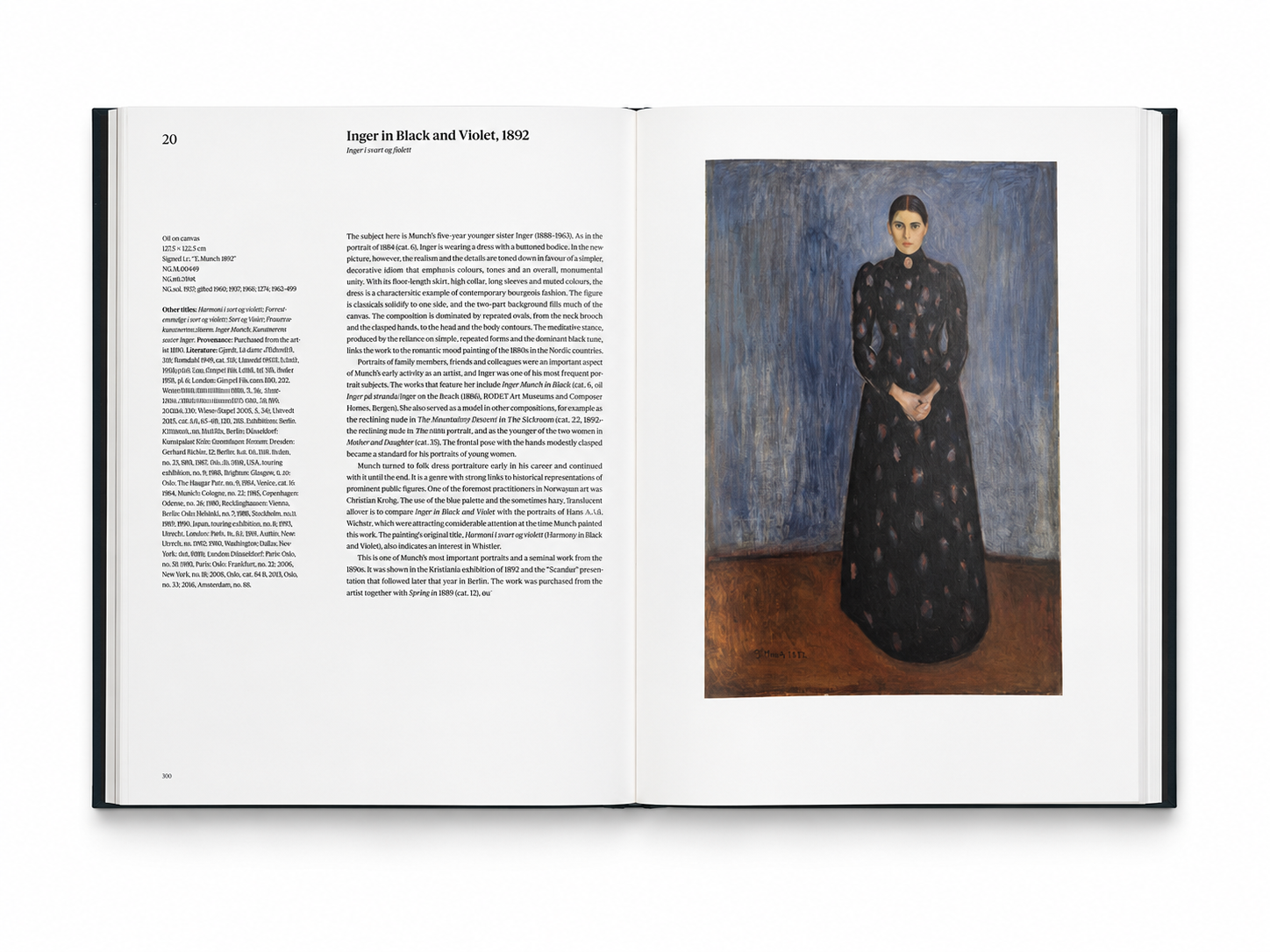
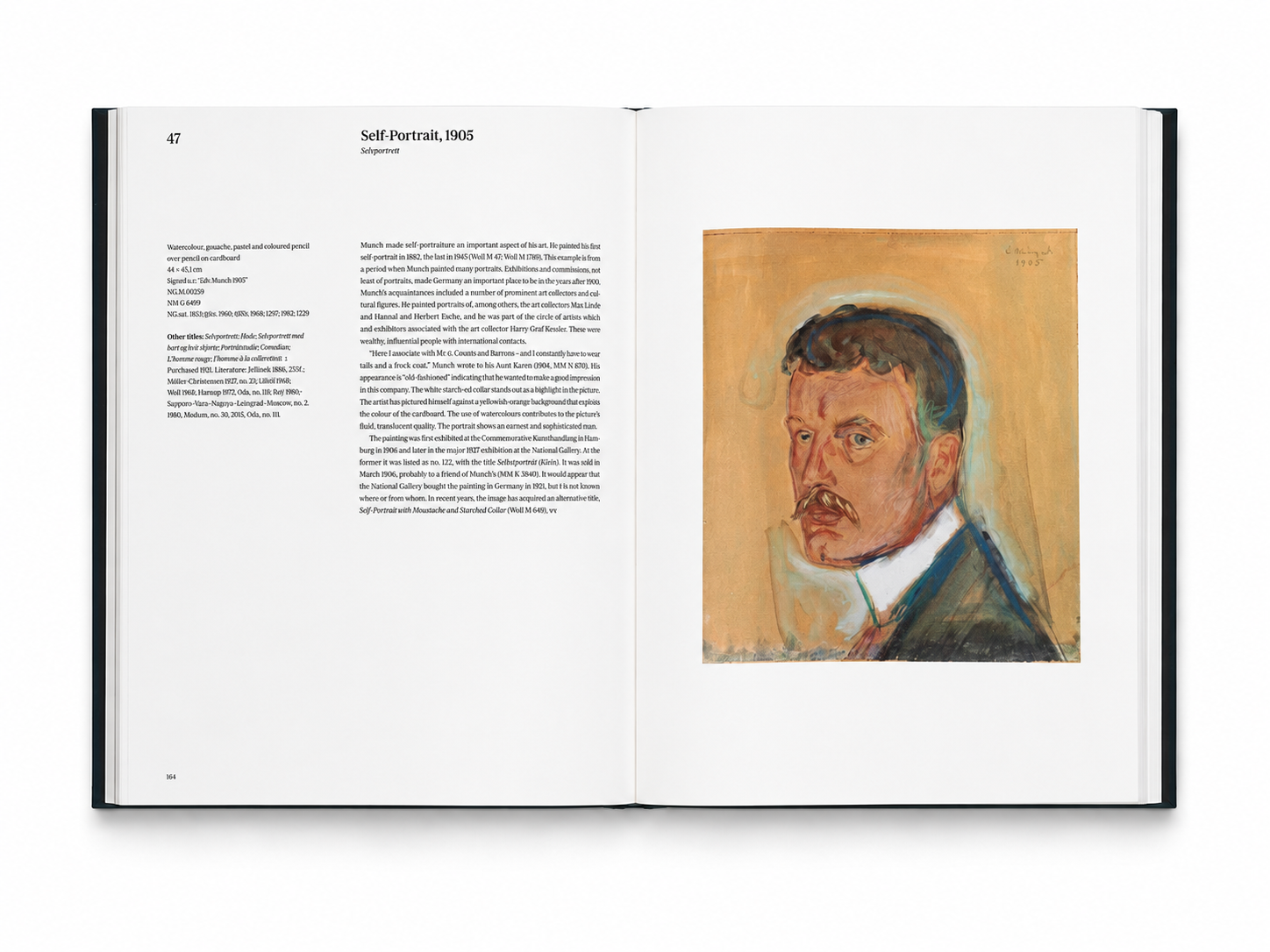
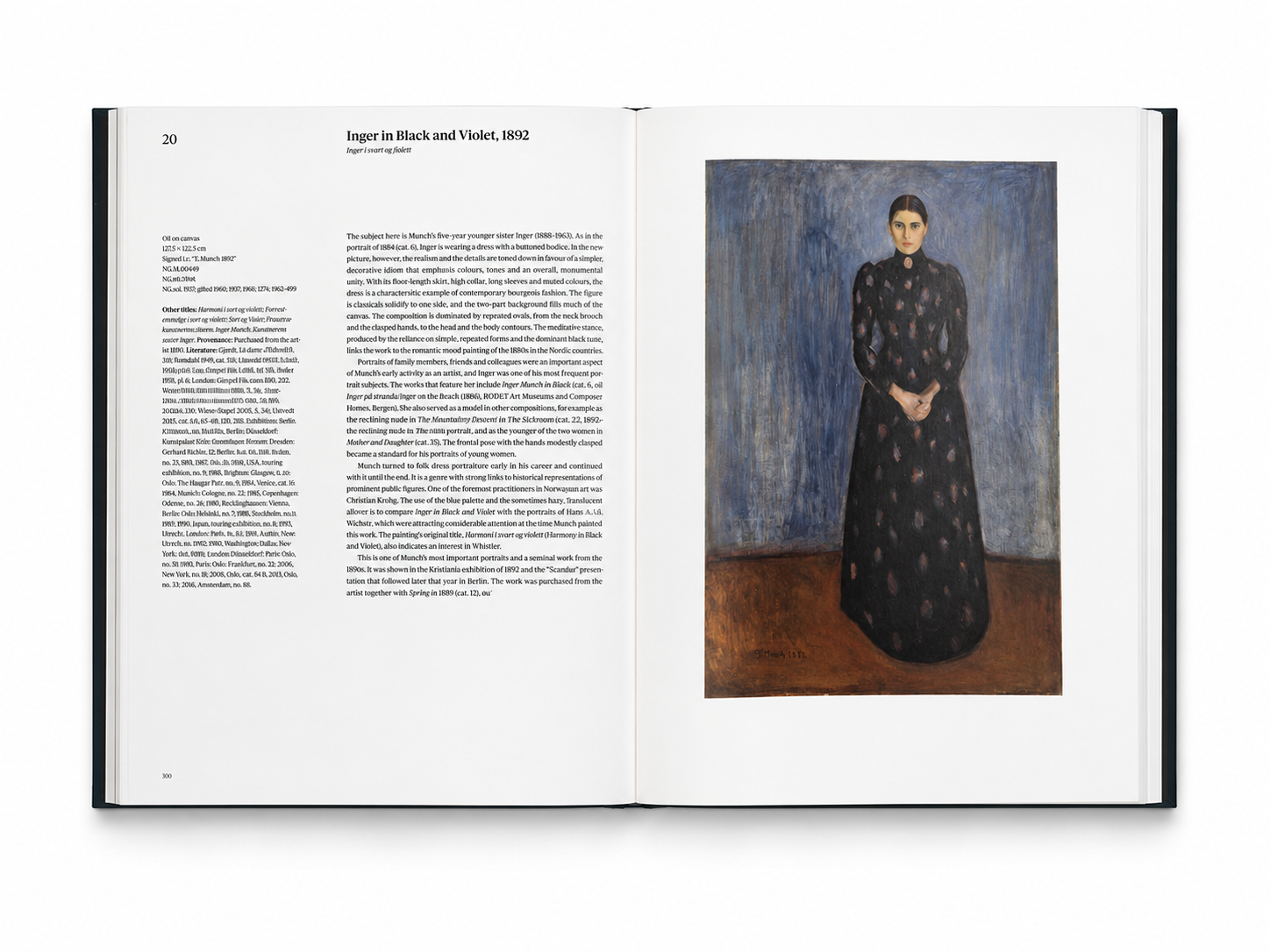
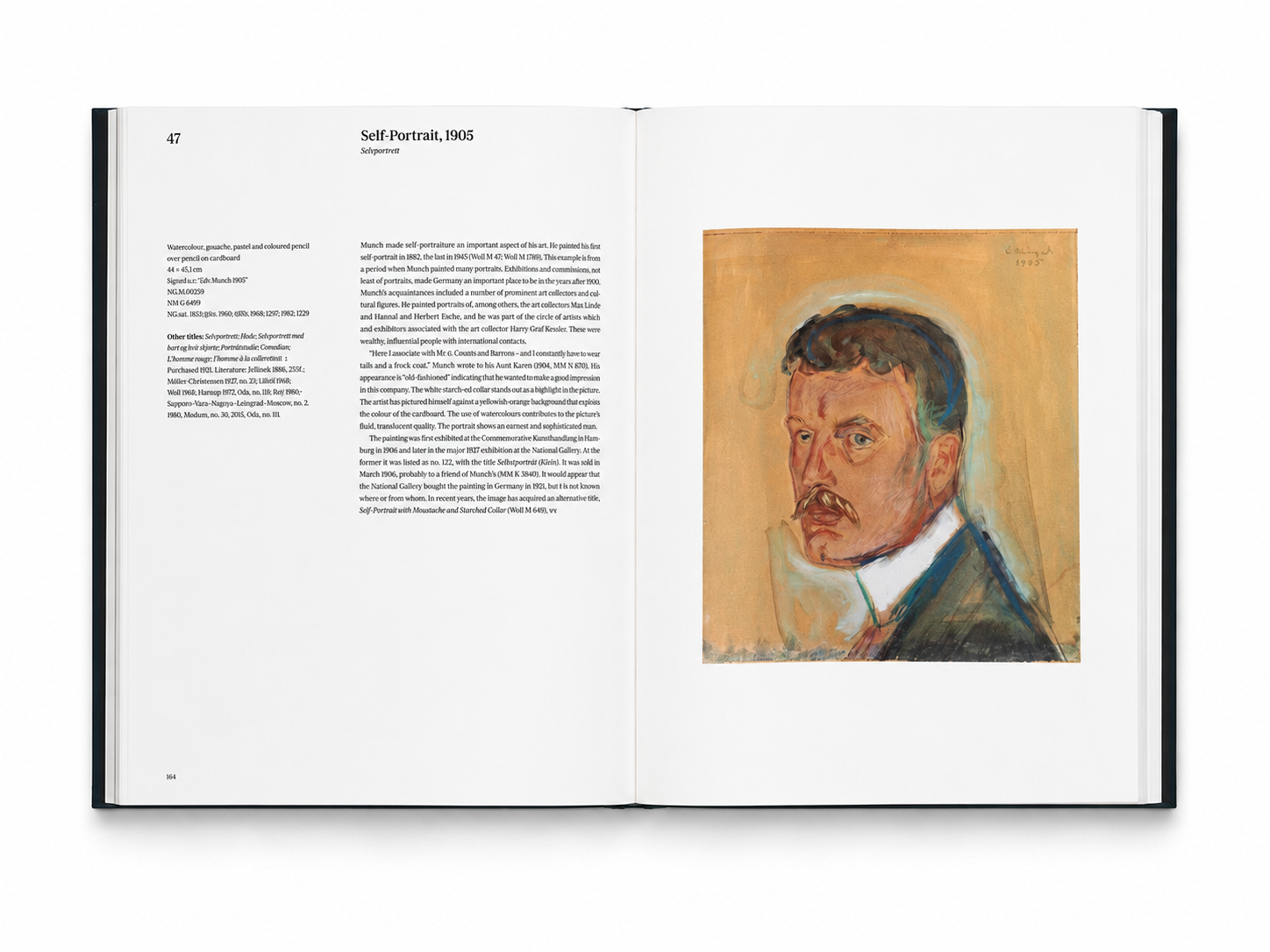
Edvard Munch in The National Museum creates the conditions for looking again at these familiar images. The National Museum of Norway’s collection includes 57 paintings and 186 works on paper, ranging from The Sick Child, The Scream, Madonna, and The Girls on the Bridge to self-portraits, landscapes, images of labour, and late works. By reproducing the museum’s complete holdings, the book reveals an artist who continually revised his subjects, techniques, and ways of seeing, extending far beyond the few iconic paintings through which he is usually understood.
Munch repeatedly returned to the same images. An embrace, a sickbed, or two figures standing close together yet remaining emotionally isolated might first appear as a painting and later re-emerge as a lithograph, etching, or woodcut. The outlines may remain similar, but the emotional register changes with the material. In painted versions of The Sick Child, wavering vertical strokes dissolve the room and its figures, while the print compresses the composition, concentrating memory in the girl’s pale face and red hair. Repetition becomes a form of renewed observation: time alters the artist’s vision, as well as the capacity of an image to carry memory.
Works on paper occupy a substantial part of the book and make Munch’s experimental approach especially visible. He cut woodblocks into separate sections, inked them individually, and reassembled them like pieces of a puzzle before printing. Wood grain, misaligned colours, and variations between impressions were not concealed but allowed to participate in the image. In The Kiss IV, the merged bodies overlap with the grain of the wood, so intimacy is conveyed not only through the subject of an embrace but also through the processes of cutting, joining, and pressing. Emotion in Munch’s work possesses a material structure, and its intensity changes with each impression.
The catalogue also records another history: the process through which Munch entered the museum. The National Gallery acquired Night in Nice in 1891, gradually expanding its holdings through purchases and donations. Once placed within a national institution, the works acquired new arrangements, conservation requirements, and positions within art history. Images that had once provoked controversy became part of Norway’s cultural identity. Essays on the formation of the collection, the history of the Munch Room, and the conservation of individual works present the museum as more than a setting for masterpieces; it becomes an active site where their meanings continue to develop.
Conservation further reminds us that a work of art does not remain permanently fixed at the moment of completion. Paper discolours, paint cracks, and earlier cleaning, varnishing, and exposure to light alter the colours and surfaces visible today. Munch sometimes even left his works outdoors, allowing weather and time to mark them physically. Including conservation history within an art-historical account acknowledges that the life of a work extends beyond the period of its creation. It includes the long process through which it is collected, exhibited, restored, and viewed again.
Edvard Munch in The National Museum consequently constructs a portrait more complex than a conventional biography of the artist. Anxiety, illness, love, and death remain central, but they are no longer explained solely through the suffering of Munch’s life. They are located instead in vibrating lines, the grain of a woodblock, shifts in colour, and the distance between one version and another. Beginning with faces that have become almost too familiar, the book allows readers to see how painting, printmaking, collecting, and time repeatedly gave the same images different ways of looking back.
Details
Author: Øystein Utvedt, Marianne Yvenes
Publisher: National Museum of Oslo
Publication Year: 2025
Size: 31×25 cm
Binding: Hardcover
Pages: 340 pages