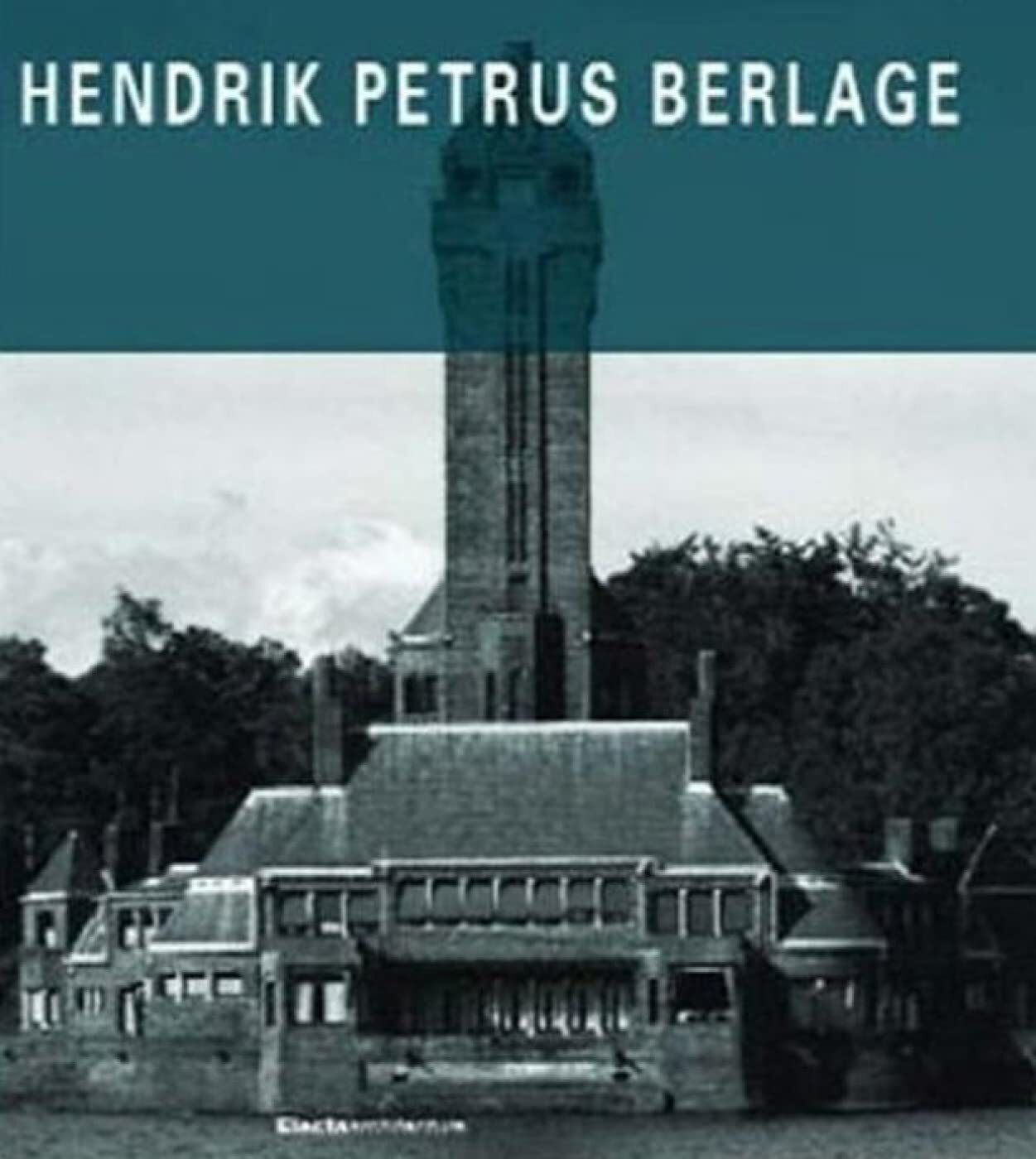
The Architectural Thought and Practice of Hendrik Petrus Berlage
Active from the late nineteenth to the early twentieth century, Hendrik Petrus Berlage stands as one of the most influential figures in the development of modern Dutch architecture. Through his rigorous structural logic, honest use of materials, and highly self-aware approach to form, Berlage laid essential foundations for twentieth-century modern architecture. His work and theoretical contributions continue to exert a lasting influence on architectural practice and education.
Berlage’s career encompasses significant achievements across both architectural and urban scales. Among his most celebrated works, the Amsterdam Stock Exchange is distinguished by its restrained yet monumental massing and expressive use of exposed brick, reinterpreting Romanesque principles while exemplifying structural clarity and craftsmanship. In the realm of urban planning, his proposals for Amsterdam, The Hague, Rotterdam, and Utrecht were based on highly unified compositional principles, standing in clear contrast to the fragmented development trends of his time and reflecting a profound understanding of urban order and public space.
He also produced several works that provoked considerable debate, including the Christian Science Church and the Municipal Museum of The Hague, demonstrating his independent stance and experimental spirit in both architectural form and ideology.
This book addresses gaps in existing scholarship by focusing on lesser-explored aspects of Berlage’s career. It offers a comprehensive and systematic index, a catalogue of his writings, a rich selection of archival images, and an extensive photographic survey—much of it previously unpublished—providing a solid foundation for a deeper understanding of Berlage’s intellectual framework and architectural practice.
More than a compilation of works, this volume serves as an essential document for understanding the formation of modern architectural thought. It is highly recommended for readers interested in architectural history, urban planning, and modern architectural theory.