Book Description
In today’s highly product-driven world, we interact with countless consumer products every day—from home appliances and digital devices to everyday household items. These products are expected not only to function safely, reliably, and efficiently, but also to deliver smooth and intuitive user experiences that feel almost effortless. Yet the challenges of consumer product design extend far beyond form and function, encompassing human factors and ergonomics, risk management, and total product life-cycle costs, all of which add layers of complexity to the design process.
Edited by internationally renowned and highly respected experts, Handbook of Human Factors and Ergonomics in Consumer Product Design is a comprehensive two-volume reference that systematically clarifies and simplifies the integration of human factors and ergonomics into consumer product design. It serves as a highly practical professional guide for designers, engineers, and researchers alike.
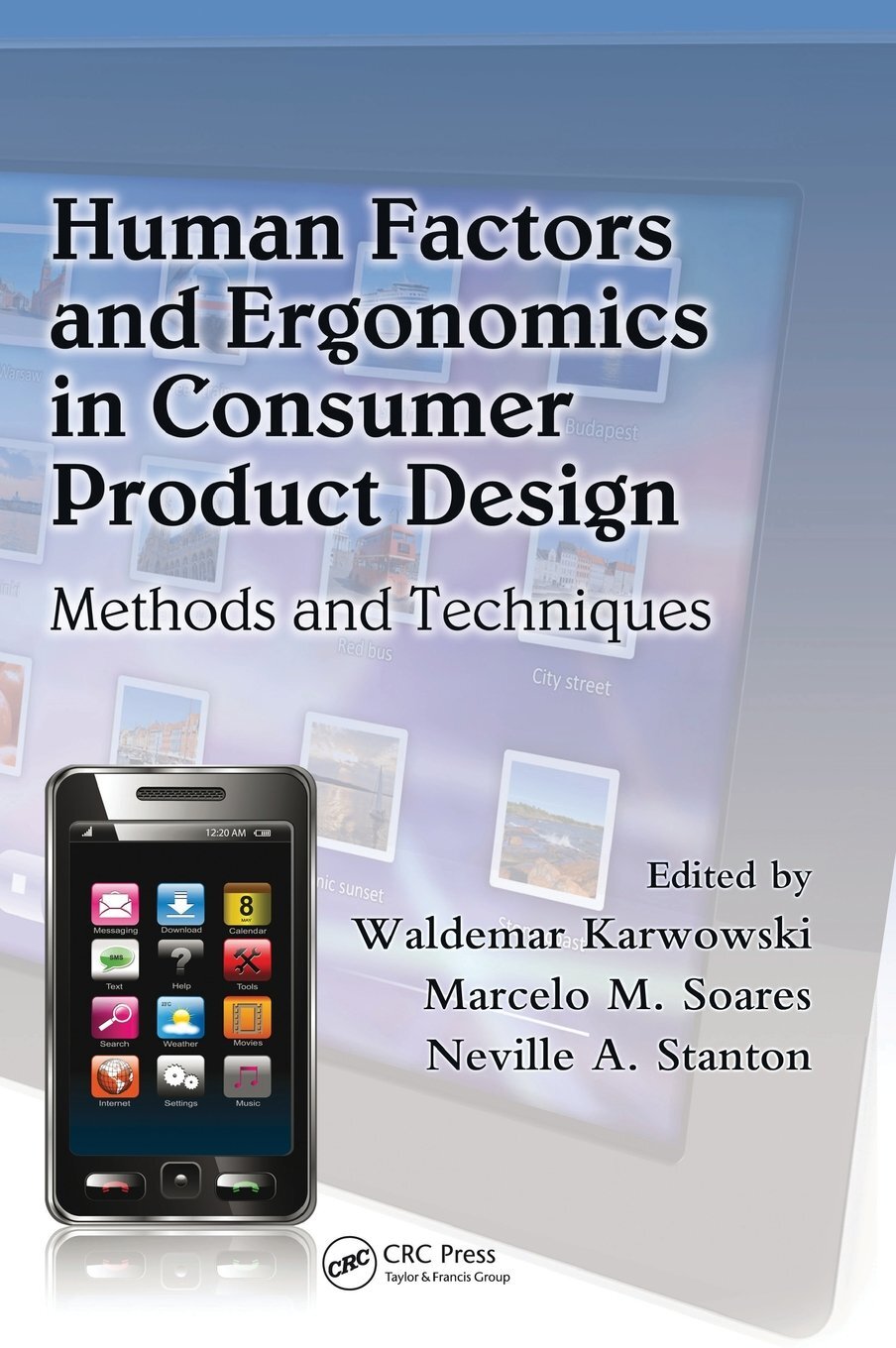
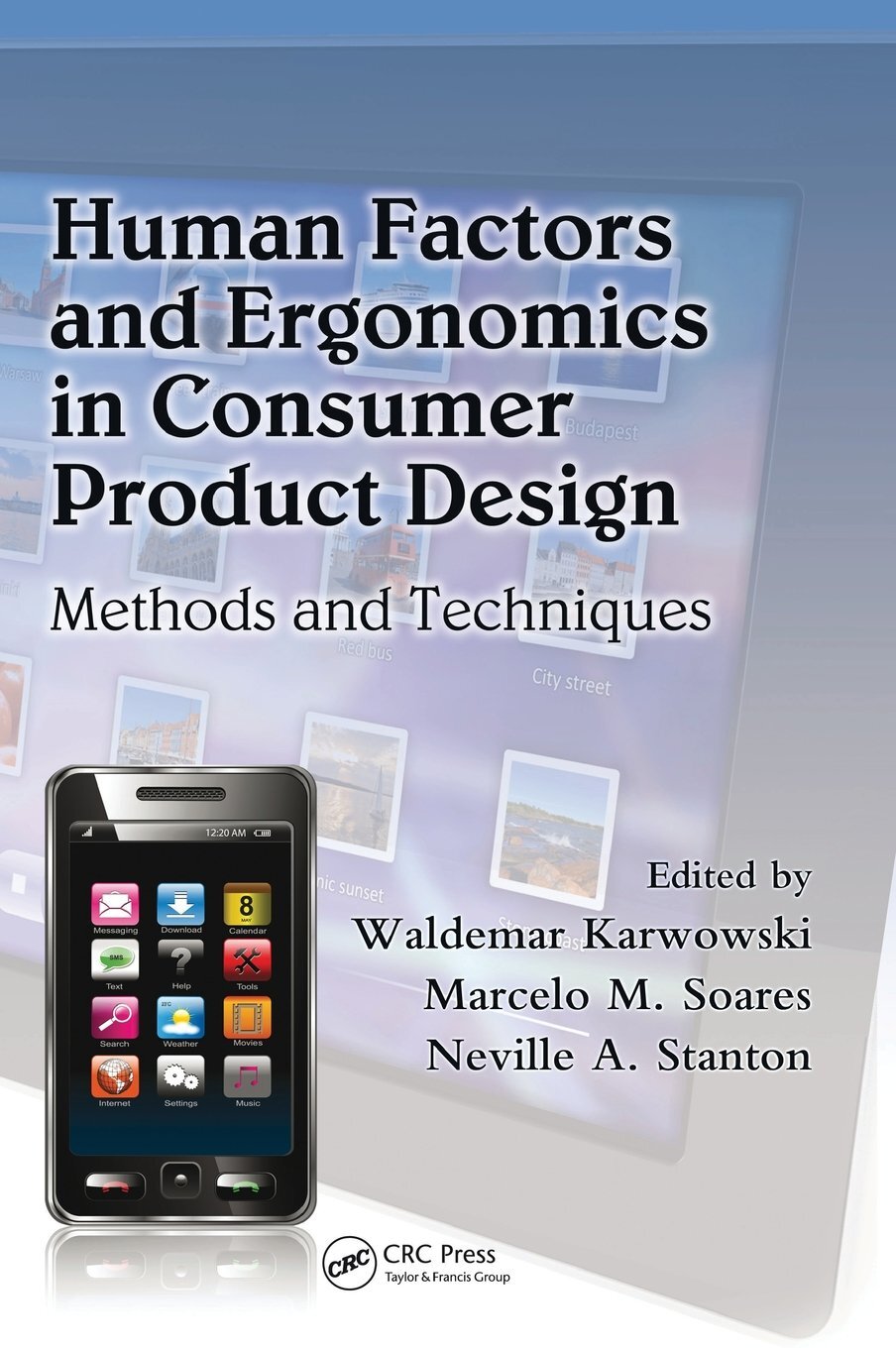
The first volume, Human Factors and Ergonomics in Consumer Product Design: Methods and Techniques, focuses on methodologies and techniques, explaining how Human Factors and Ergonomics (HF/E) principles can be effectively applied across a wide range of consumer products. Centered on a user-focused design process, it begins by examining how mental workload influences everyday interactions with products, and how these insights can be translated into concrete design decisions. The book also explores the growing role of information technology in contemporary product design, including digital imaging, audiovisual media, and virtual reality tools, and their impact on both design processes and user experience.
In addition, the volume provides a thorough discussion of user-oriented product development perspectives, covering comparisons between user-centered and task-based design approaches, the articulation and assessment of user needs, the application of design models, and eco-design considerations. These discussions help readers build clear, actionable frameworks for navigating complex design challenges.
Drawing on research contributions from experts in 21 countries, this two-volume set presents the current state of the art in product ergonomics methods and techniques. It not only deepens readers’ understanding of human factors and ergonomics principles, but also guides their effective application in practice—ultimately supporting the creation of safer, more intuitive, and truly user-centered consumer products.
Details
Editors: Waldemar Karwowski, Marcelo M. Soares, Neville A. Stanton
Publisher: CRC Press
Publication Year: 2011
Format: Hardcover
Size: 26 × 18 cm
Pages: 512 pages