Description
For many years, Catherine Legrand has traveled the world following the threads of textiles and clothing. She has entered markets, villages, and workshops across different countries in search of dyeing, weaving, and clothing traditions that remain part of everyday life. From indigo and patchwork to traditional dress from around the world, her interest has never been limited to the finished patterns themselves, but extends to how textiles are made, used, and connected to the life of a particular place. Ikat: Dyed & Woven Textiles from Around the World continues this long-running “textile journey.” This time, Legrand follows a technique in which the pattern is already embedded in the yarn before the cloth itself has even been woven: ikat.
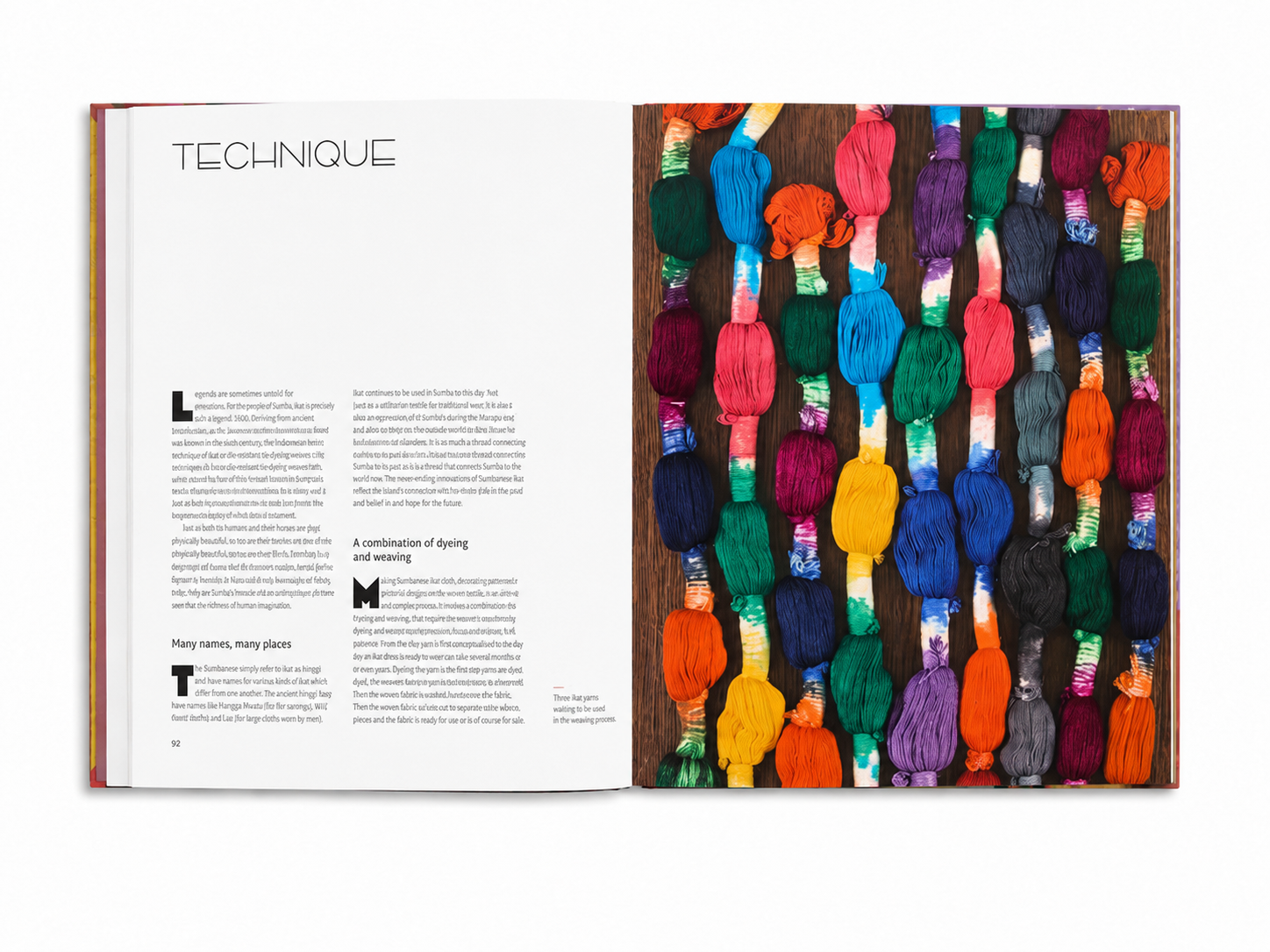
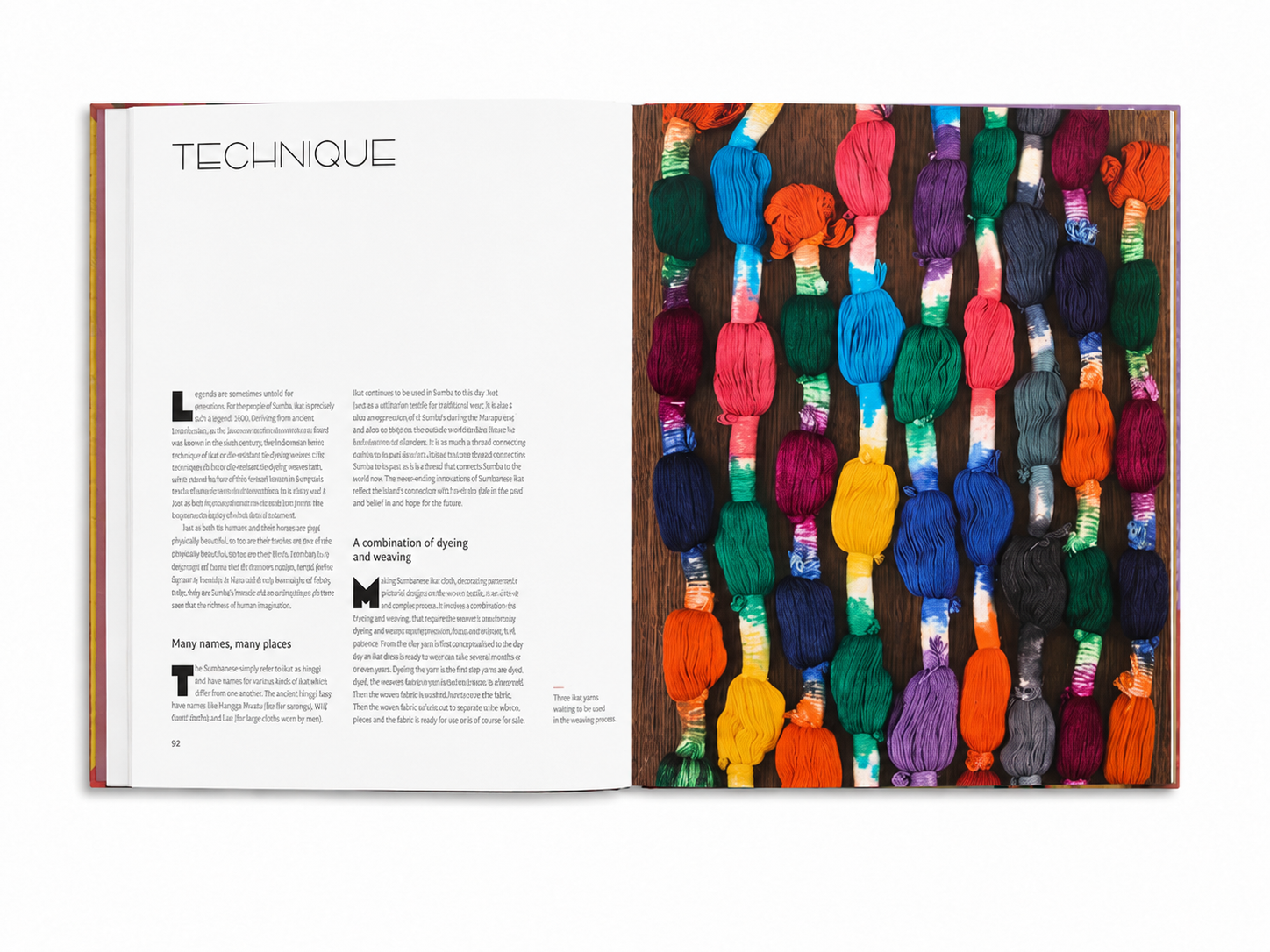
What makes ikat so fascinating is that its patterns are not printed onto a finished fabric. Artisans first bind sections of yarn according to a planned design and then dye them, sometimes repeating the binding and dyeing process several times. Only after this are the differently colored lengths of yarn rearranged and placed on the loom. As warp and weft gradually interlace, the colors that were once dispersed across individual threads slowly come together to form a complete pattern. The process demands an extraordinary degree of calculation and control, yet the finished textile often retains subtle shifts, blurred transitions, and softly feathered edges—the visual characteristics that make ikat so immediately recognizable. Through an exceptionally precise craft, ikat creates a beauty defined by a certain degree of uncertainty.
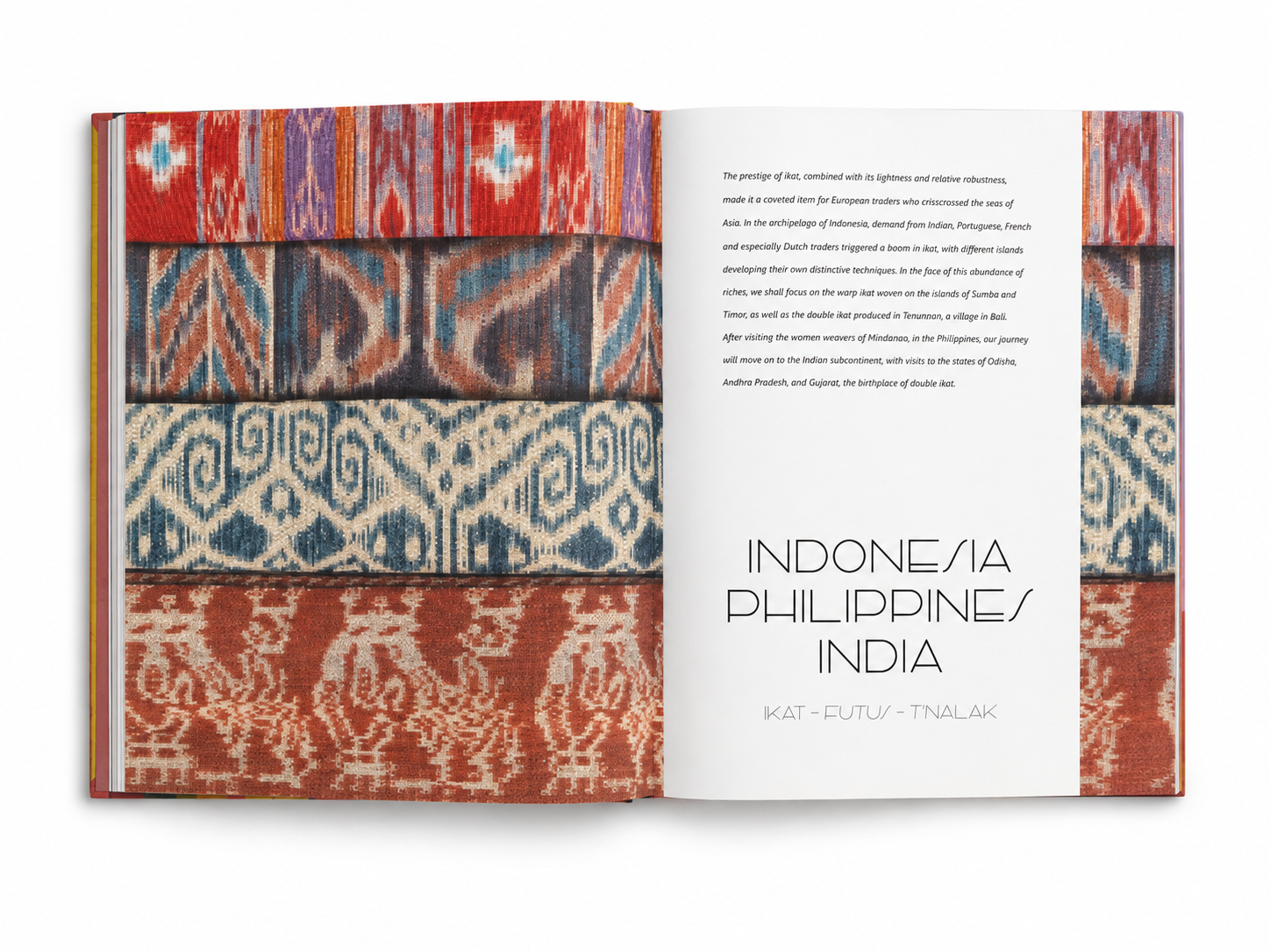
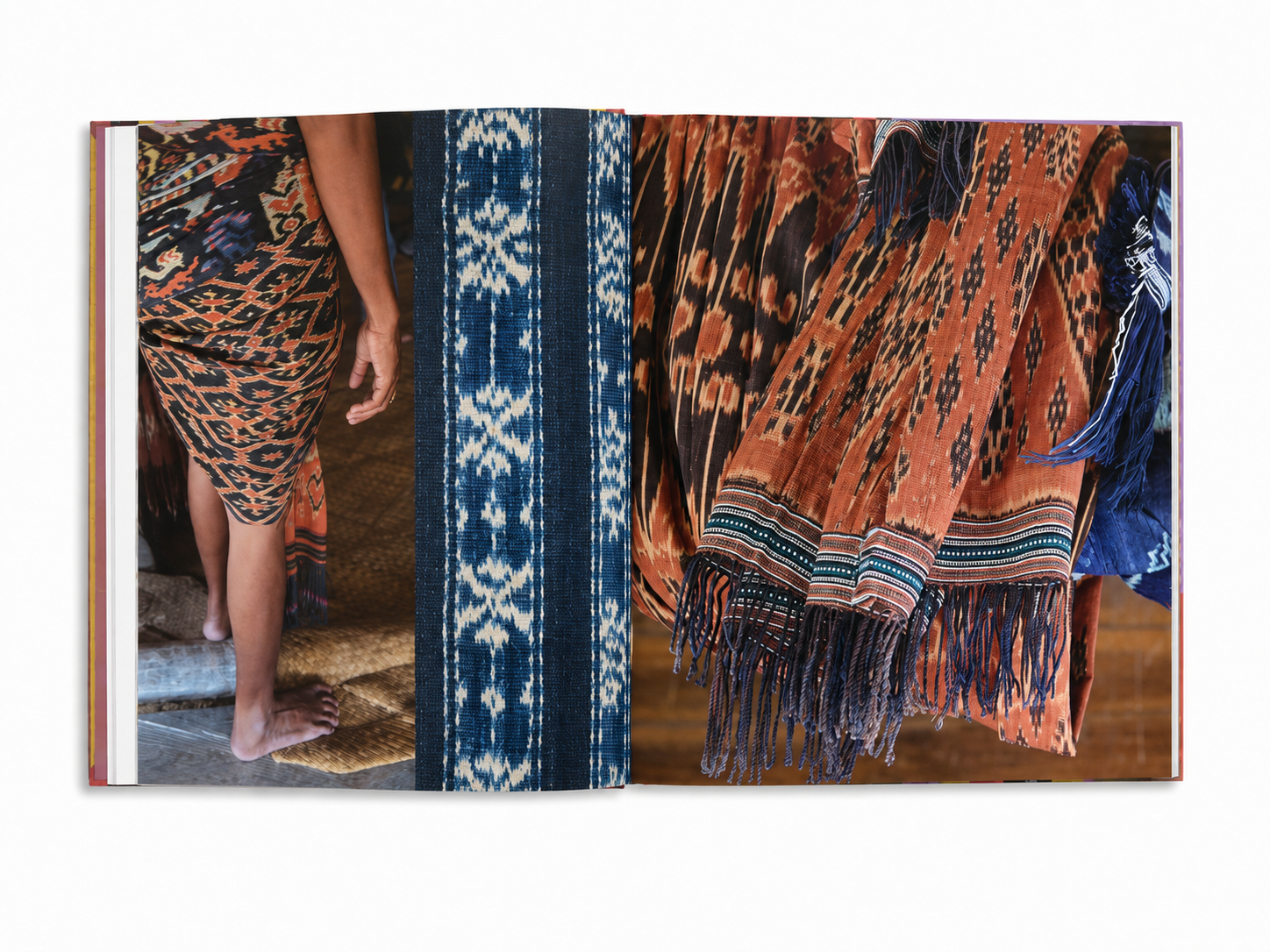
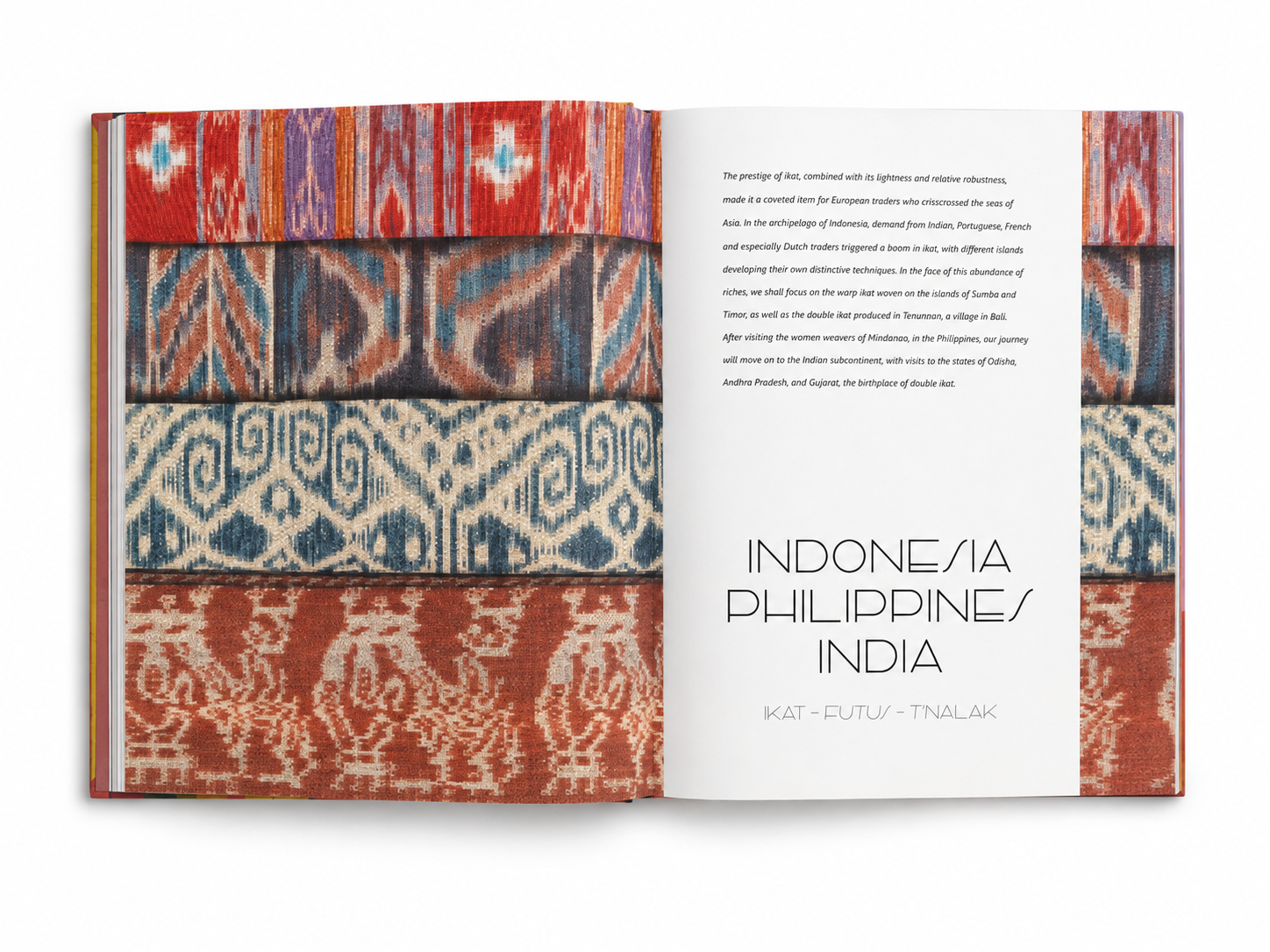
Even more fascinating is that ikat belongs to no single country or culture. The book travels from Indonesia, India, Japan, and Thailand to Uzbekistan, Turkey, and Nigeria, before continuing across Mexico, Guatemala, Chile, Mallorca, and Europe. The same fundamental principle of dyeing the yarn before weaving has developed into entirely different colors, patterns, and uses in different places. Some textiles become everyday clothing, while others are reserved for important ceremonies; some are dominated by geometric compositions, while others feature human figures, plants, or animals. Rather than searching for a single “standard” form of ikat, Legrand reveals how the same technique has been repeatedly reinterpreted and transformed as it enters different cultures.
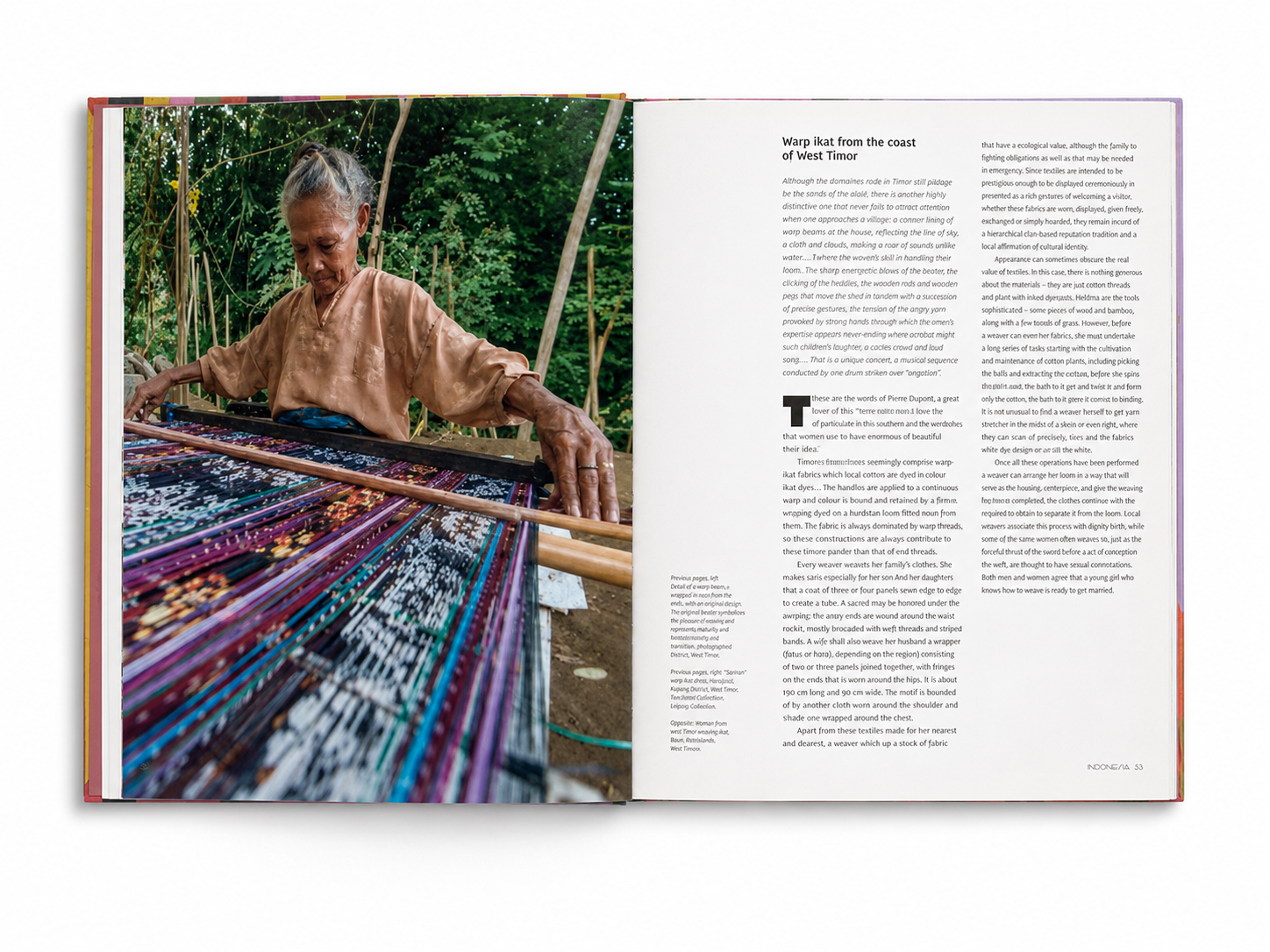
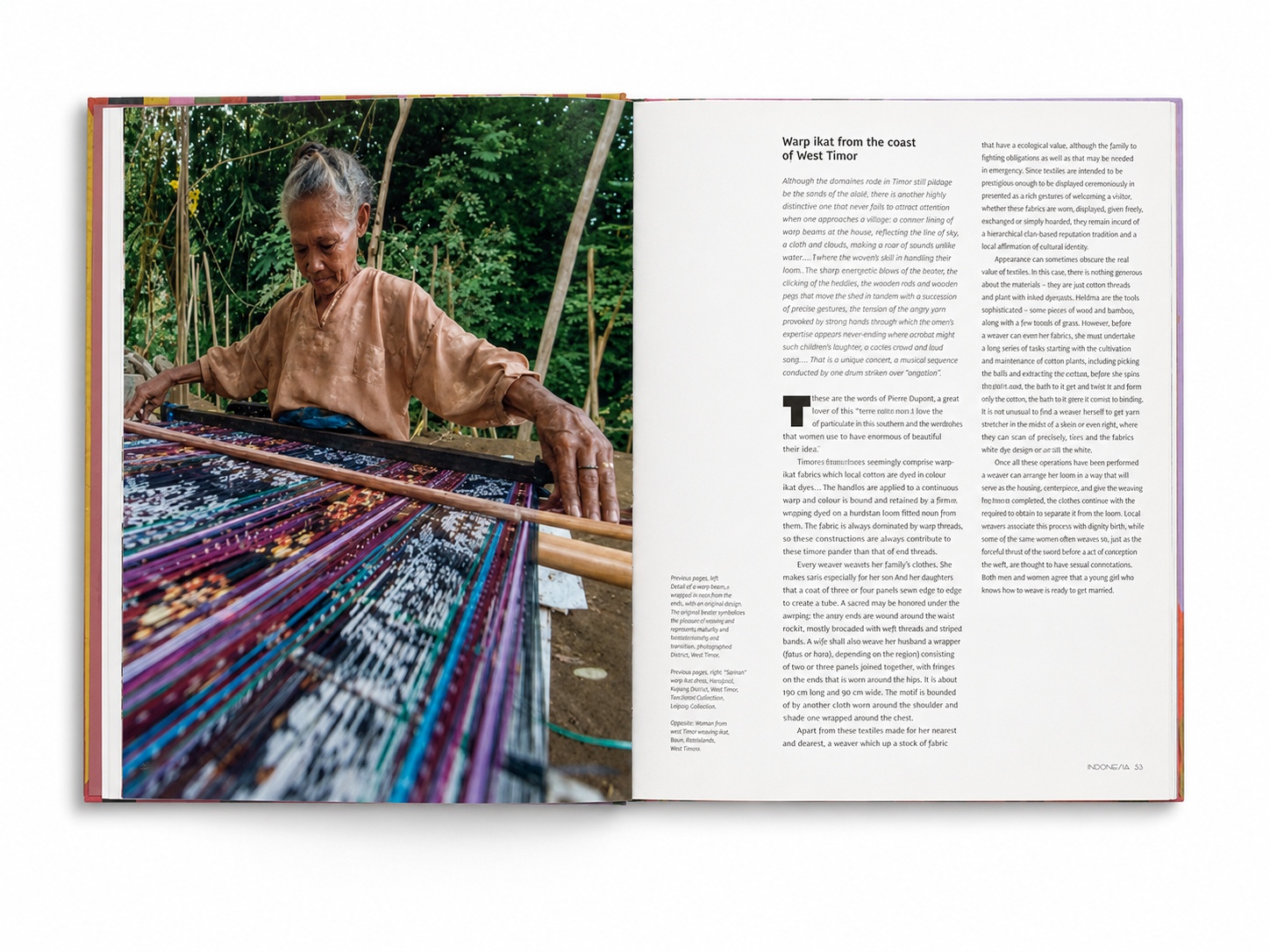
For this reason, Ikat is not only a record of cloth. Catherine Legrand turns her attention to dyers, weavers, and the networks of makers who sustain these traditions, bringing the people behind the patterns back into view. The completion of a single textile often depends on a sequence of processes—dyeing, calculating, arranging, and weaving—while the knowledge behind them is frequently passed down through families, local workshops, and generations of accumulated experience. When we look at a piece of ikat, what we are really seeing is not simply color and pattern, but an entire network of relationships between materials, techniques, time, and people.
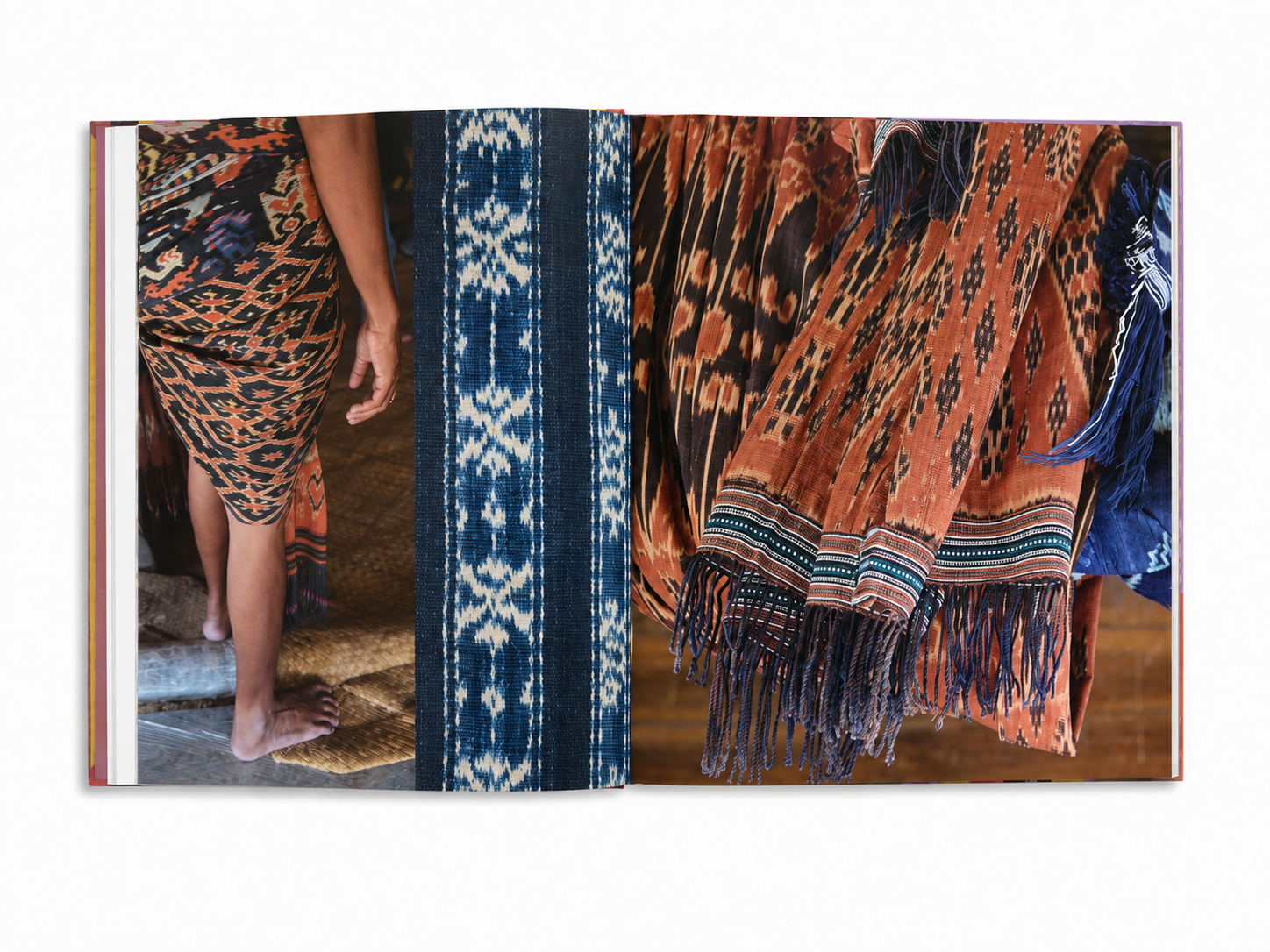
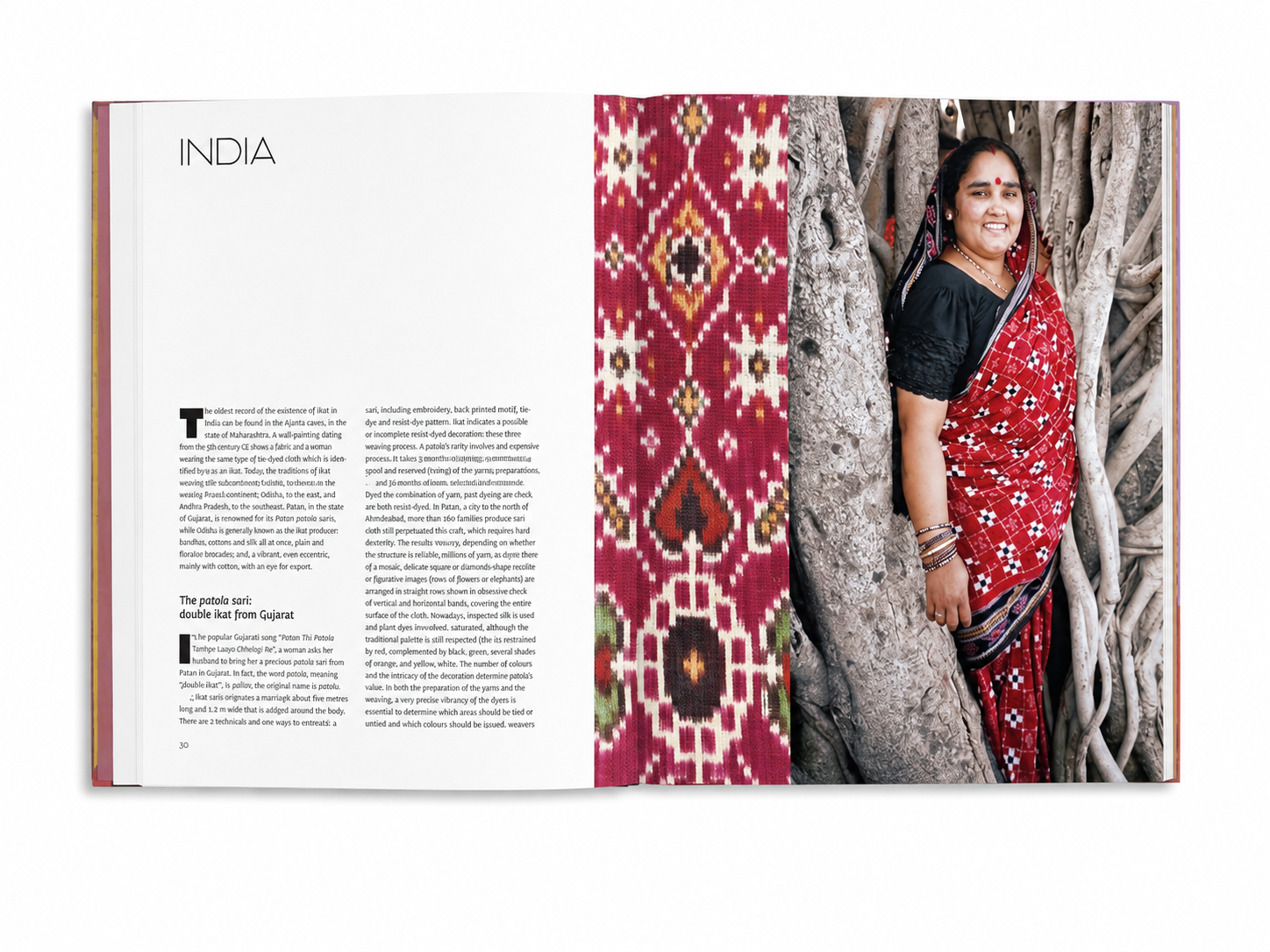
Spanning 208 pages and featuring approximately 200 color images, the book presents everything from complete textiles, garments, and close-up pattern details to the makers themselves and the places where these fabrics are produced, creating a textile journey across Asia, Europe, Africa, and the Americas. For textile, fashion, graphic, and pattern designers, it offers a rich source of inspiration in color, composition, and material. More importantly, however, it helps us understand why these patterns have taken the forms they have today. Ultimately, Ikat may document more than a dyeing and weaving technique found around the world; it reveals how people weave their own places, lives, and cultures into cloth, one thread at a time.
Details
Author: Catherine Legrand
Publisher: Thames and Hudson Ltd
Publication Year: 2026
Size: 26 × 22 cm
Format: Hardcover