【BOOK INTRODUCTION】
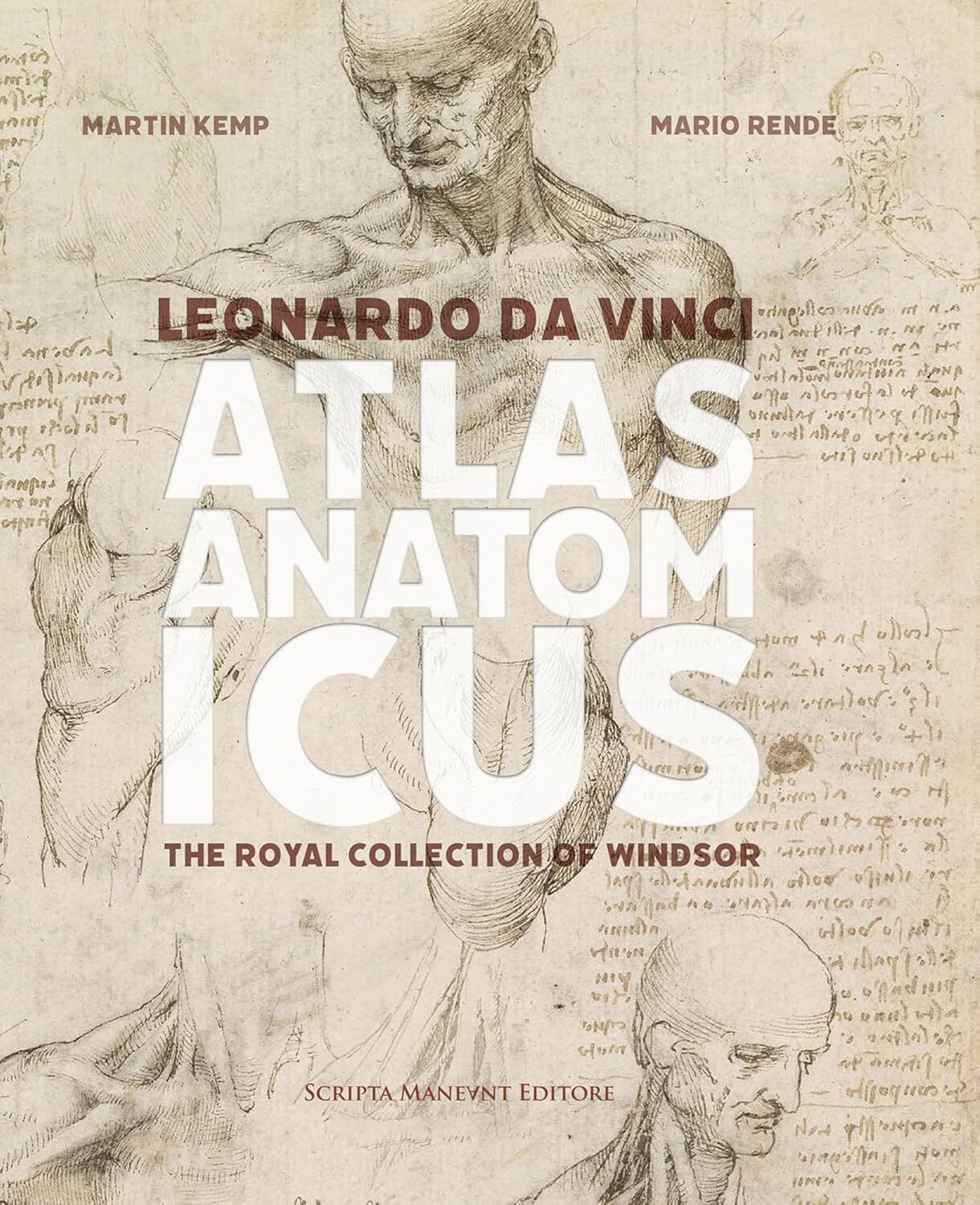
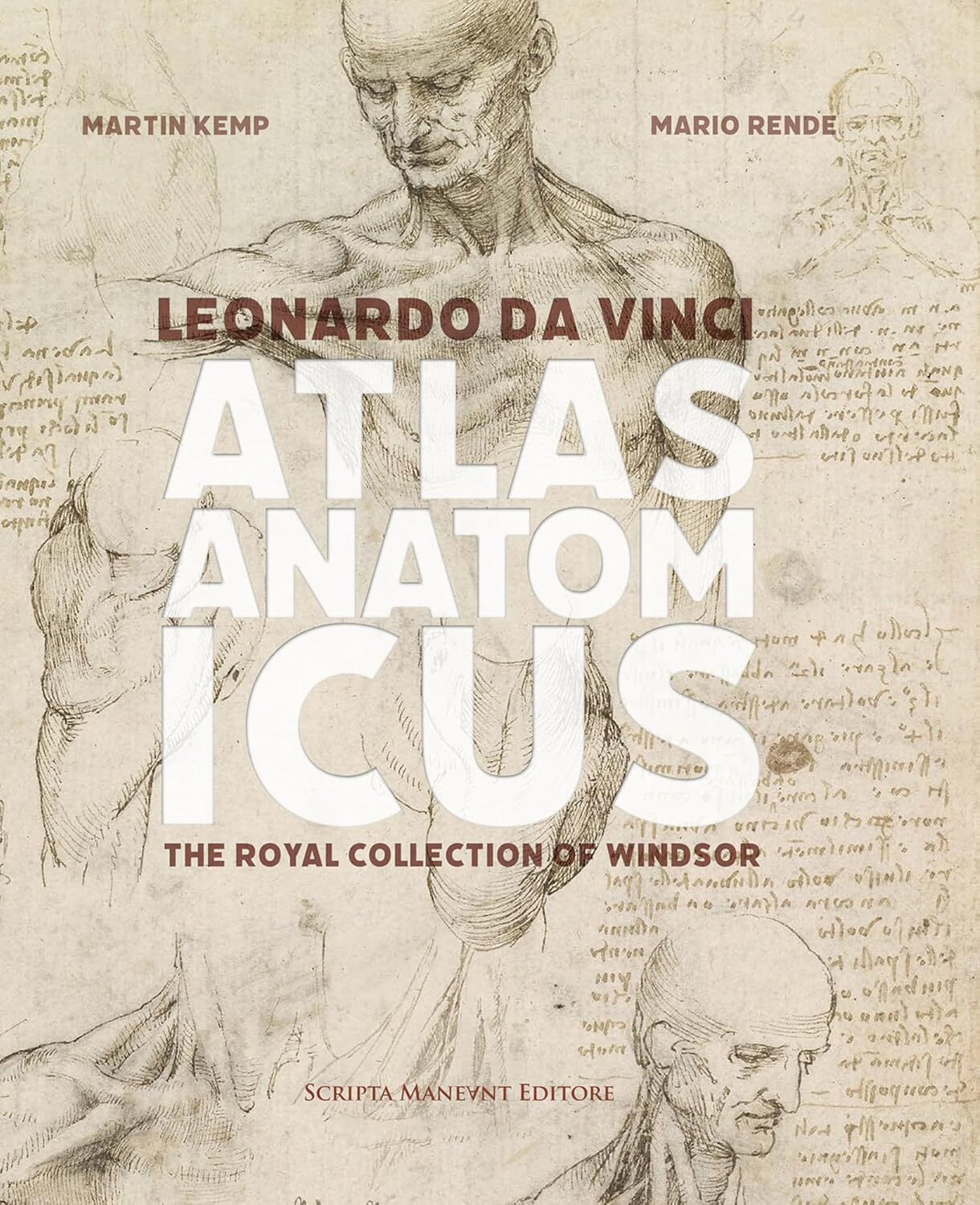
Leonardo da Vinci was not only one of the most important artists of the Renaissance, but also a pioneering researcher who explored the mysteries of the human body using methods that closely resemble modern scientific investigation. Leonardo da Vinci’s Anatomical Atlas brings together the complete collection of Leonardo’s anatomical drawings held in the Royal Library at Windsor Castle, revealing how the great master gradually developed a profound understanding of human anatomy and physiology through observation, experimentation, and drawing.
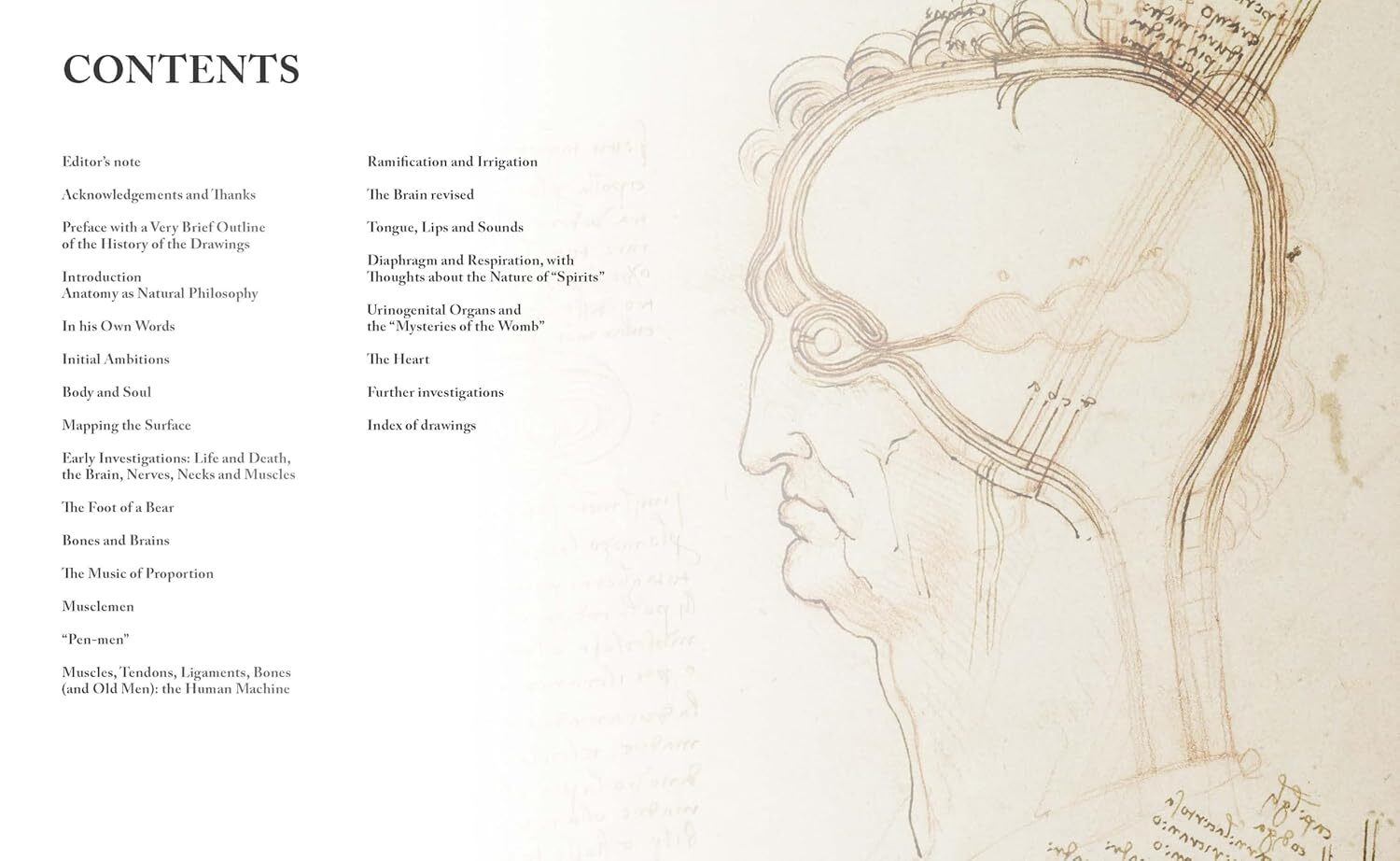
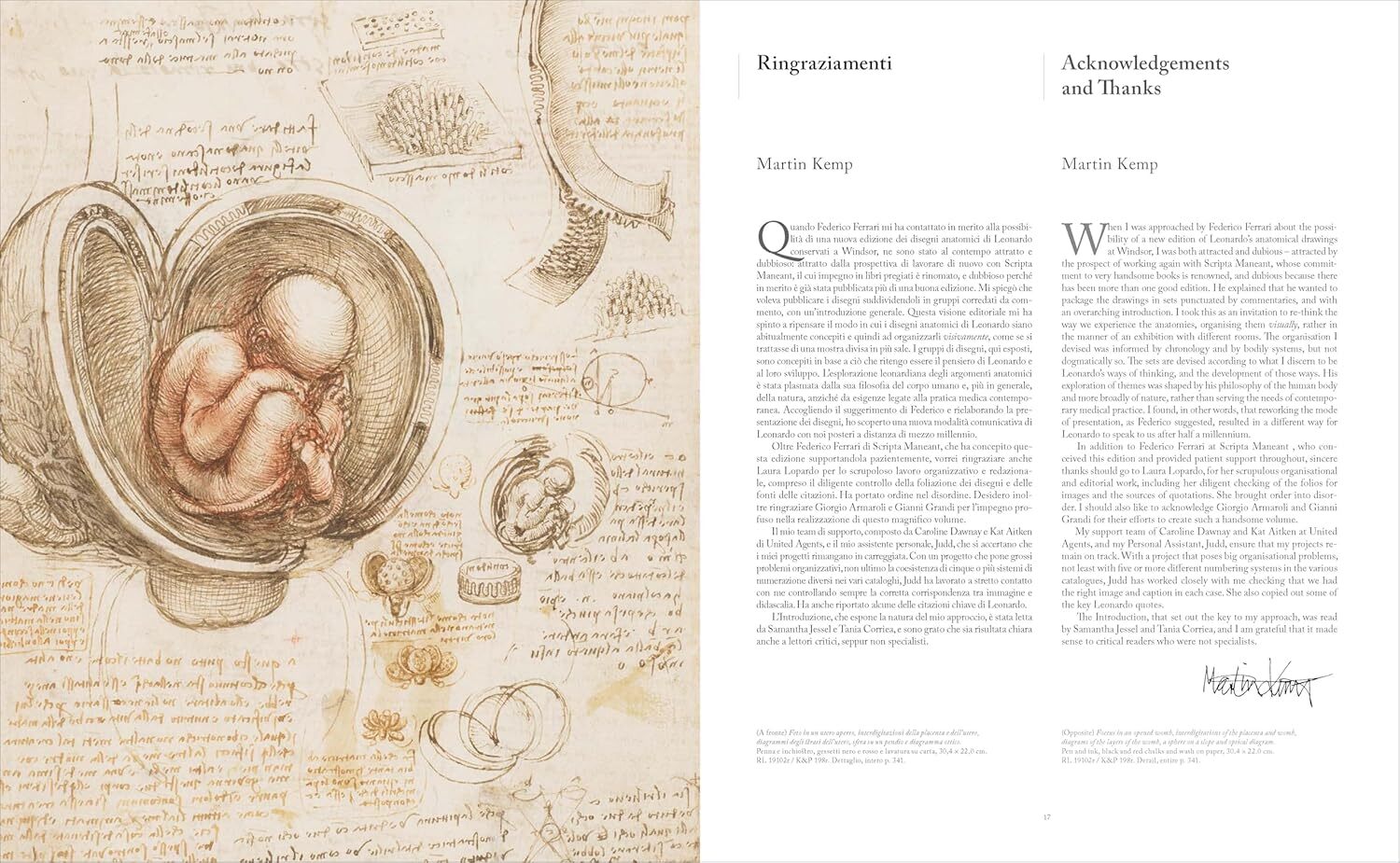
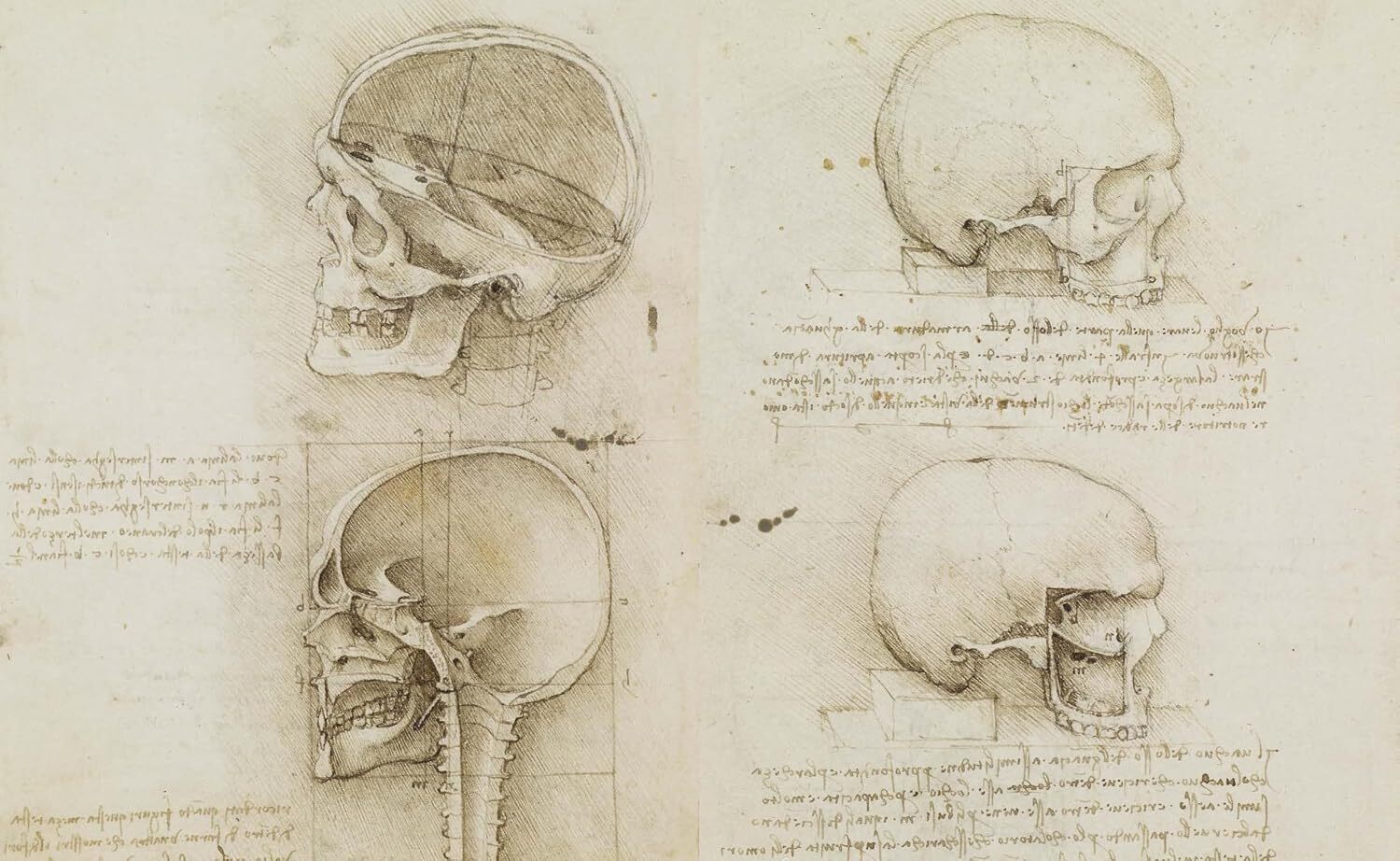
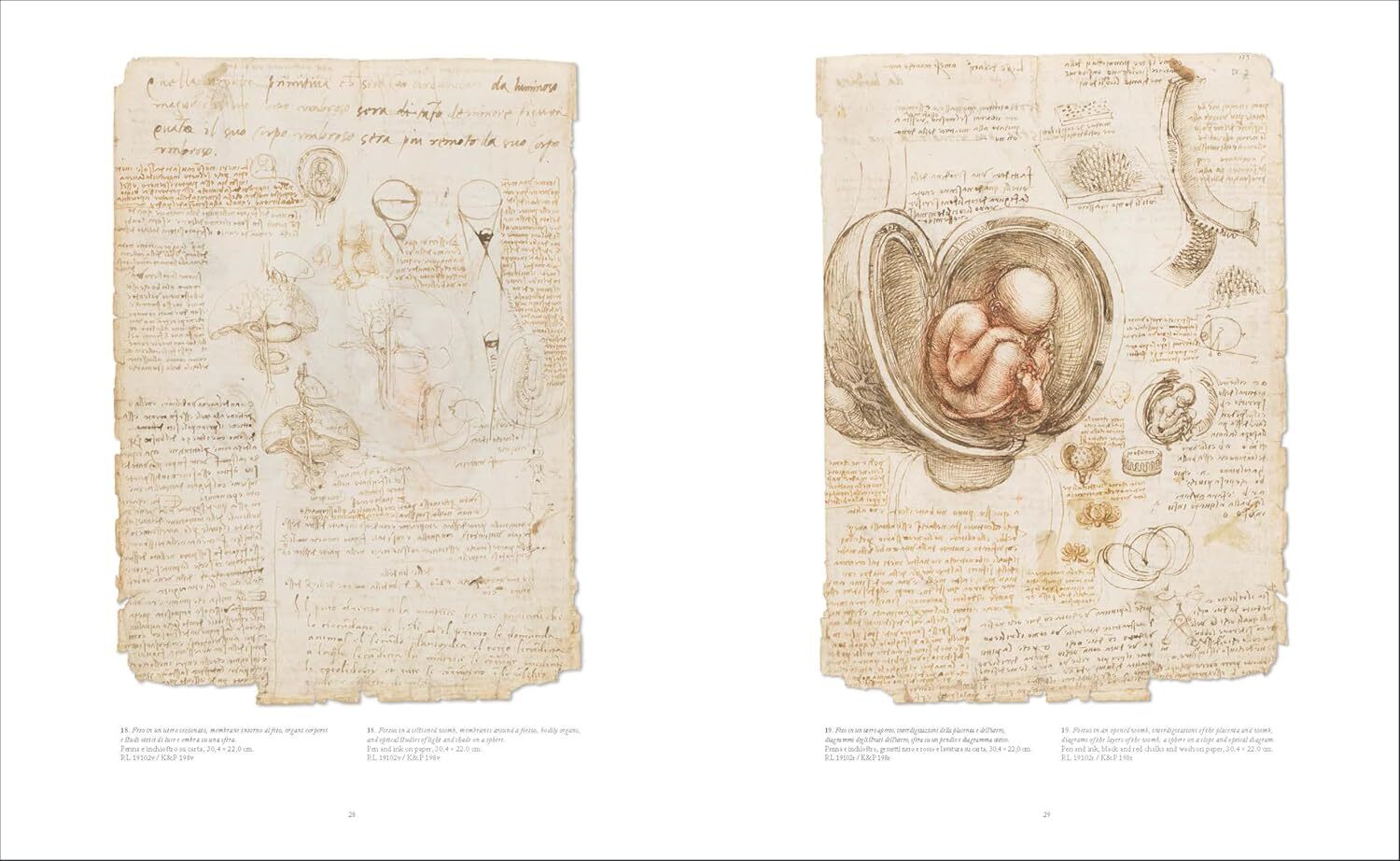
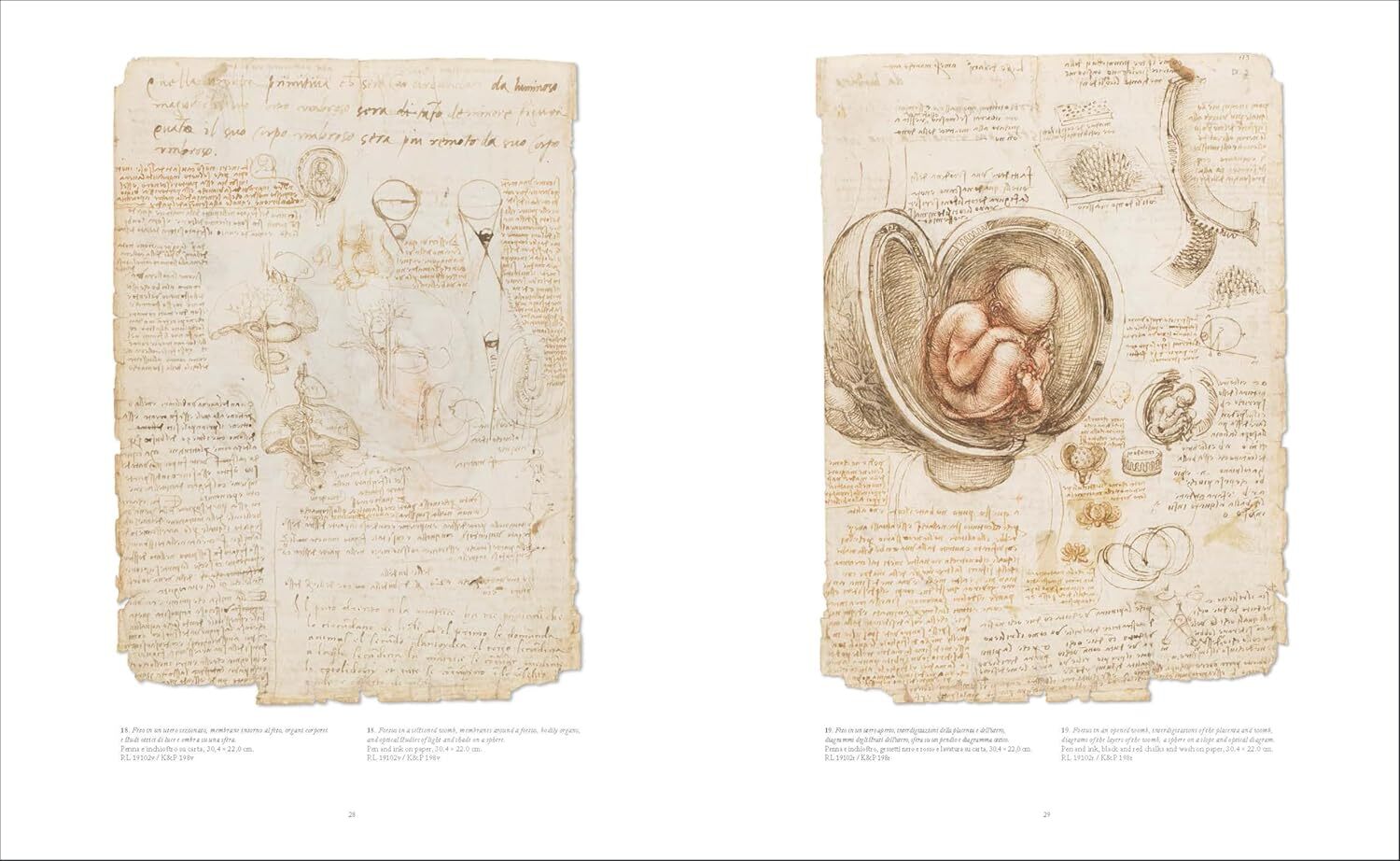
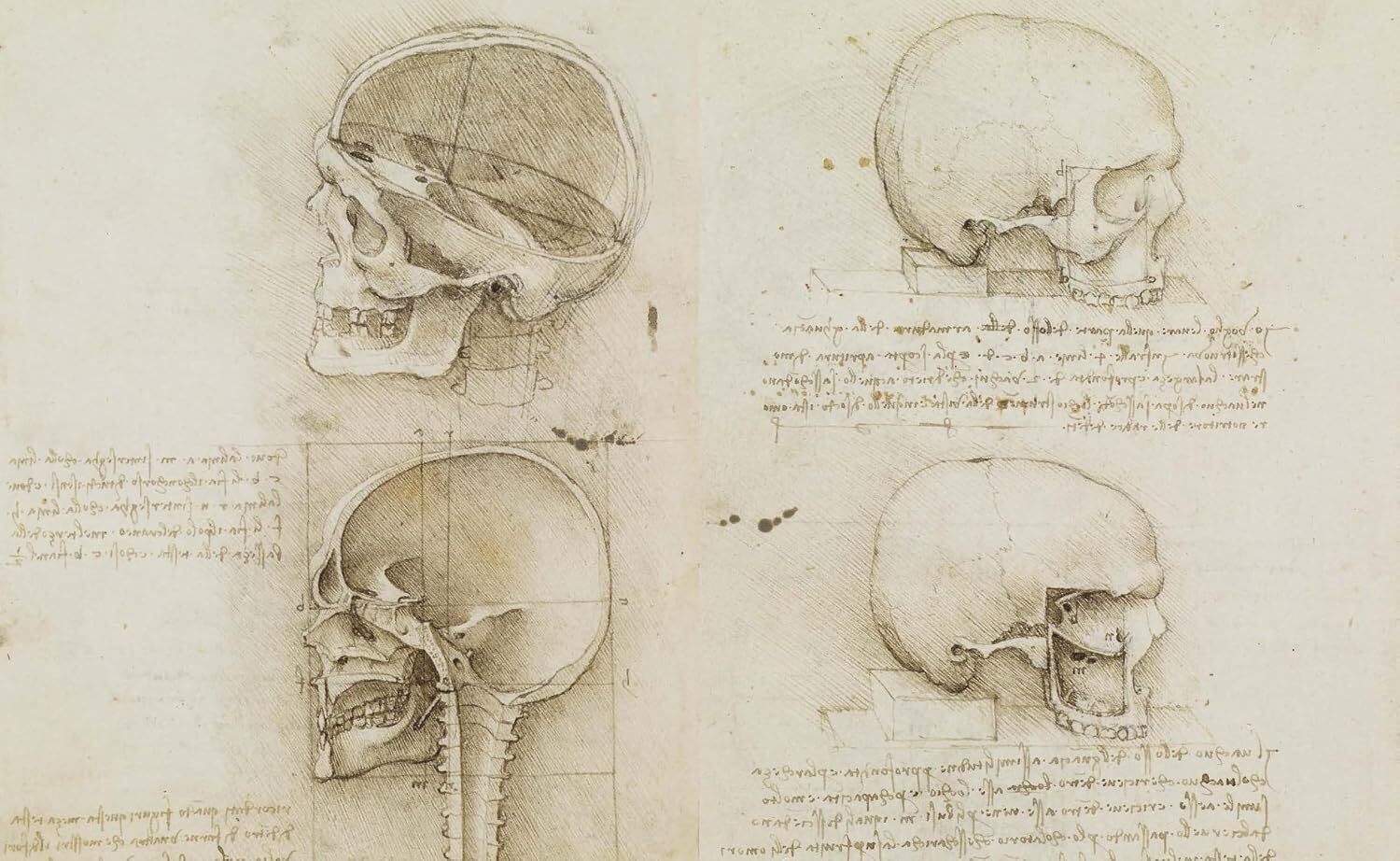
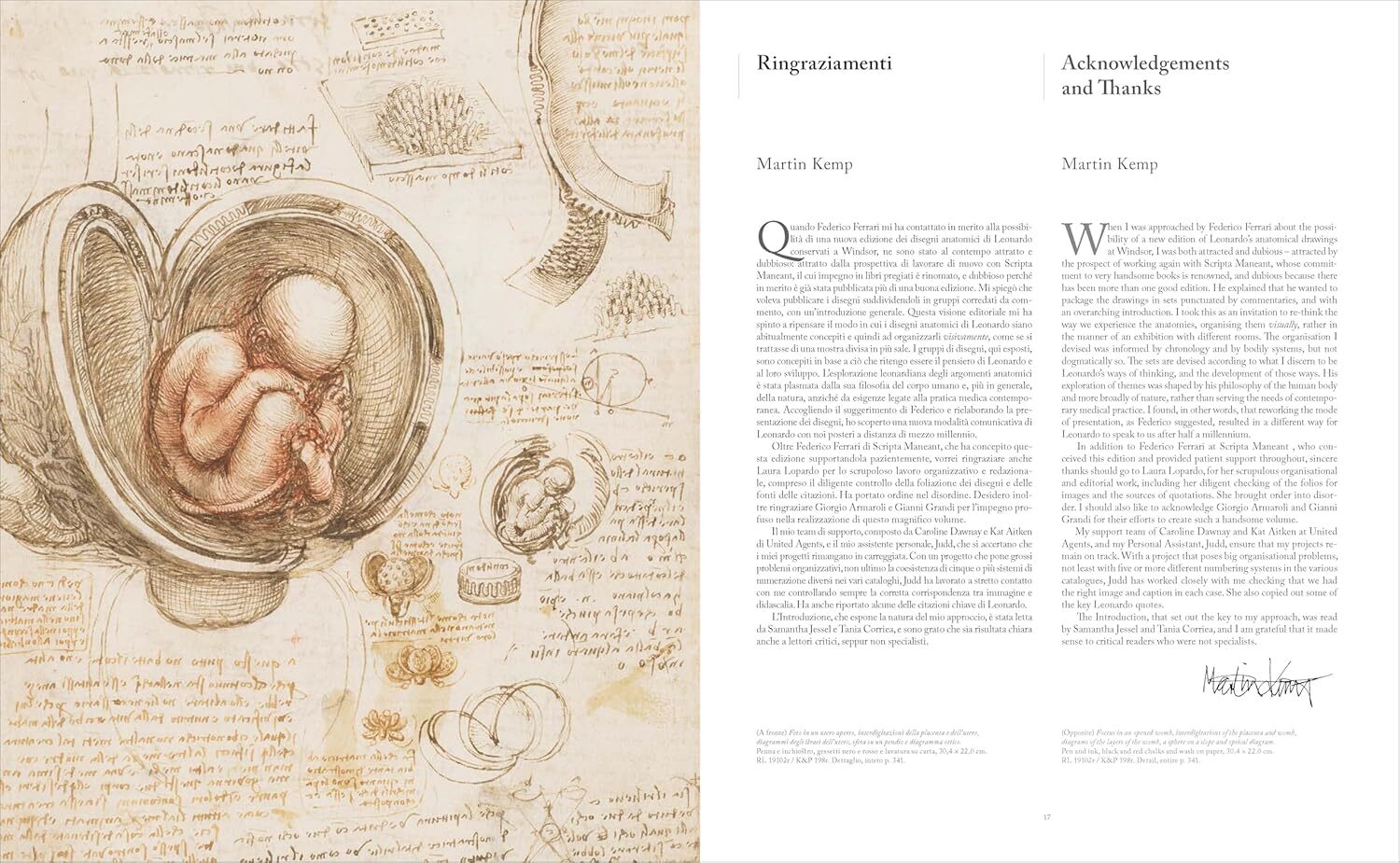
The volume features approximately 300 images of the human body created between around 1485 and 1510–1515. Subjects include the skeleton, muscles, internal organs, blood vessels, human proportions, and the developing foetus. Many of these works were based on Leonardo’s own anatomical dissections. With precise and remarkably detailed lines, he examined the body through multiple viewpoints, cross-sections, and layered studies, documenting the relationships between organs and proposing possible explanations for physiological processes. These drawings are not only records of anatomical research, but also demonstrate how Leonardo transformed scientific observation into a highly sophisticated visual language.
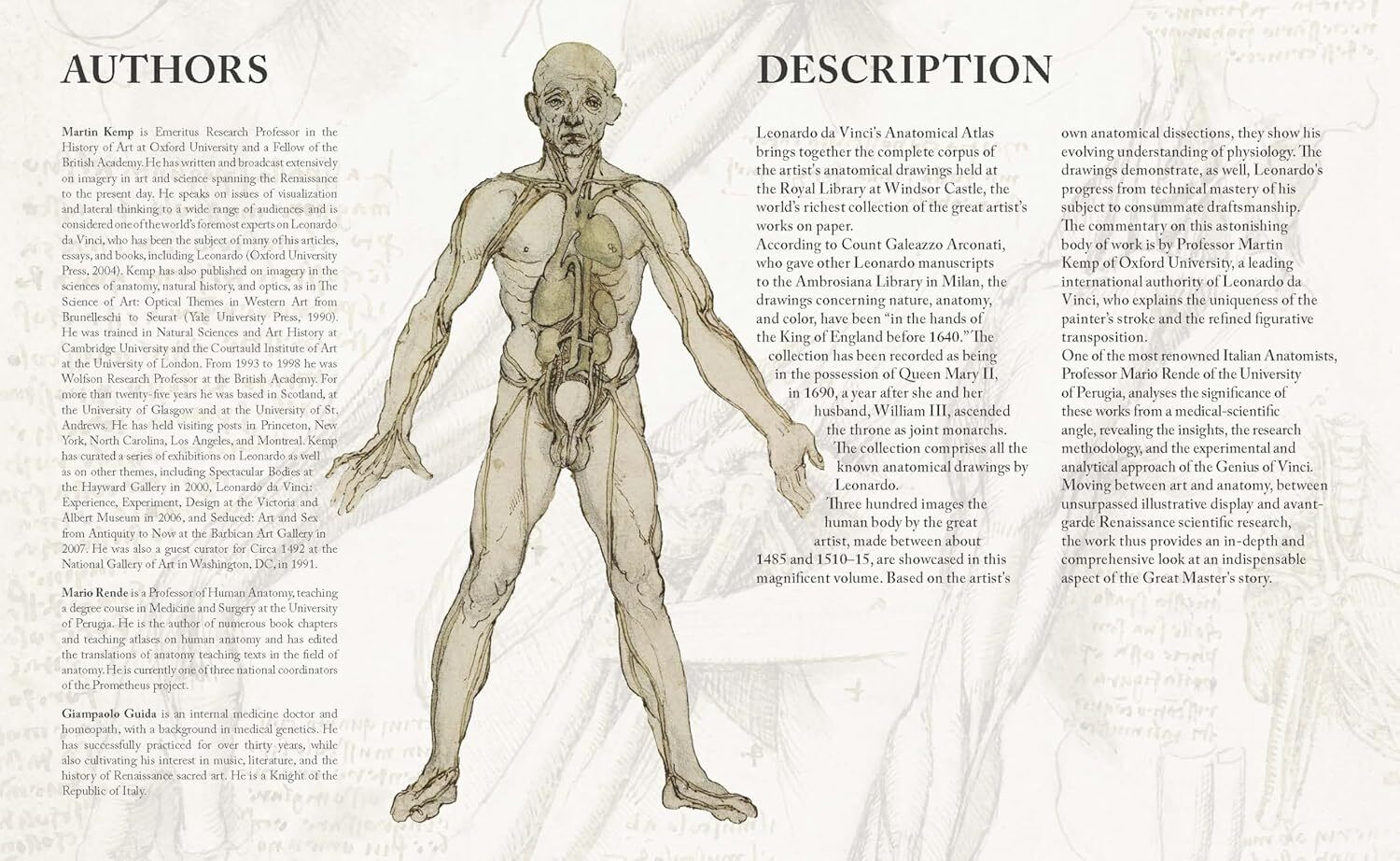
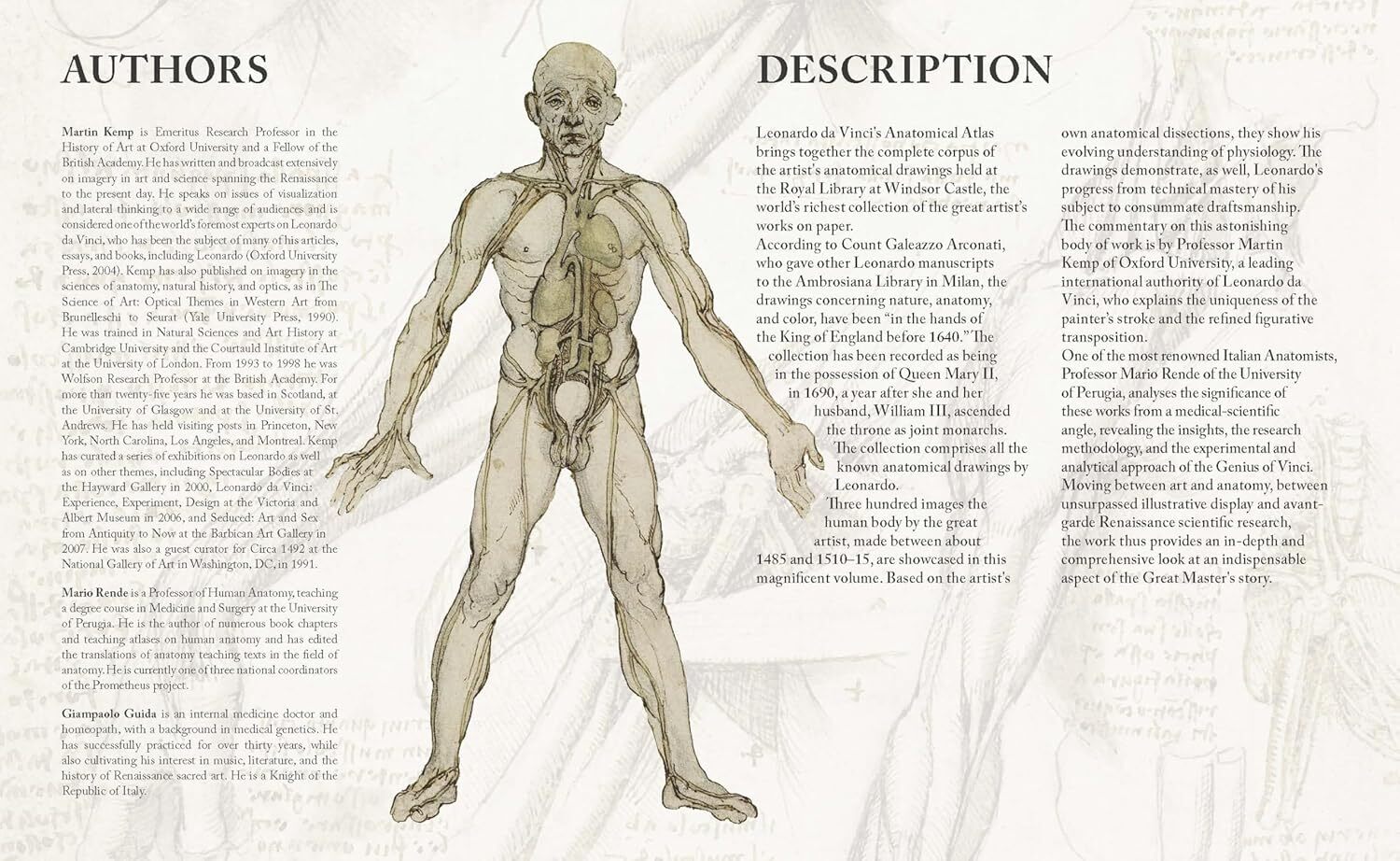
The drawings had entered the British Royal Collection before 1640 and were recorded as belonging to Queen Mary II in 1690. Today, the Royal Library at Windsor Castle holds the world’s most important and comprehensive collection of Leonardo’s works on paper, while this volume encompasses all of his known anatomical drawings.
The scholarly commentary is written by Martin Kemp, Professor at the University of Oxford and a leading international authority on Leonardo da Vinci. Kemp provides an in-depth examination of Leonardo’s distinctive line, compositional methods, and remarkable ability to translate anatomical knowledge into images. Mario Rende, an Italian anatomist and Professor at the University of Perugia, approaches the works from medical and scientific perspectives, explaining their research significance and highlighting the extraordinary foresight of Leonardo’s observational methods, experimental spirit, and analytical thinking.
Positioned between art and science, Leonardo da Vinci’s Anatomical Atlas is more than an anatomical reference. It is also an invaluable record of knowledge, perception, and creative inquiry. Through these precise yet vividly expressive images, readers can discover how Leonardo viewed the human body as a world that could be studied, understood, deconstructed, and reimagined.
Presented in both English and Italian, the volume features gold foil detailing on the cover and spine, making it an exceptional publication for academic study, artistic appreciation, and collecting.
【DETAILS】
Author: Martin Kemp
Publisher: Scripta Maneant Editori
Publication Year: 2026
Dimensions: 29 × 24 cm
Binding: Hardcover
Pages: 370