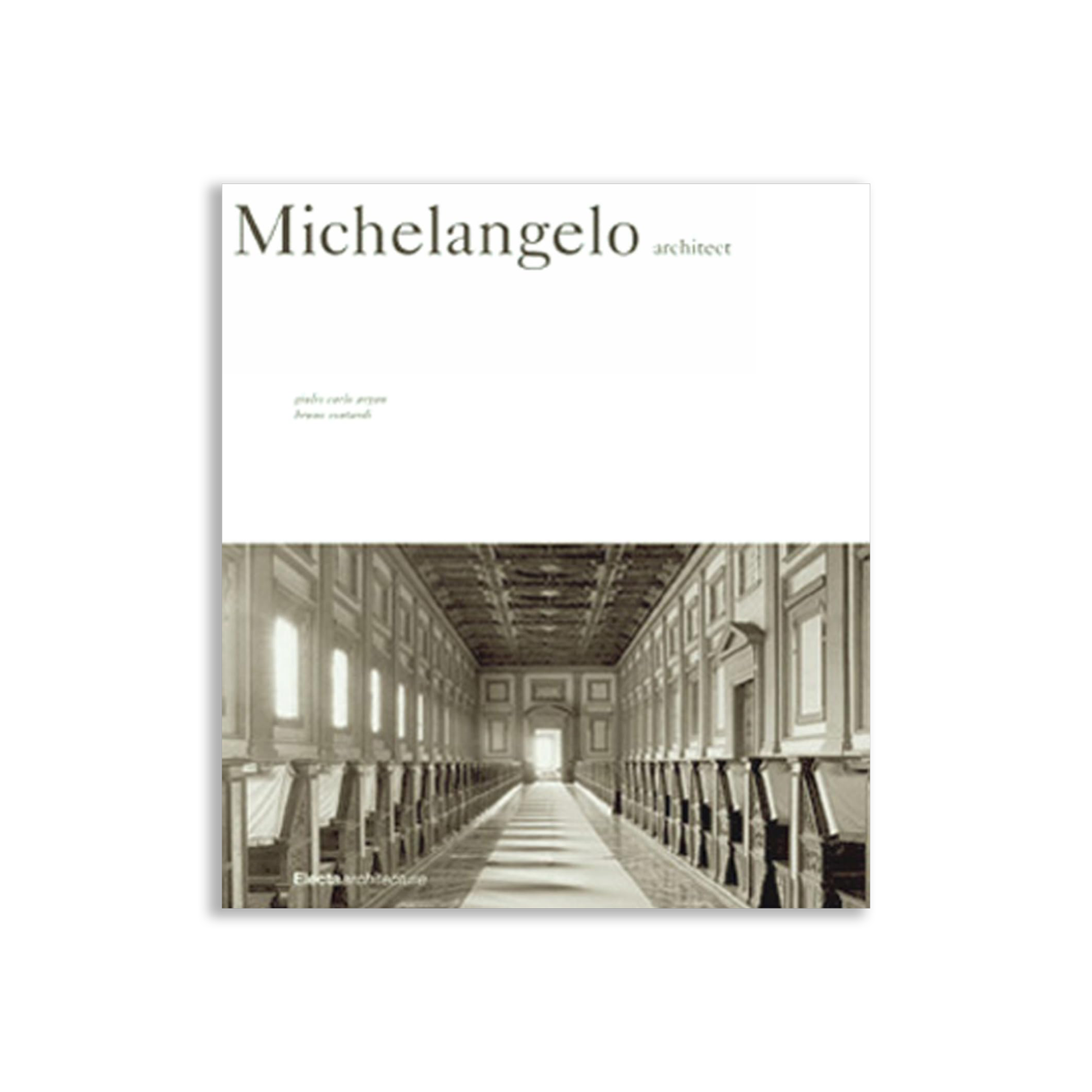
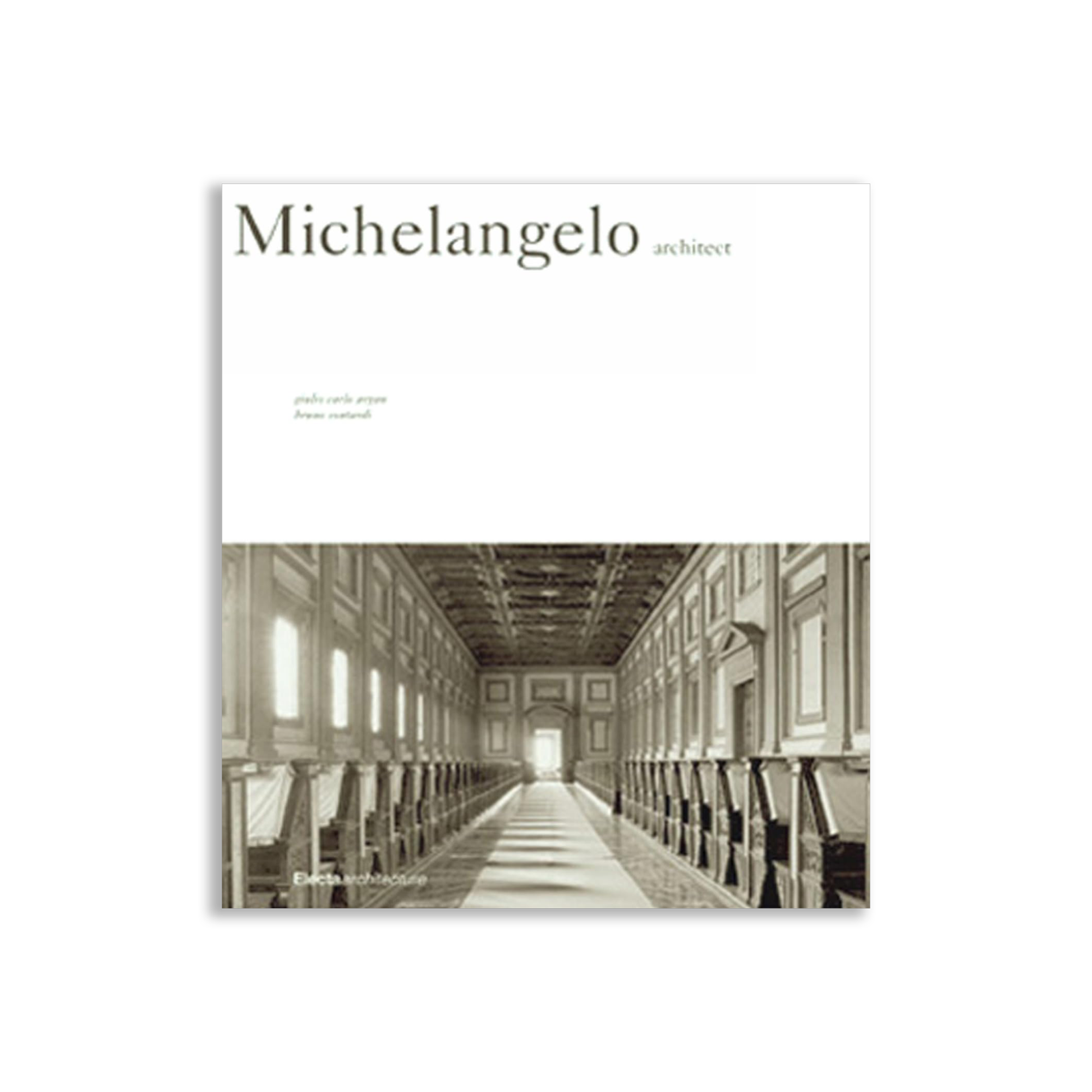
Book Description
This book offers a comprehensive and in-depth examination of Michelangelo (1475–1564) as an architect, carefully tracing more than half a century of his architectural practice. Organized chronologically, it begins with his early works in Rome at the start of the 16th century, moves on to the Florentine period between 1516 and 1534—including the iconic Biblioteca Laurenziana—and concludes with an in-depth analysis of the major projects he undertook after returning to Rome in 1534, such as St. Peter’s Basilica, the Porta Pia, and Santa Maria degli Angeli.
In architectural history, Michelangelo is often regarded as an essentially “anti-classical” architect. Rejecting the traditional emphasis on proportion, symmetry, and balance, he replaced these conventions with rhythm, tension, and movement, forging an architectural language of extraordinary personal force and emotional intensity. The book explores in detail his complex and often delicate relationships with powerful patrons, including the papacy and the Medici family, while also addressing his conflicted relationship with his own work—many architectural ideas never progressed beyond the drawing board or were realized only in incomplete form due to political, practical, or personal factors.
Michelangelo’s architectural drawings are marked by urgent strokes and spontaneous annotations, revealing the richness of his creative energy but also the difficulties faced by builders tasked with translating his impetuous ideas into built form. This volume reproduces a wide range of annotated sketches, pen-and-ink studies, plans, elevations, and perspectival drawings, accompanied by a substantial selection of high-quality black-and-white photographs that illuminate the close relationship between his architecture, architectural details, and sculptural works.
Completed with an extensive bibliography, an index of works, and an index of names, this book is not only a visually compelling architectural study but also a major scholarly resource. It offers architects, art historians, and readers interested in Renaissance thought and creative practice a critical framework for understanding Michelangelo’s architectural vision and his enduring position in architectural history.
Book Details
Author: Mondadori Electa SpA
Publisher: Phaidon Press
Year of Publication: 2004
Dimensions: 29 × 26 cm
Binding: Hardcover
Pages: 388 pages