Description
Some designers create clothes; others create stars. René Hubert clearly belonged to the latter. Gloria Swanson, Marlene Dietrich, Ingrid Bergman, and Shirley Temple—these names have long symbolized Hollywood’s Golden Age. Yet the way they turned on screen, stepped into the light, and remained in the audience’s memory through a particular silhouette was often shaped by a costume designer who had already arranged the character’s first impression. Hubert understood that a gown could reveal a character more quickly than dialogue, and that true glamour was never about adding more decoration, but about achieving the perfect harmony between fabric, body, and camera.
Hubert was born in Switzerland and grew up in St. Gallen, a city renowned for its embroidery and textiles, before moving to Paris and entering the worlds of theatre and fashion. He understood how tulle moved, how embroidery captured the light, and how, in black-and-white cinema, what truly mattered was not necessarily color itself, but the layers of light and shadow created when materials were translated into grayscale. In the 1920s, silent film star Gloria Swanson noticed his designs in Paris and soon invited him to the United States. It was more than a job offer; it was a passport into the heart of the star-making industry.
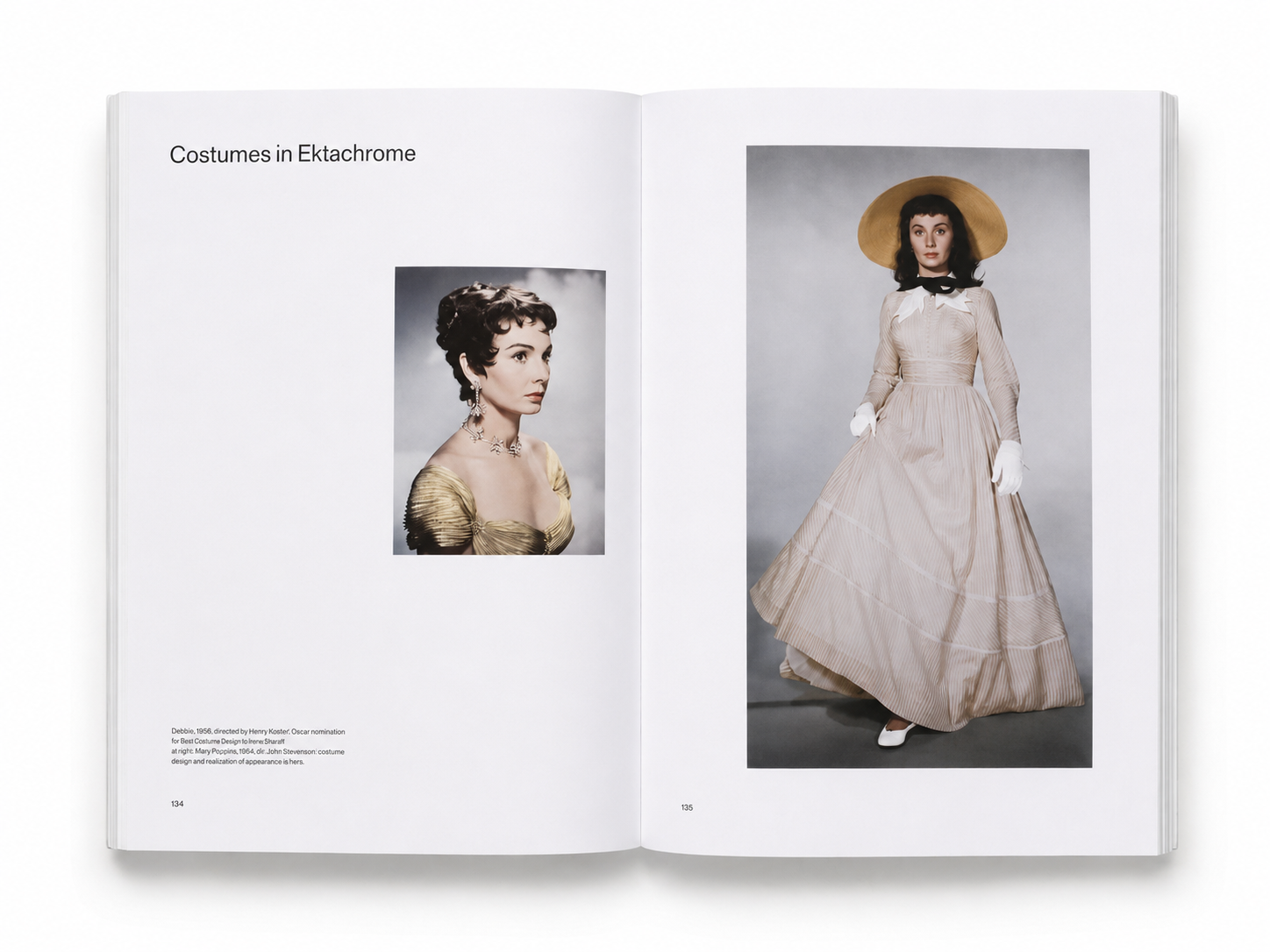
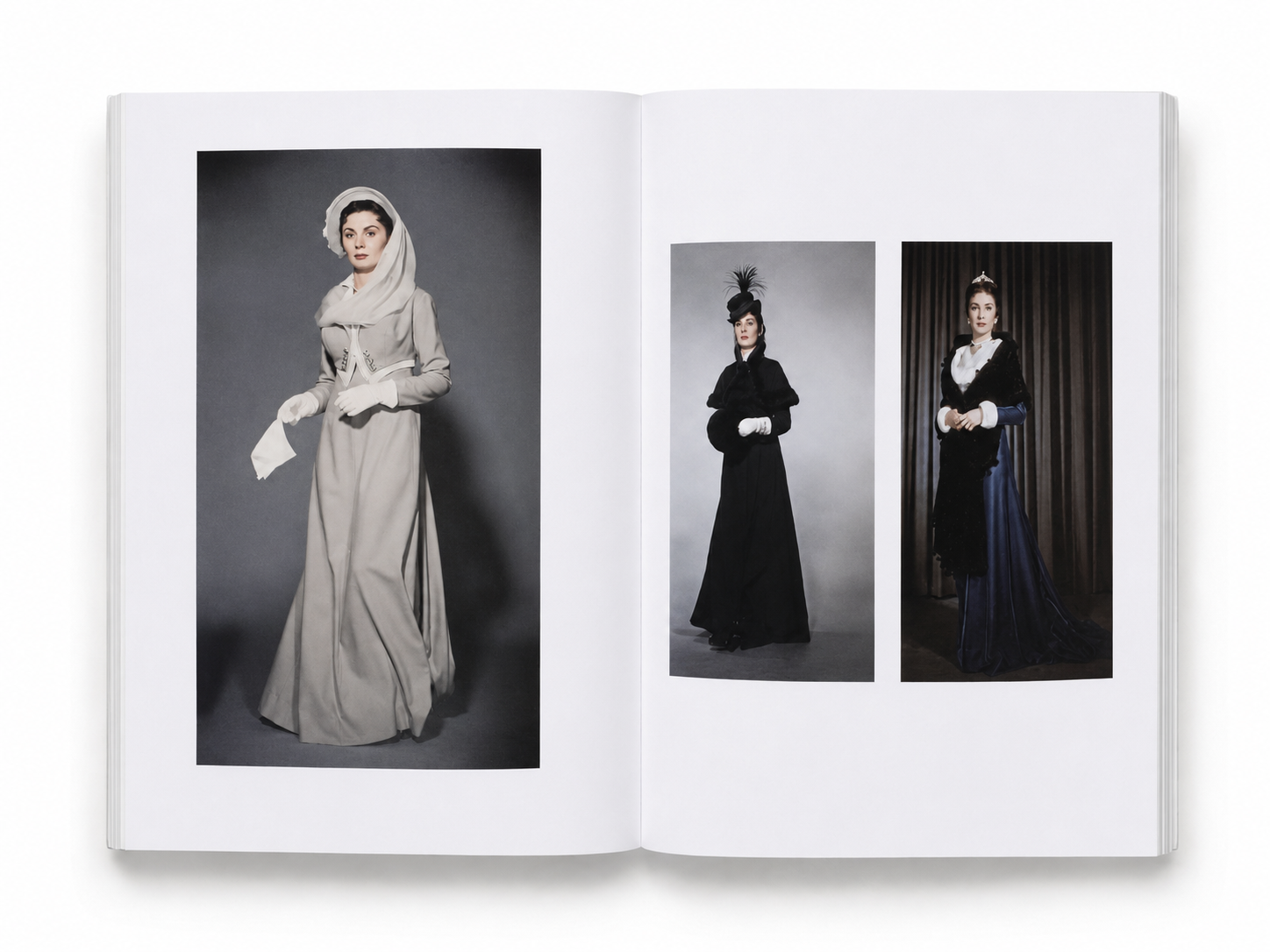
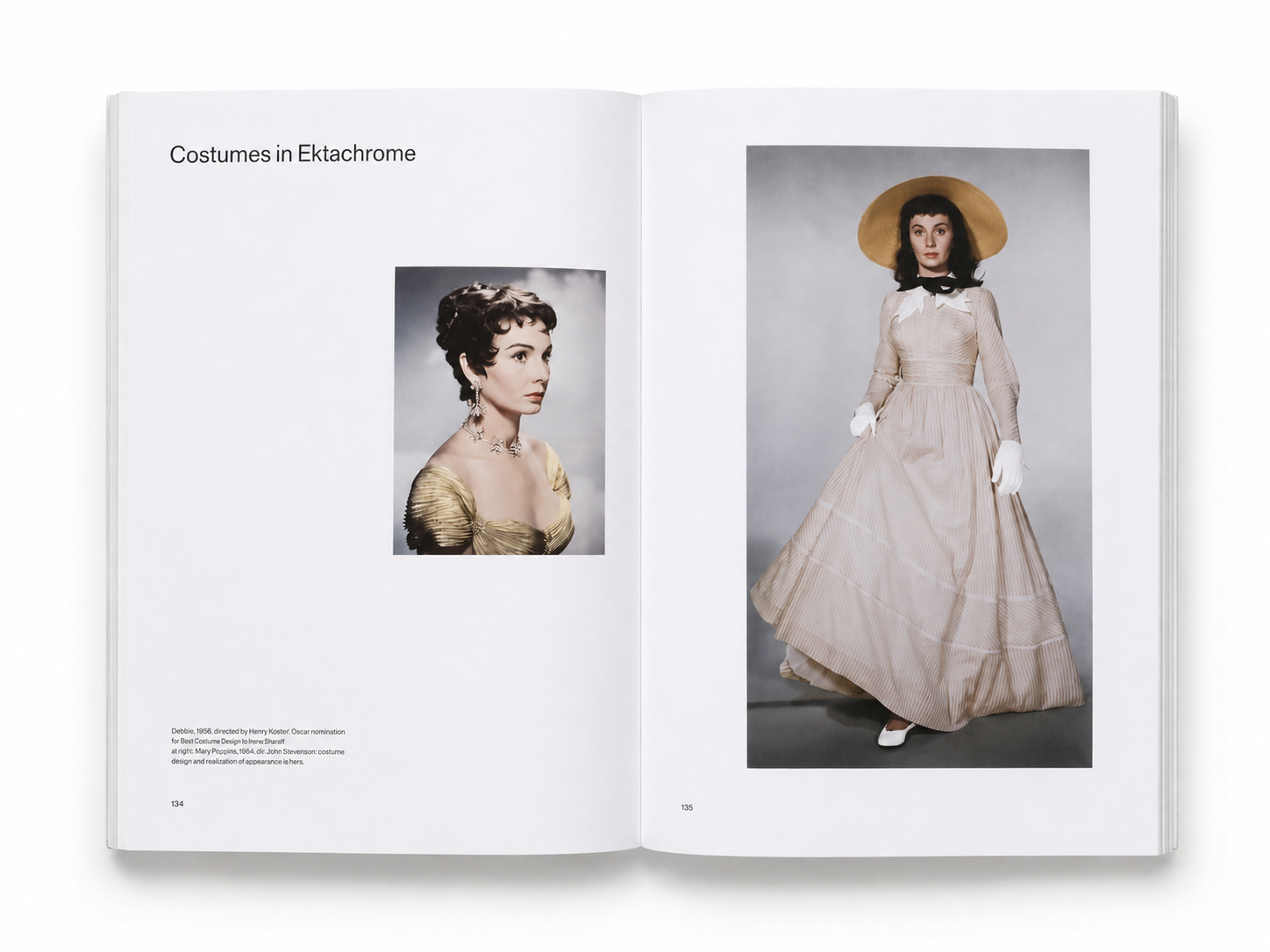
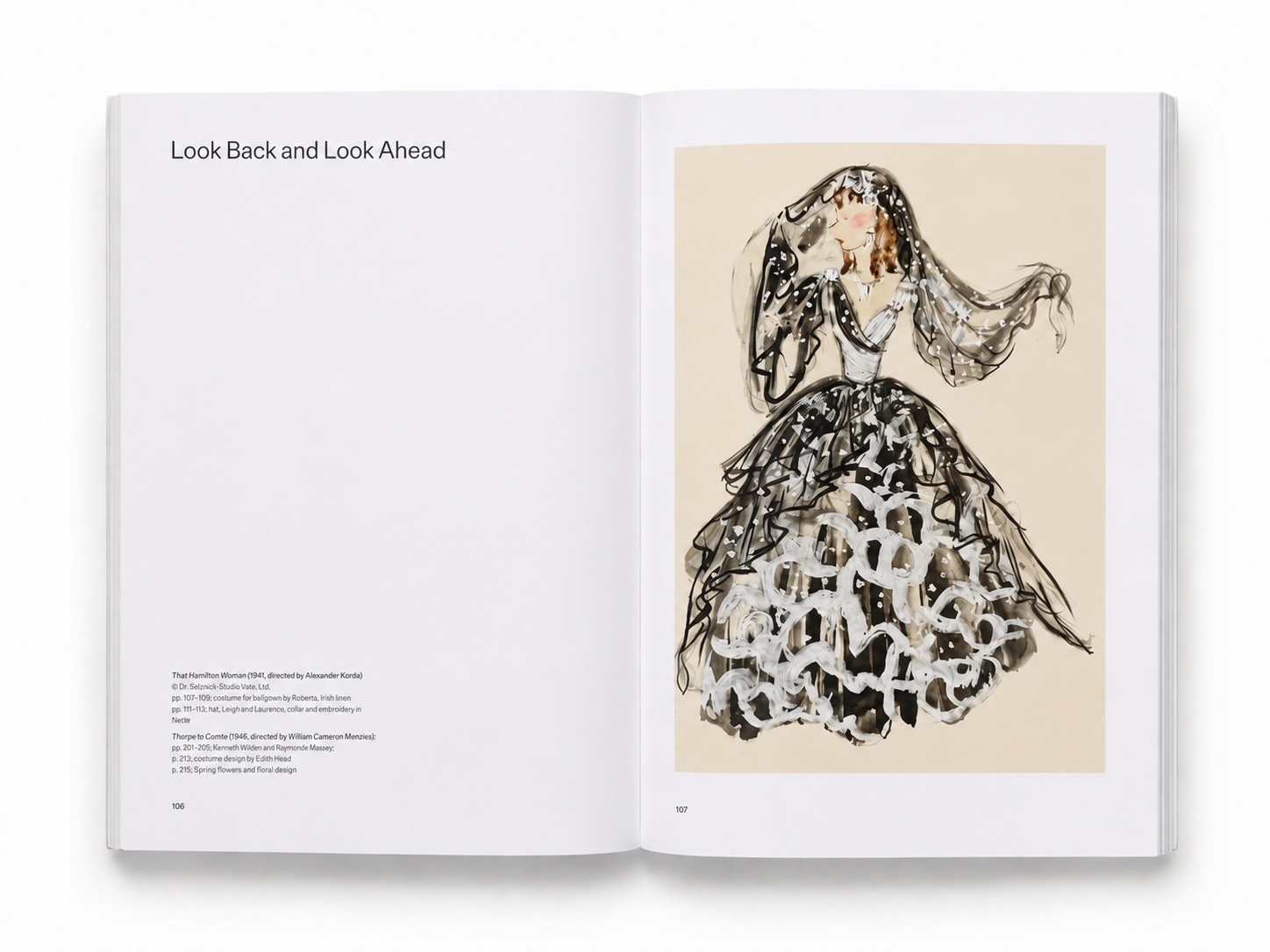
Over the following decades, Hubert moved between Europe and Hollywood, designing costumes for historical films, musicals, science-fiction productions, and the private wardrobes of film stars. He could heighten a character’s dramatic presence with an exaggerated skirt, yet in Things to Come, he set aside familiar opulence and imagined the future through streamlined silhouettes. From silent films and talkies to color cinema, photographic technology continued to evolve, and costumes had to change with it: fabrics could not interfere with sound recording, colors had to be reinterpreted through film stock and lighting, and silhouettes needed to retain their strength in both long shots and close-ups. Hubert received two Academy Award nominations for costume design, demonstrating that his work was not simply about dressing stars beautifully, but about continually creating believable glamour within the technical constraints of the film industry.
What makes Hubert’s story truly distinctive is that he later brought this same expertise aboard airplanes. In the 1950s, Swissair wanted its flight attendant uniforms to move away from an overly militarized appearance. Hubert therefore reworked their tailoring, proportions, and colors, making the cabin crew look more modern, more approachable, and more closely aligned with the emerging postwar vision of elegant air travel. His work later extended to seat fabrics, cabin interiors, and overall color schemes, while “Swissair Blue” became part of the airline’s identity. From gowns for film stars to aircraft cabins, he was ultimately designing the same thing: the way people should present themselves when entering public view.
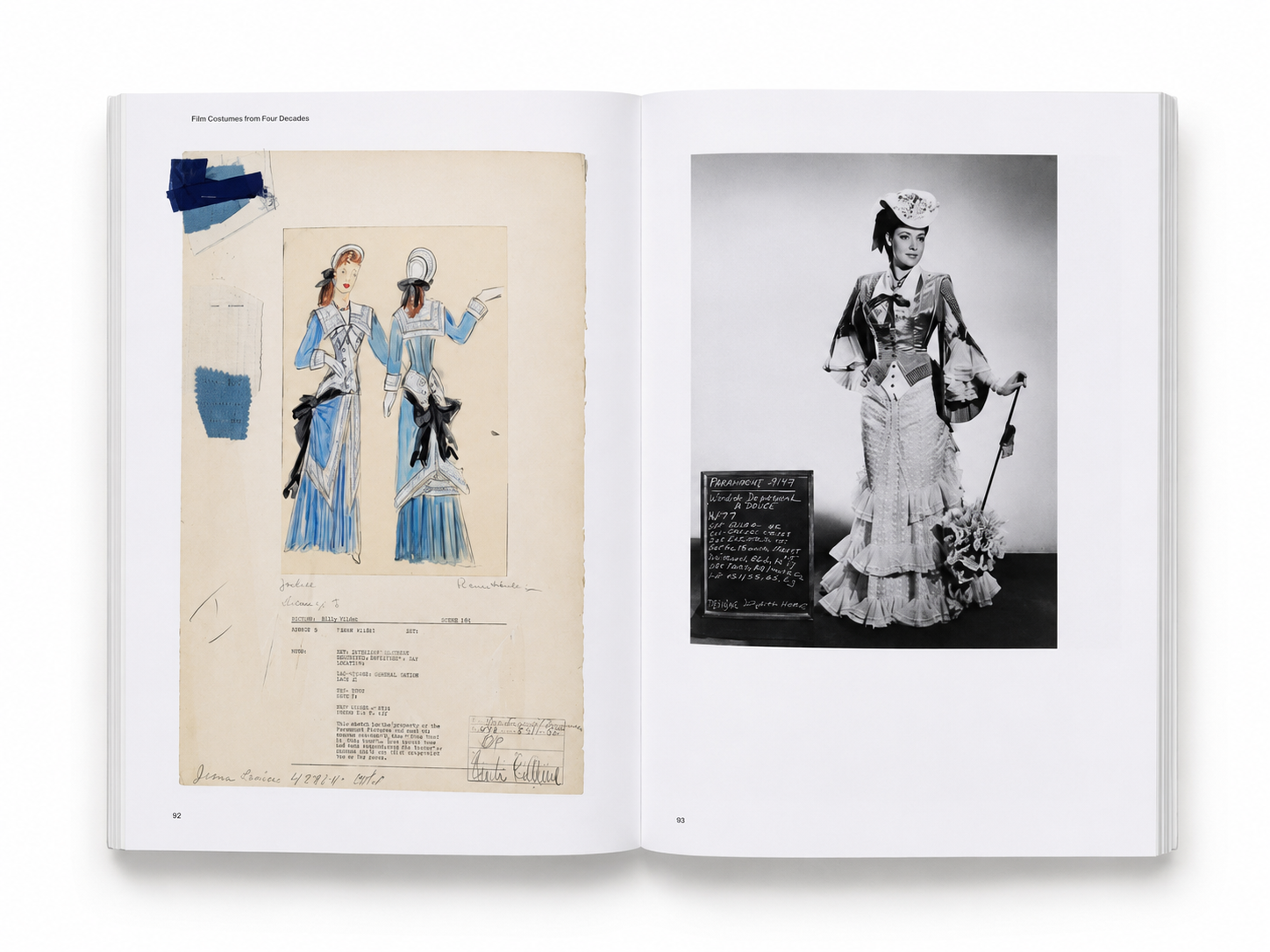
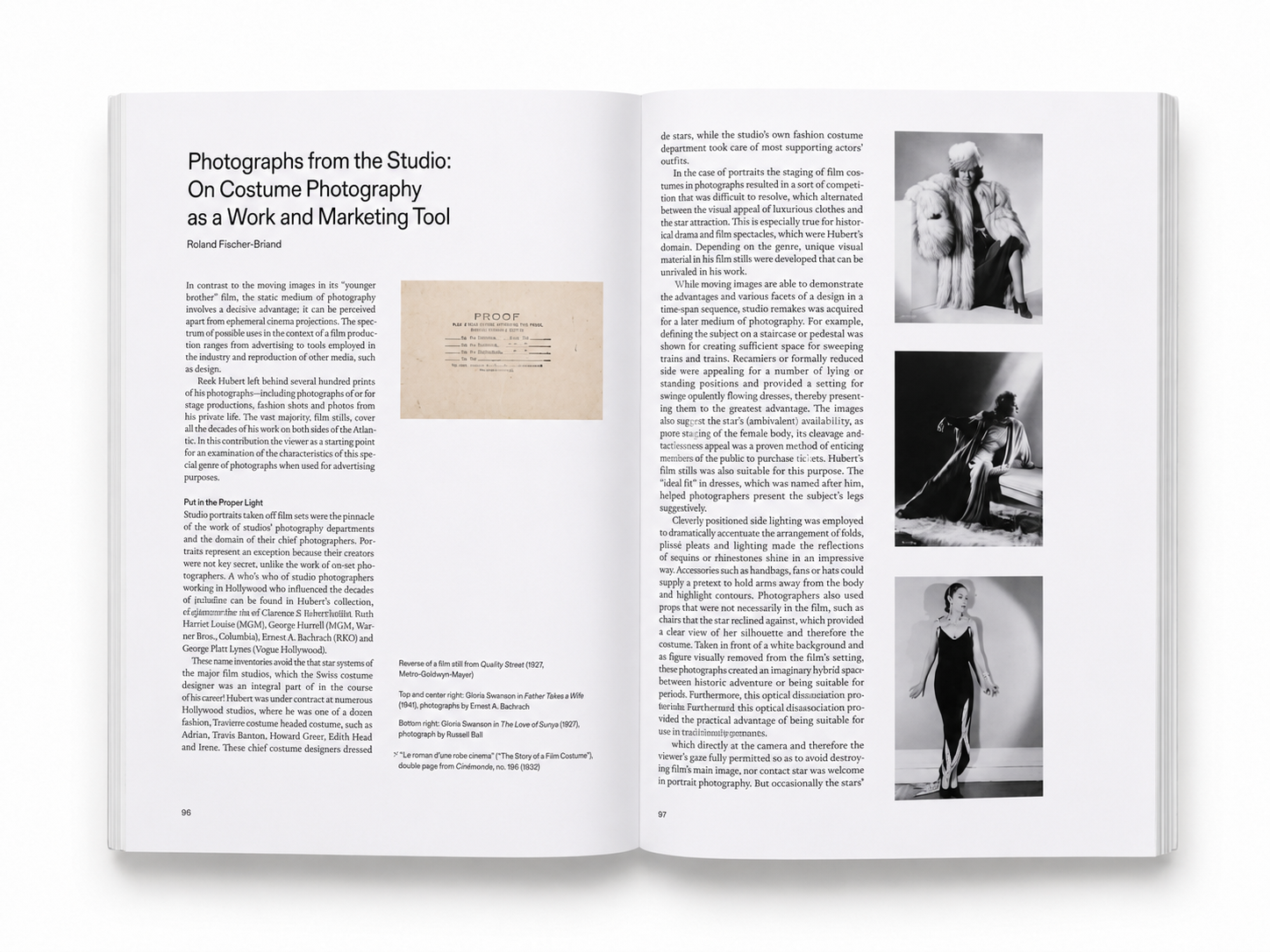
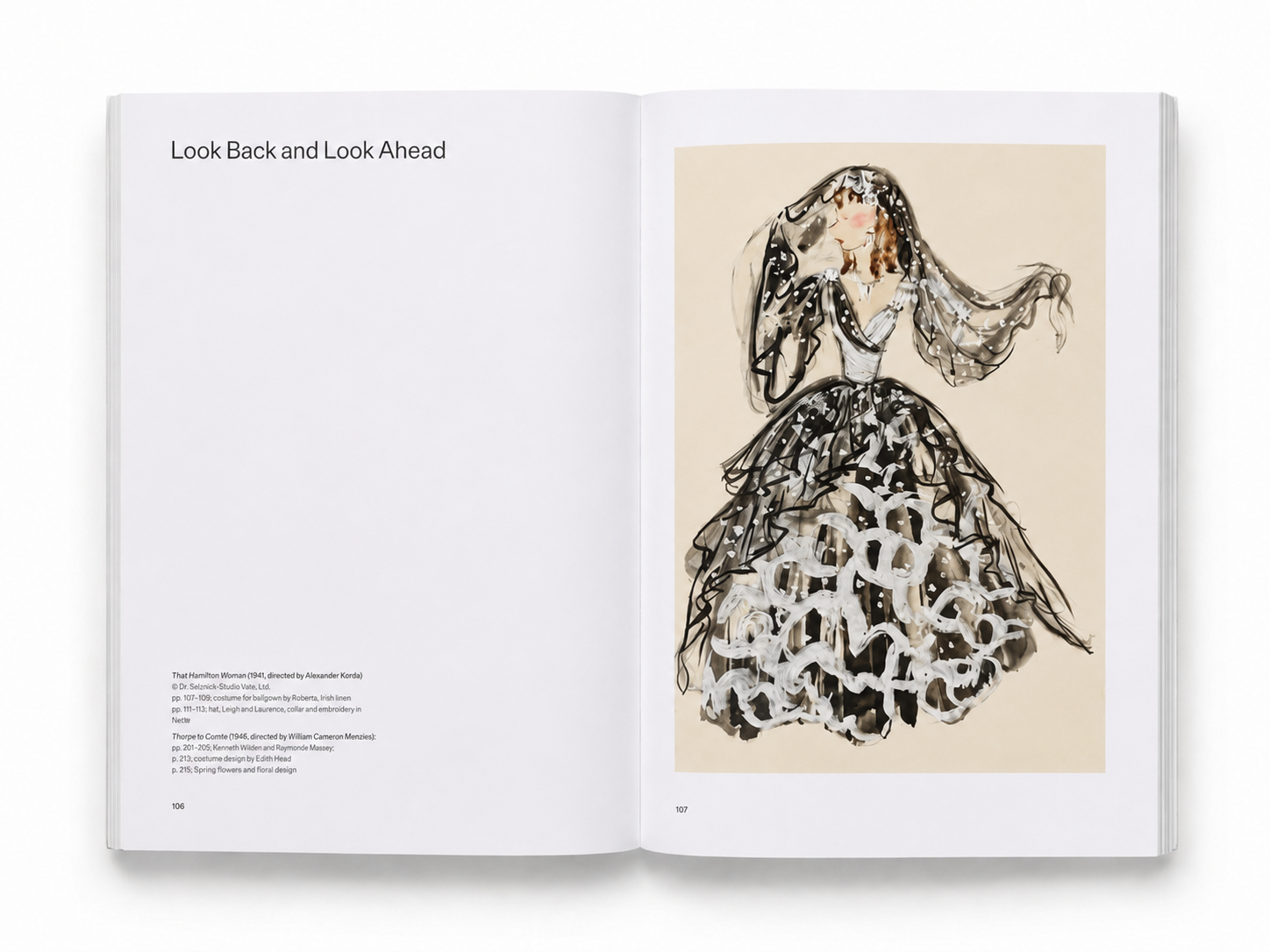
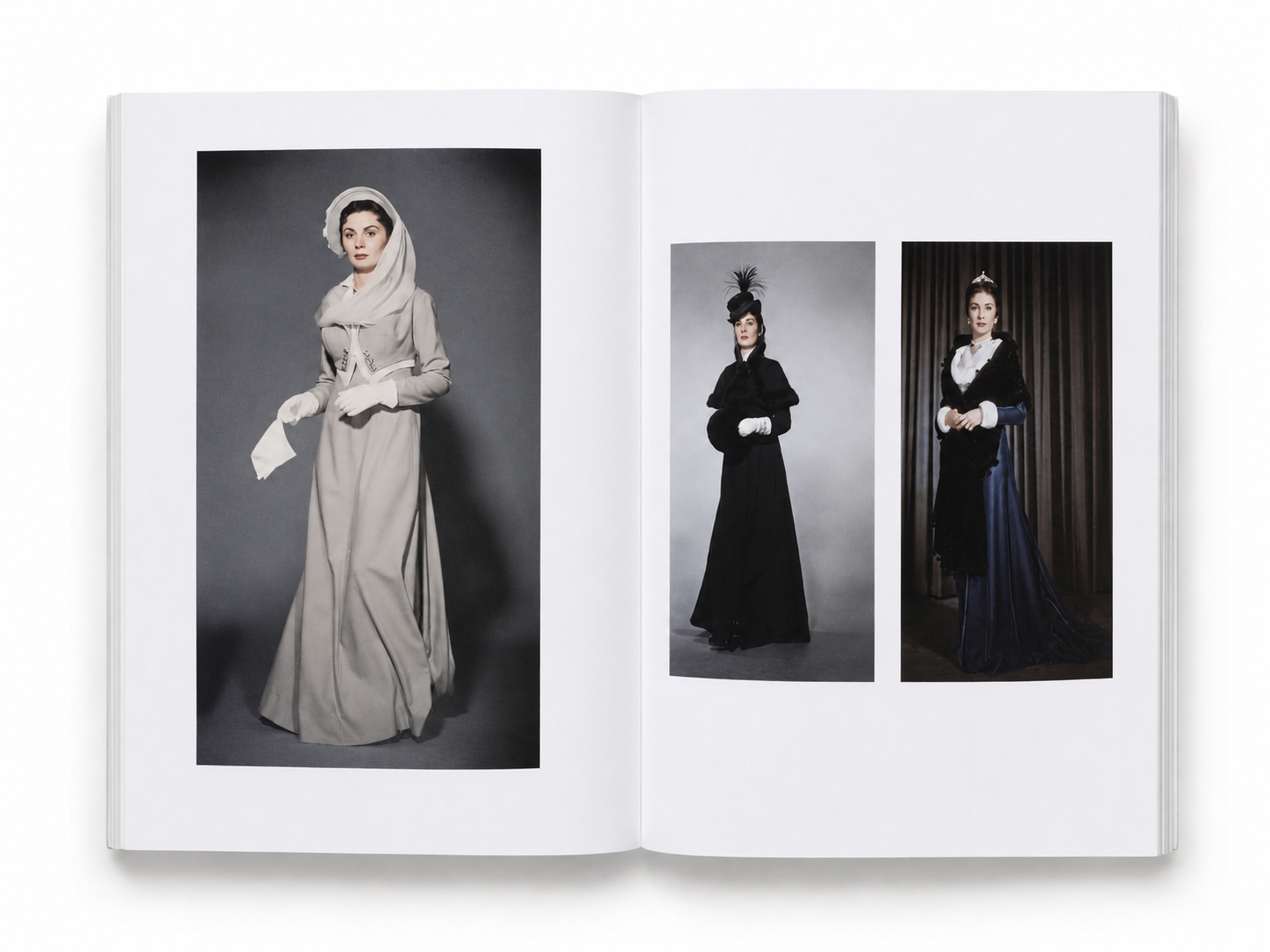
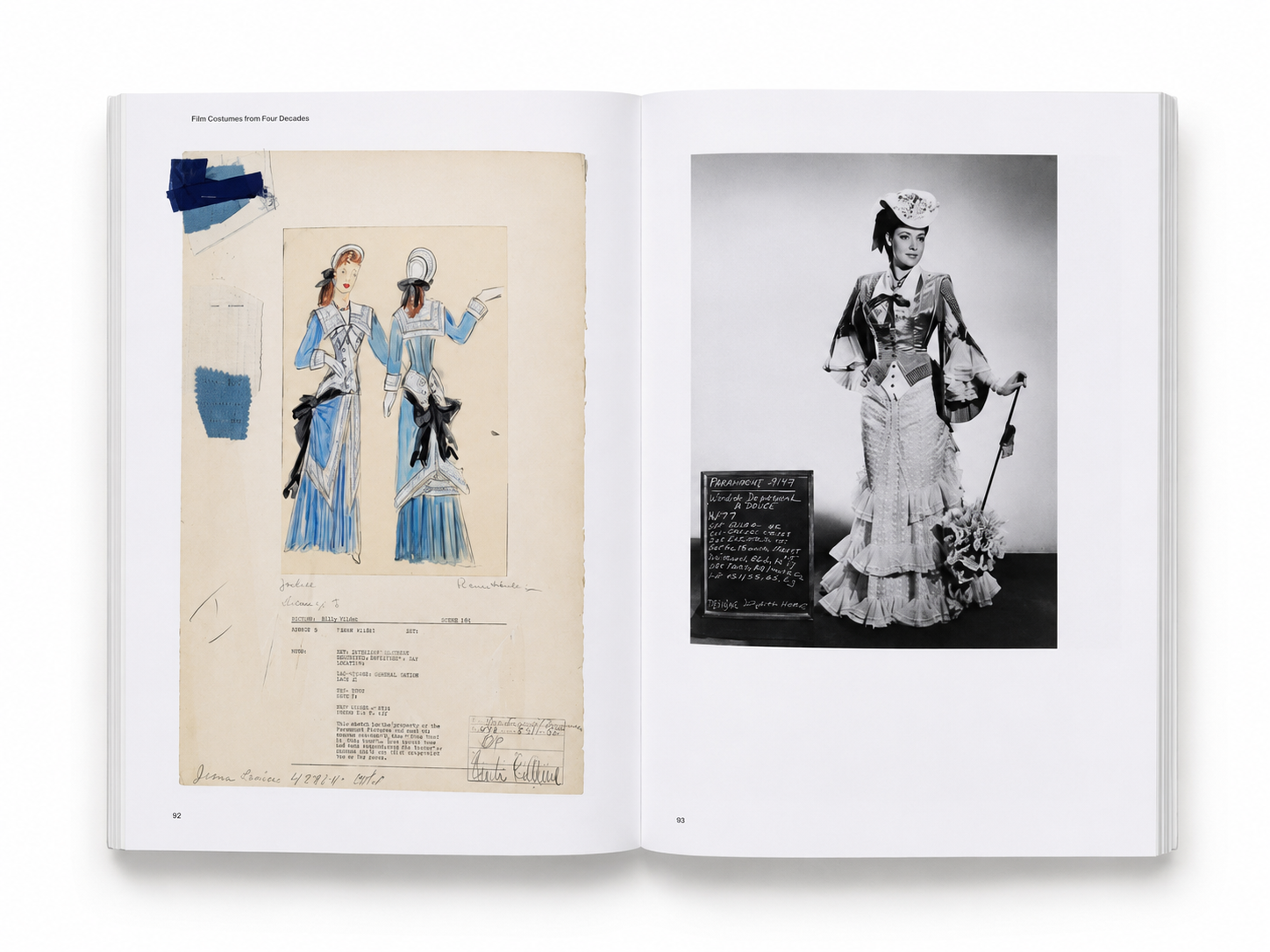
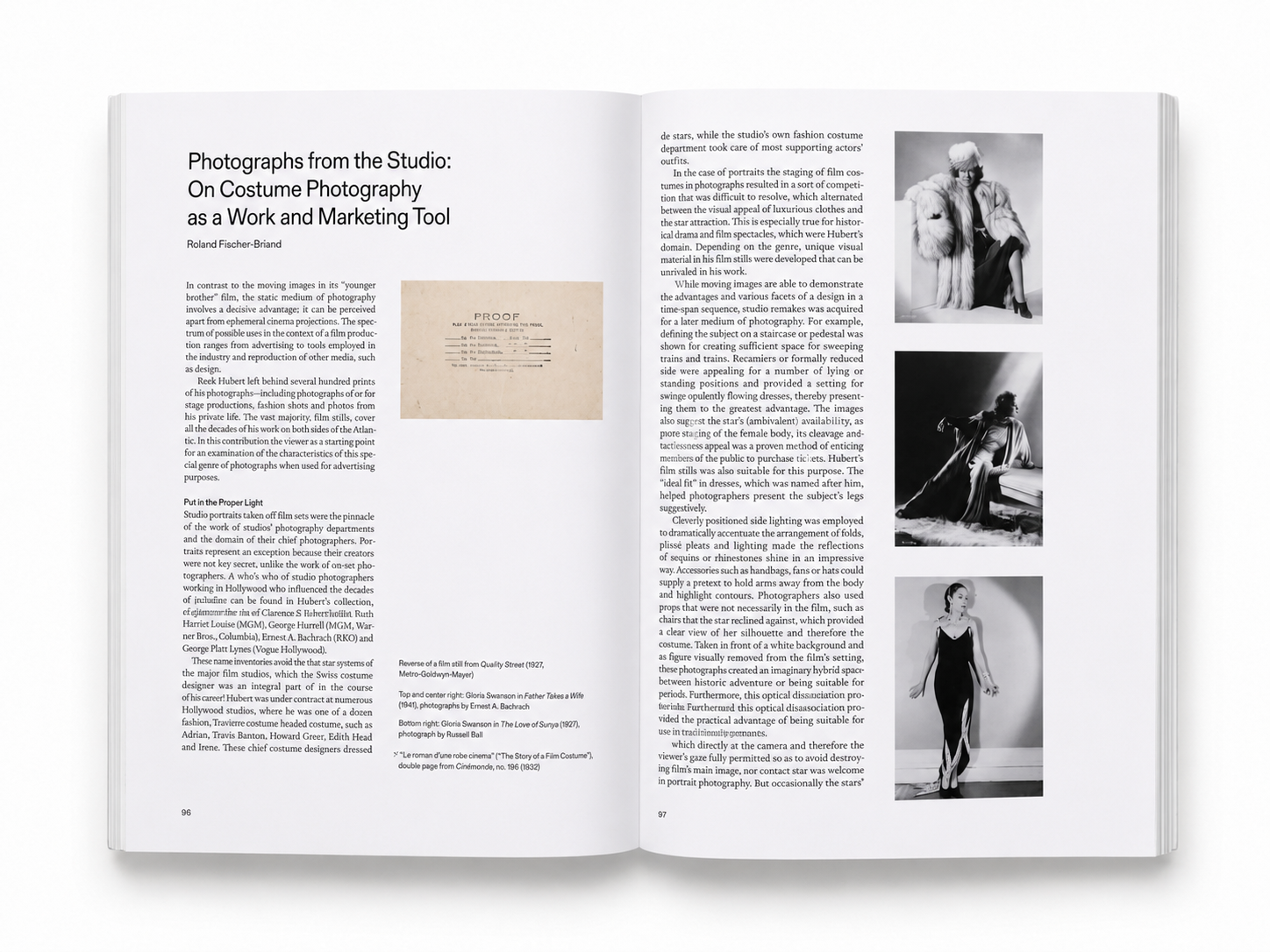
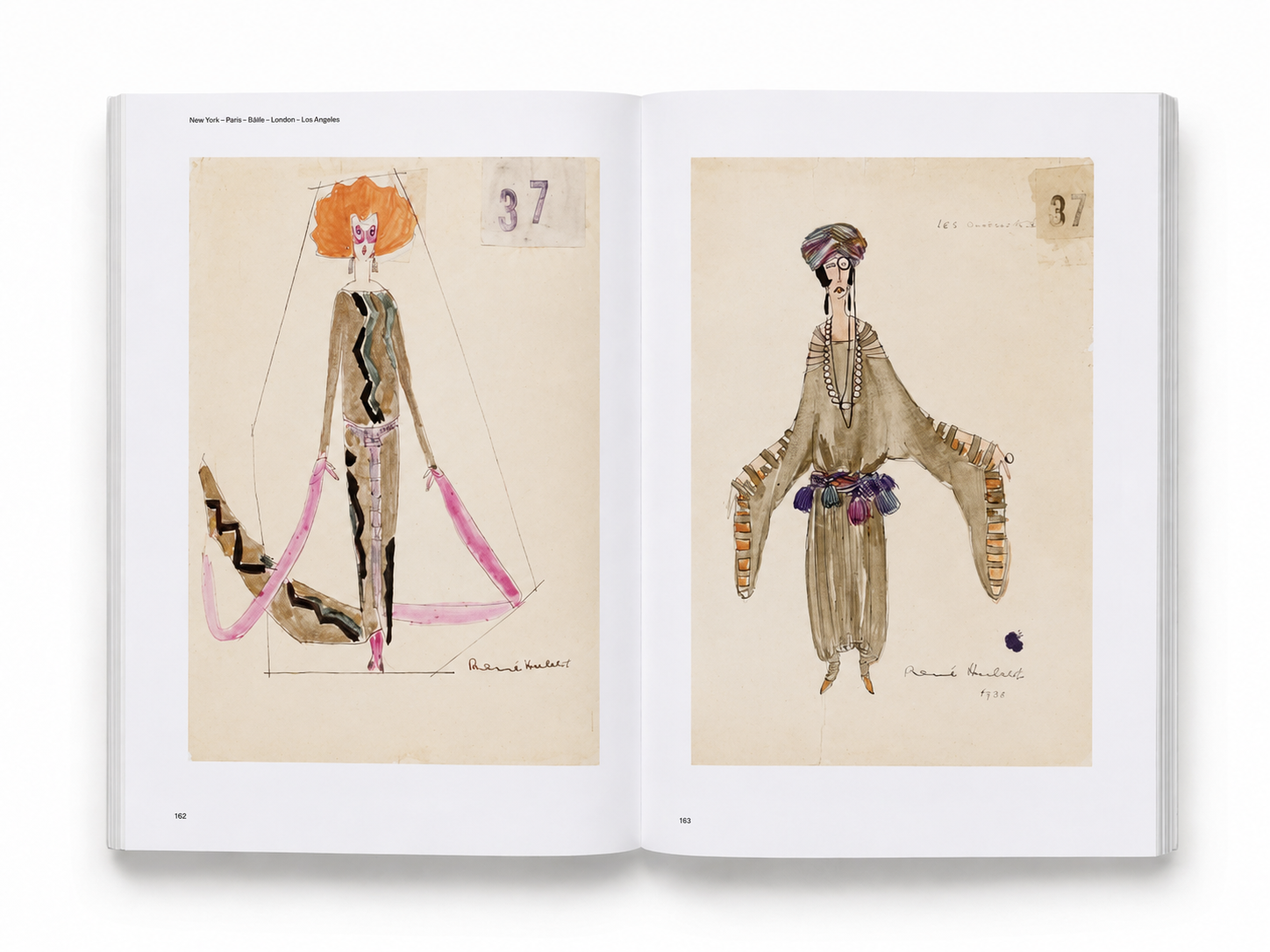
René Hubert: The Man Who Dressed Filmstars and Airplanes brings together a career that spanned film, fashion, theatre, textiles, and aviation. The book contains 275 costume sketches, film stills, working photographs, stage images, and Swissair design materials, alongside excerpts from Hubert’s unpublished memoir. These archives reveal how a garment progressed from lines on paper to an image on screen, while also showing that airline uniforms and aircraft cabins were not merely footnotes in corporate history, but important sites of twentieth-century design culture.
The book also carries a note of regret that feels almost cinematic. After Hubert’s death in 1976, his manuscripts, photographs, and documents nearly ended up being discarded as ordinary belongings. Fortunately, they were preserved in time, making today’s exhibitions and research possible. Stars remain forever in the spotlight, while those responsible for shaping their images may disappear after the end credits. Turning through this book offers a renewed understanding of style: it does not exist only in a classic gown or a captivating shade of blue. It lies in how precisely a designer understands the desires of an era, and then arranges the entrance of a person, a brand, or even an airplane.
Details
Author︰Andres Janser (Editor)
Publisher︰Lars Muller Publishers
Publication Year︰2022
Dimensions︰25.4 × 19 cm
Binding︰Paperback