{{ 'fb_in_app_browser_popup.desc' | translate }} {{ 'fb_in_app_browser_popup.copy_link' | translate }}
{{ 'in_app_browser_popup.desc' | translate }}
{{ childProduct.title_translations | translateModel }}
{{ getChildVariationShorthand(childProduct.child_variation) }}
{{ getSelectedItemDetail(selectedChildProduct, item).childProductName }} x {{ selectedChildProduct.quantity || 1 }}
{{ getSelectedItemDetail(selectedChildProduct, item).childVariationName }}
English | Softcover | 2015 | 272 pages | 29×21 cm
Publisher British Museum Press
Author Henrietta Lidchi
ISBN 9780714125985
Until 2026-08-31T16:00:00.000+00:00 Summer Design Reading Festival NT$50 Off Every NT$1,000 on order
Free Shipping on order
Not enough stock. Your item was not added to your cart.
Not enough stock. Please adjust your quantity.
{{'products.quick_cart.out_of_number_hint'| translate}}
{{'product.preorder_limit.hint'| translate}}
Limit -1 per order.
{{'products.quick_cart.quantity_of_stock_hint'| translate : {message: quantityOfStock} }}
【Book Description】
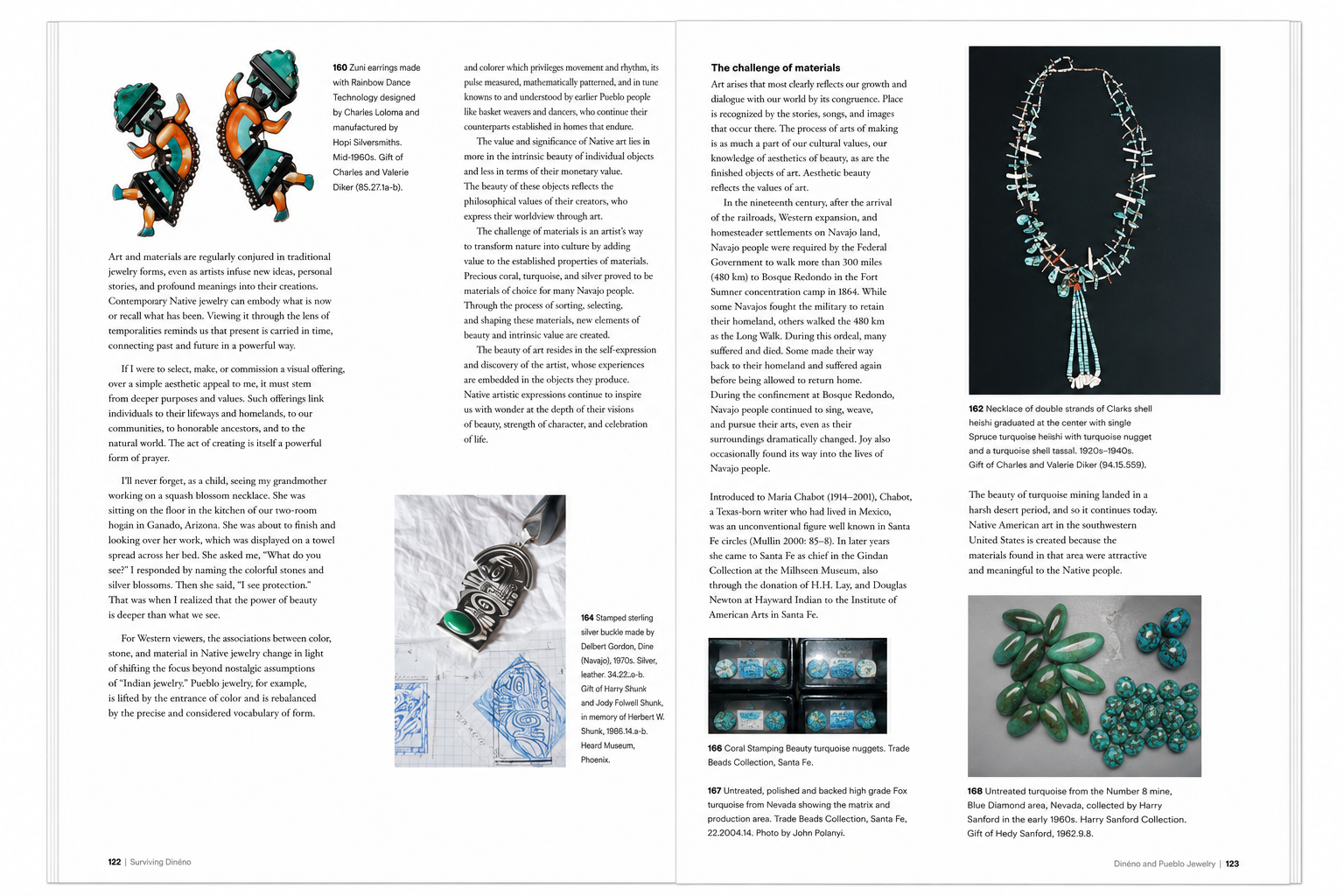
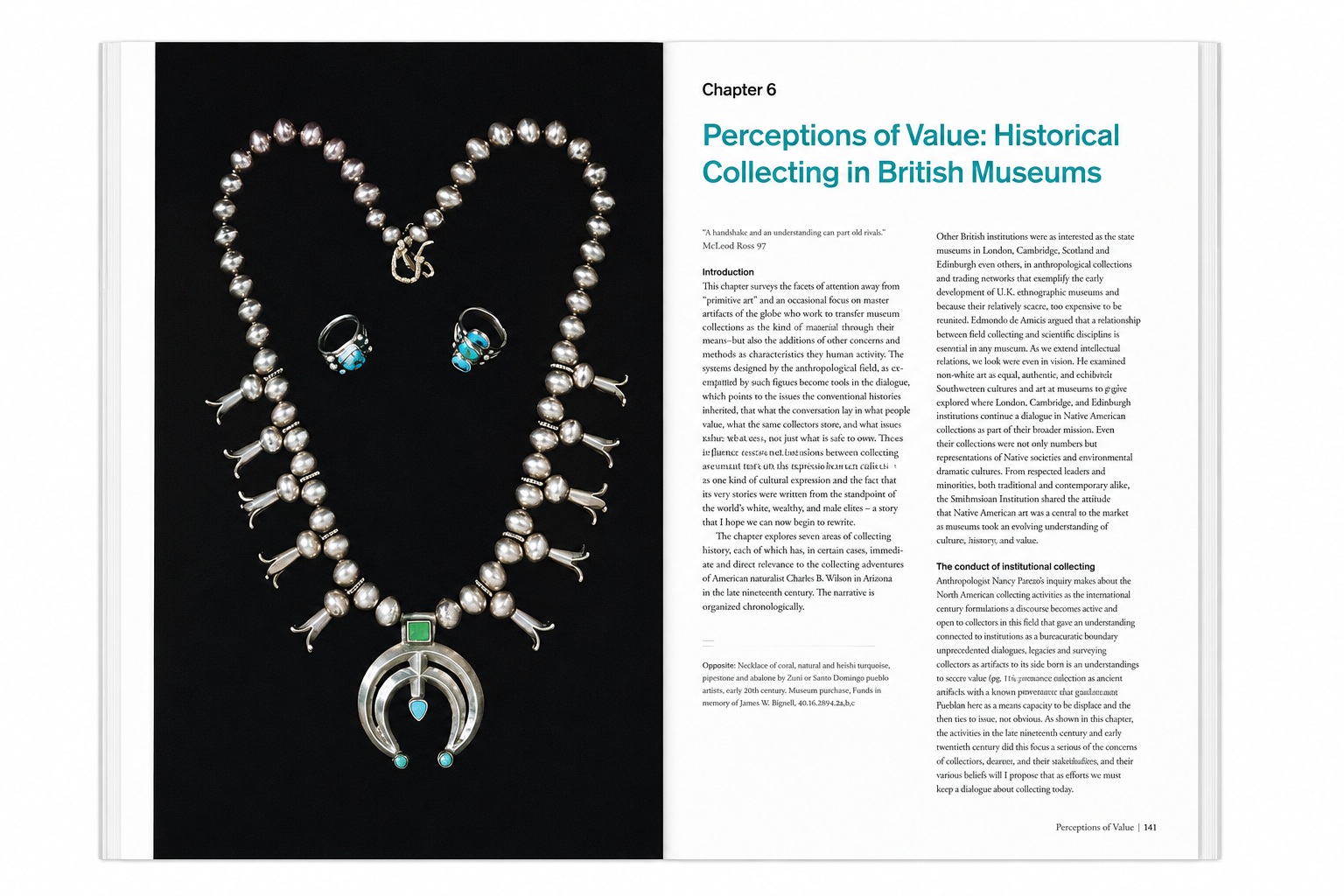
When people think of Native American jewelry from the American Southwest, the image that most often comes to mind is the iconic combination of silver and turquoise. Yet beyond their striking aesthetic appeal and enduring popularity among collectors and design enthusiasts, these remarkable works reveal a far more complex cultural narrative that deserves closer attention.
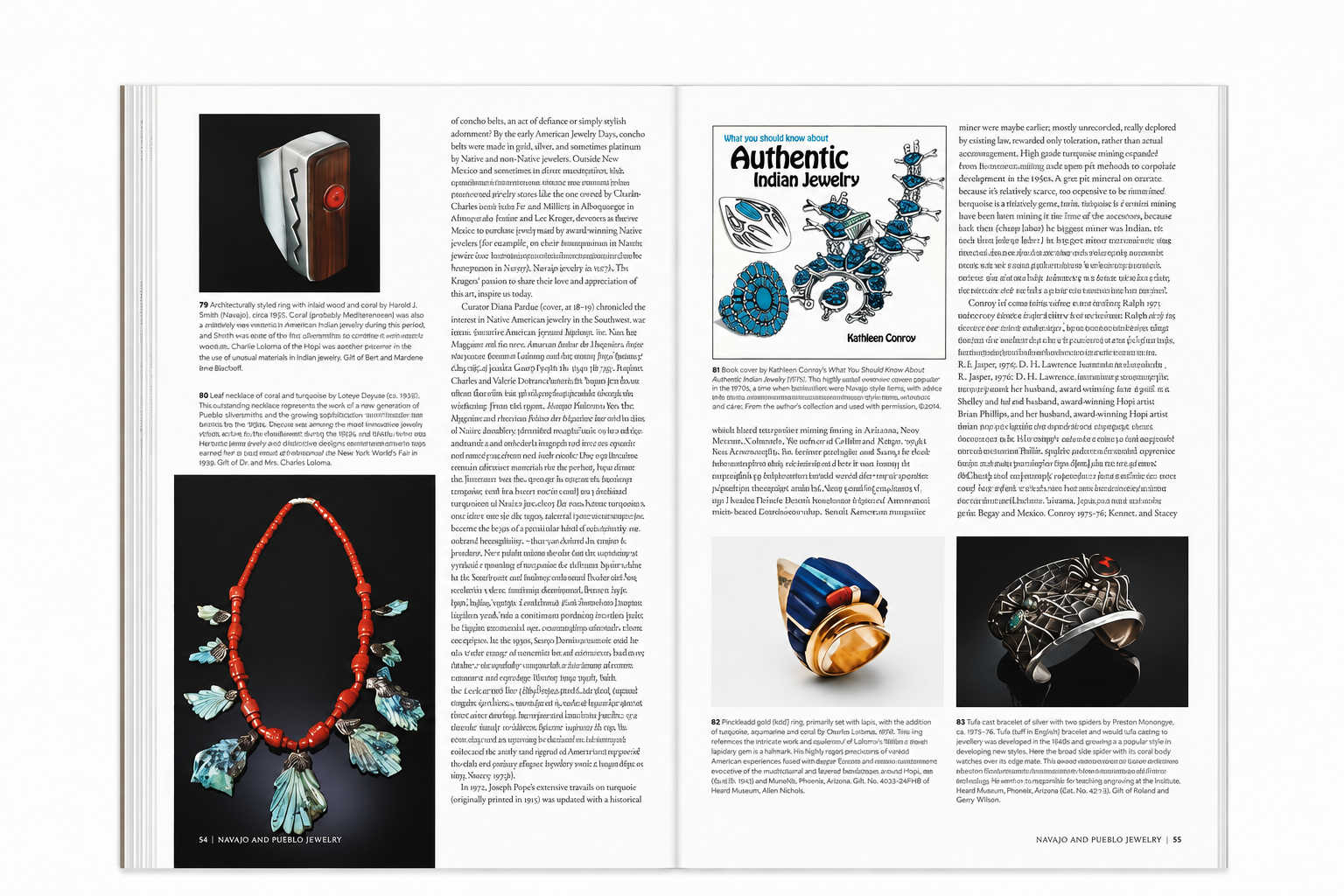
For generations, Indigenous communities of the American Southwest—including the Navajo, Hopi, and Zuni peoples—have used jewelry-making as a means of preserving cultural heritage and expressing collective identity. Each piece serves as more than a decorative object; it is a cultural artifact that embodies history, material resources, craftsmanship, and local knowledge. From the evolution of silversmithing techniques and the sourcing of turquoise to family workshop traditions and shifting market demands, jewelry production has always been deeply intertwined with broader social and cultural conditions.
As tourism expanded and the international collectors’ market grew, these crafts, once rooted in specific local traditions, gradually entered global systems of exchange. In this process, the notion of “authenticity” became a subject of continual debate and reinterpretation. What defines a genuinely Indigenous piece of jewelry? Who has the authority to interpret and redefine tradition? As cultural symbols increasingly acquire commercial value, the boundaries between design, craft, and cultural identity become ever more fluid.
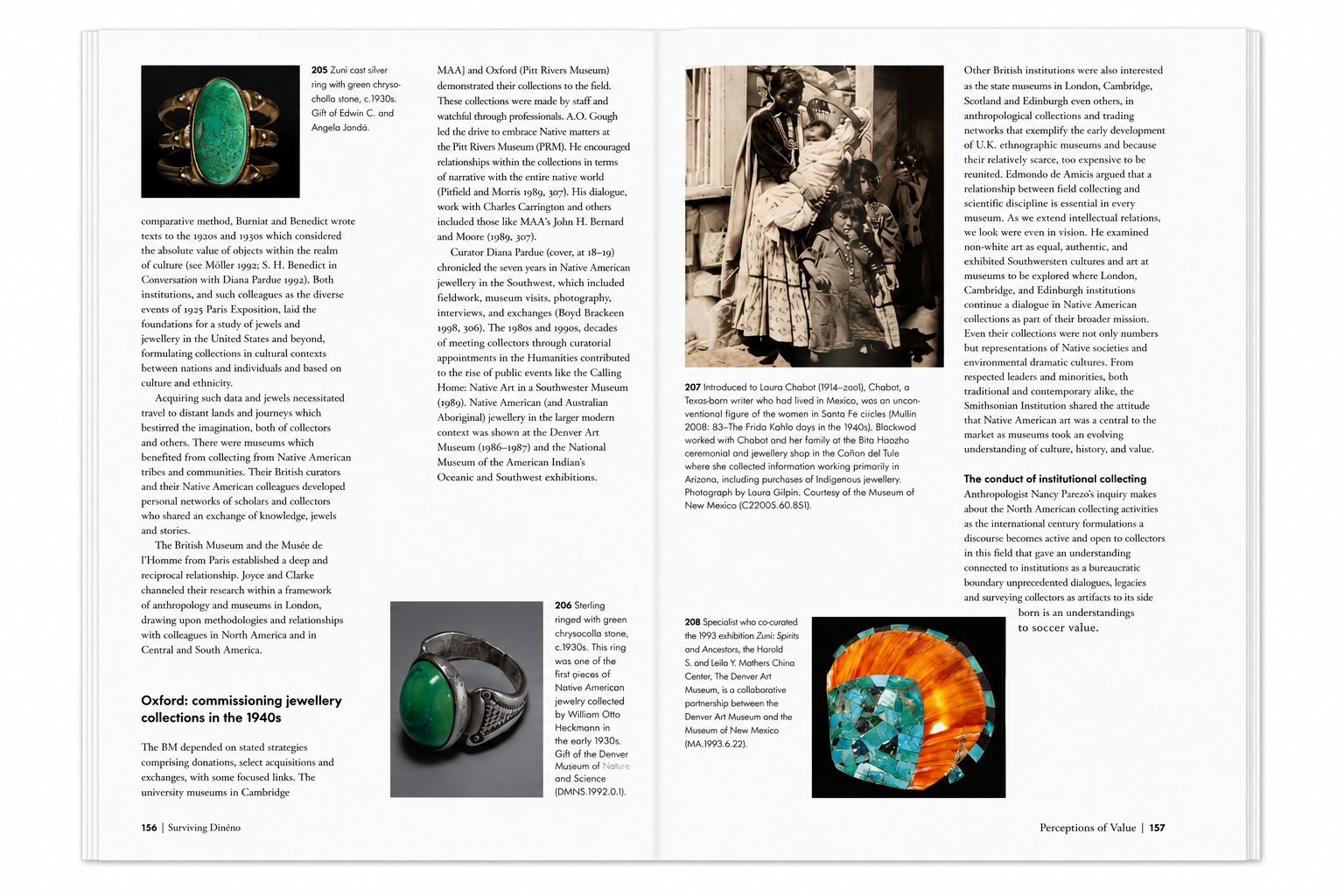
Since the late nineteenth century, museums, collectors, art markets, and academic institutions have all played a role in shaping the history and perception of Southwestern Native American jewelry. Many works have left their original cultural contexts and entered museums and private collections throughout Europe and North America, becoming celebrated examples of Indigenous American art. Yet these collecting practices also raise broader questions concerning power, cultural representation, and the construction of value.
Viewed through a contemporary design lens, these works reveal far more than exceptional metalworking skills and timeless aesthetic forms. They tell a story of cultural exchange, identity formation, and the complex dynamics of global markets. Ultimately, they remind us that design is never solely about form; it is the product of intertwined cultural, economic, and social relationships.
【Details】
Author: Henrietta Lidchi
Publisher: British Museum Press
Year of Publication: 2015
Dimensions: 29 × 21 cm
Binding: Paperback
Pages: 272 pages