Description
Unicorns have never existed, yet for thousands of years humanity has continued to leave traces suggesting that they did. From ancient natural histories, medieval religious imagery, courtly collections, and tapestries to modern painting and contemporary art, this imaginary creature has been depicted again and again, taking on different meanings with each era. Unicorn: The Mythical Beast in Art follows this long visual history to ask a seemingly simple yet deeply fascinating question: why has a creature that never truly existed survived for so long in human culture?
The book originates from a major exhibition jointly organized by Museum Barberini and the Musée de Cluny in Paris. After years of research and coordination with lenders, the curatorial team brought together around 150 artworks and historical objects from important museums and collections around the world, spanning several millennia. Paintings, prints, illuminated manuscripts, sculptures, tapestries, decorative arts, and objects from cabinets of curiosities are placed in dialogue, allowing unicorns once scattered across different countries and collections to be compared with one another on an unprecedented scale. For this reason, the exhibition catalogue is more than a record of the works on display; it preserves the results of an international art-historical undertaking that would be extraordinarily difficult to recreate.
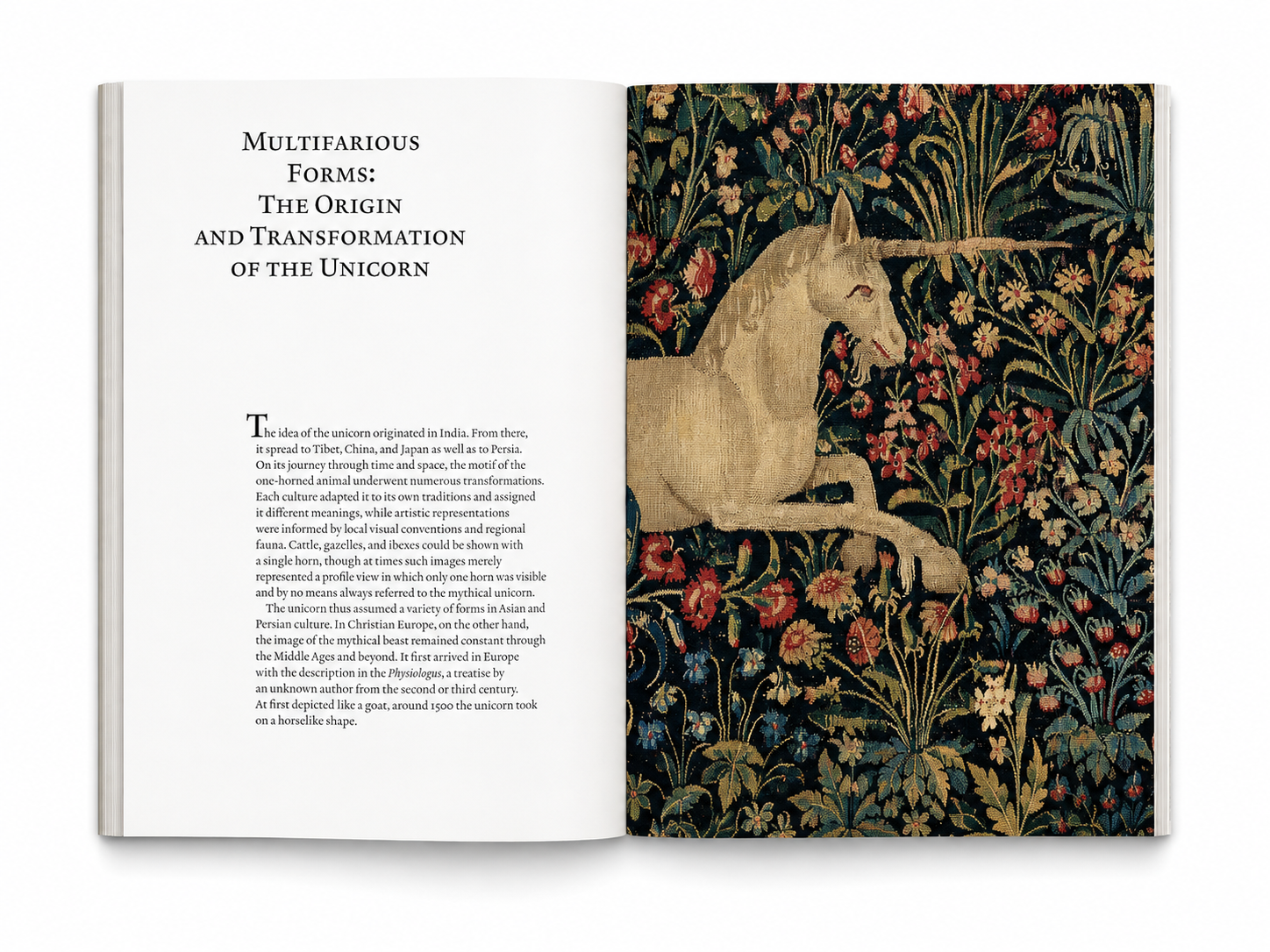
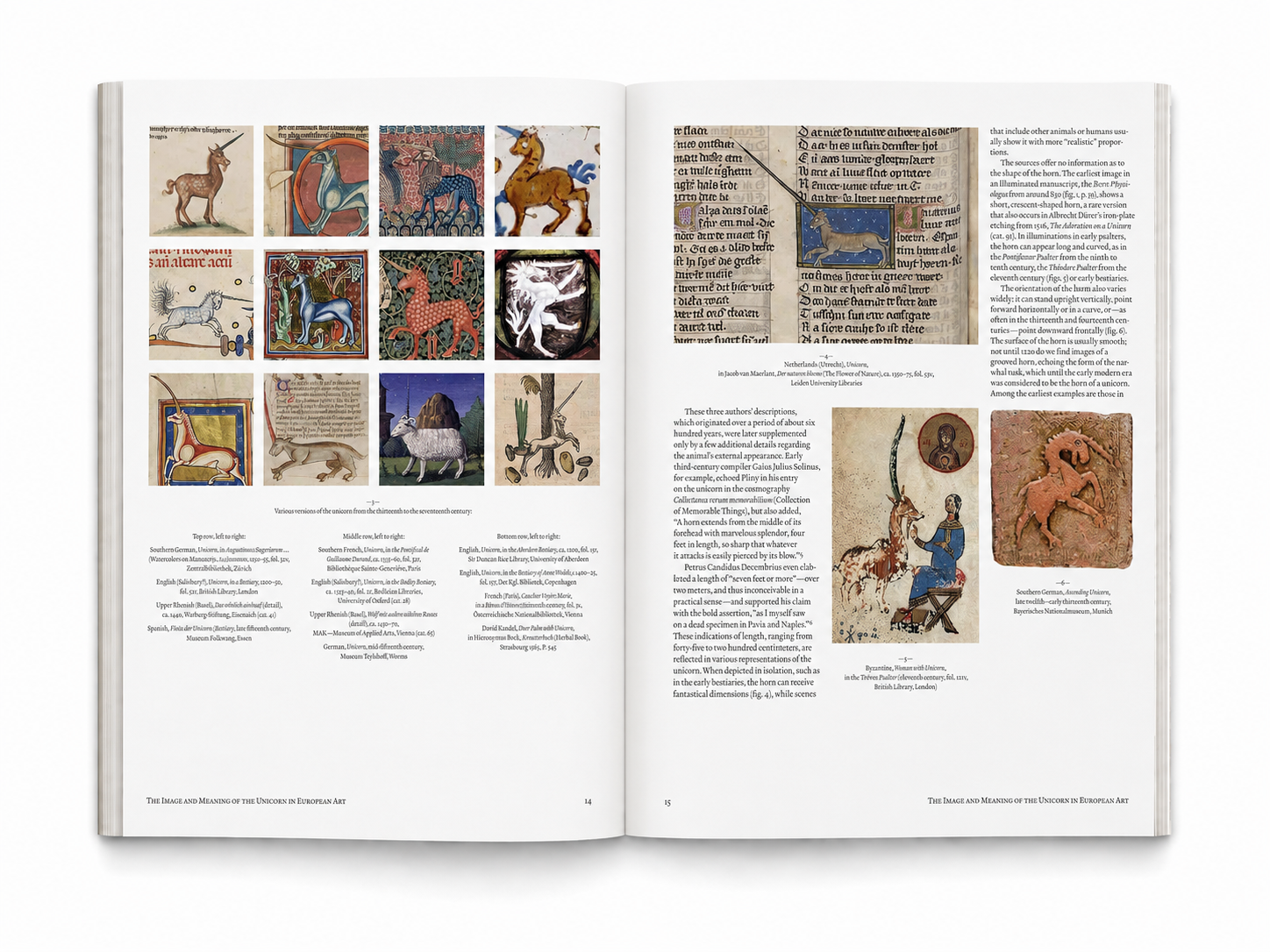
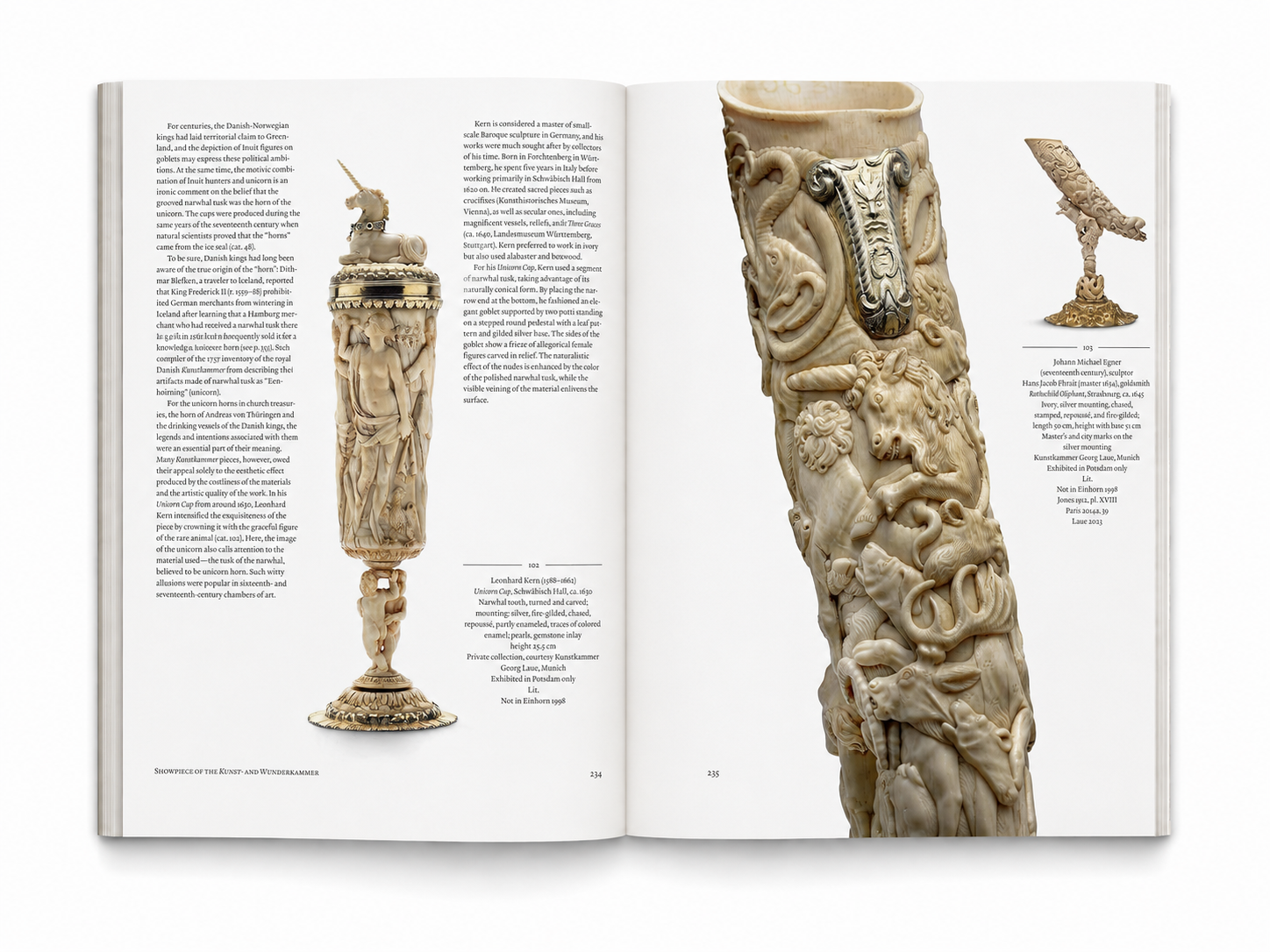
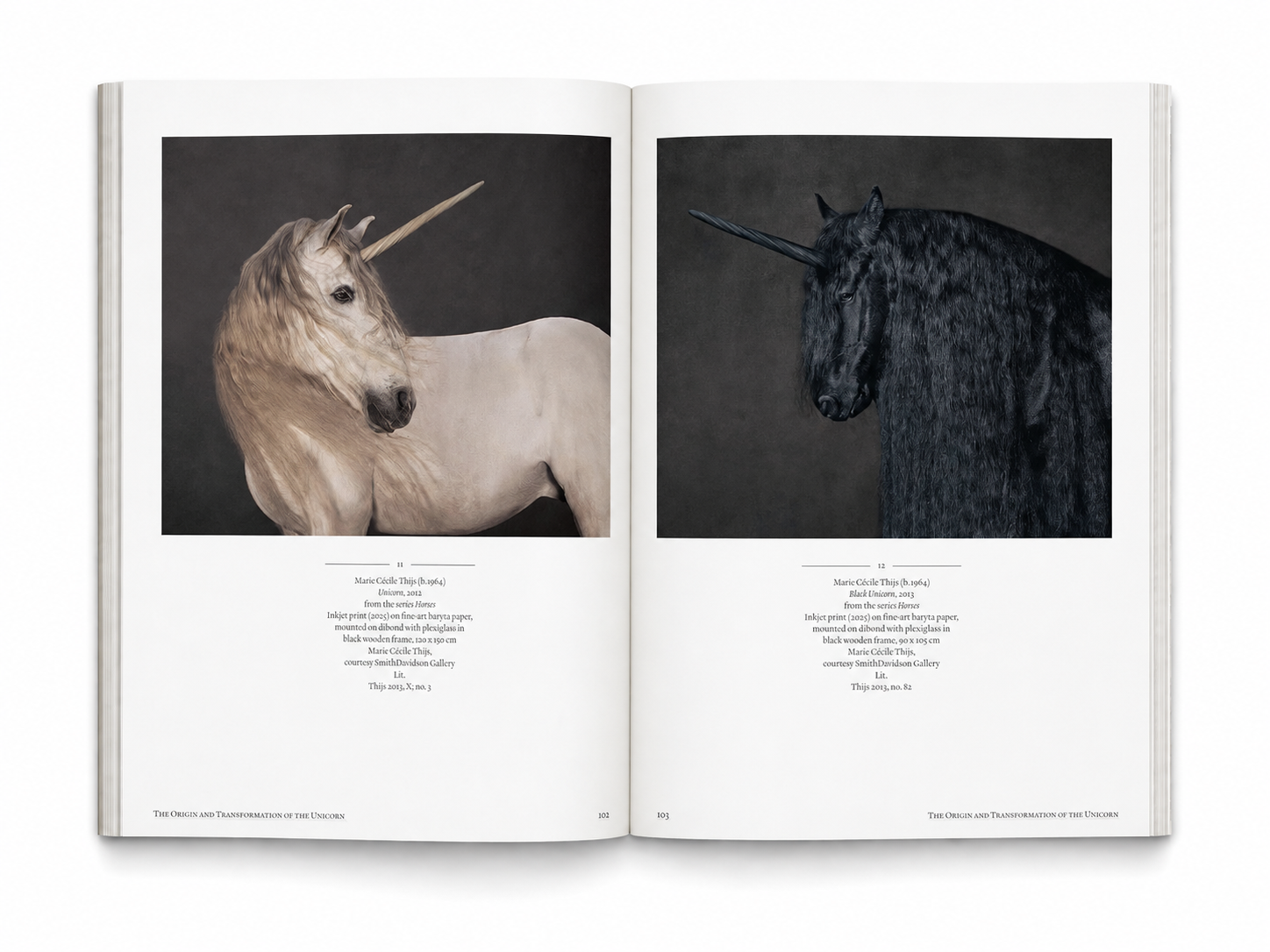
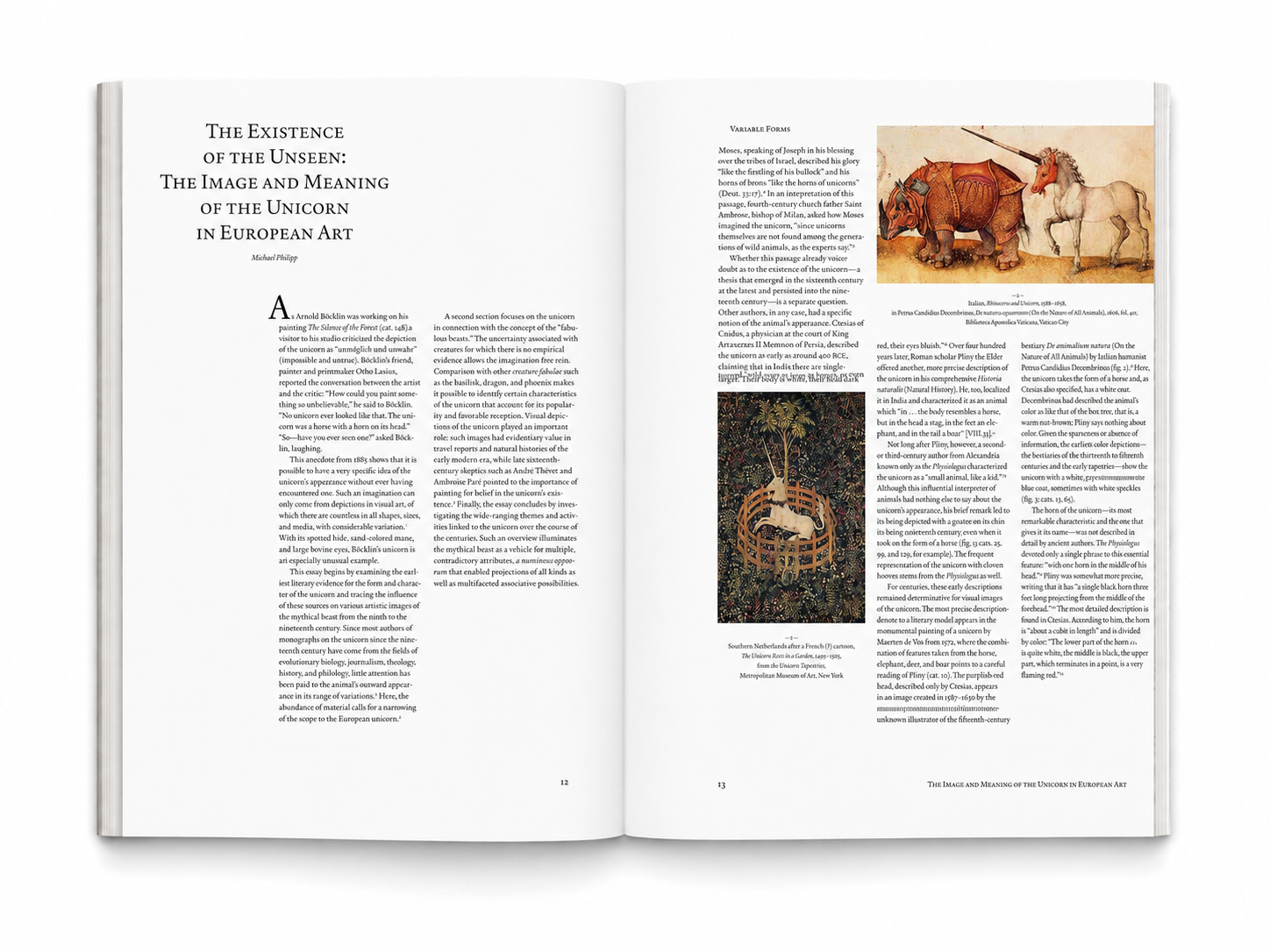
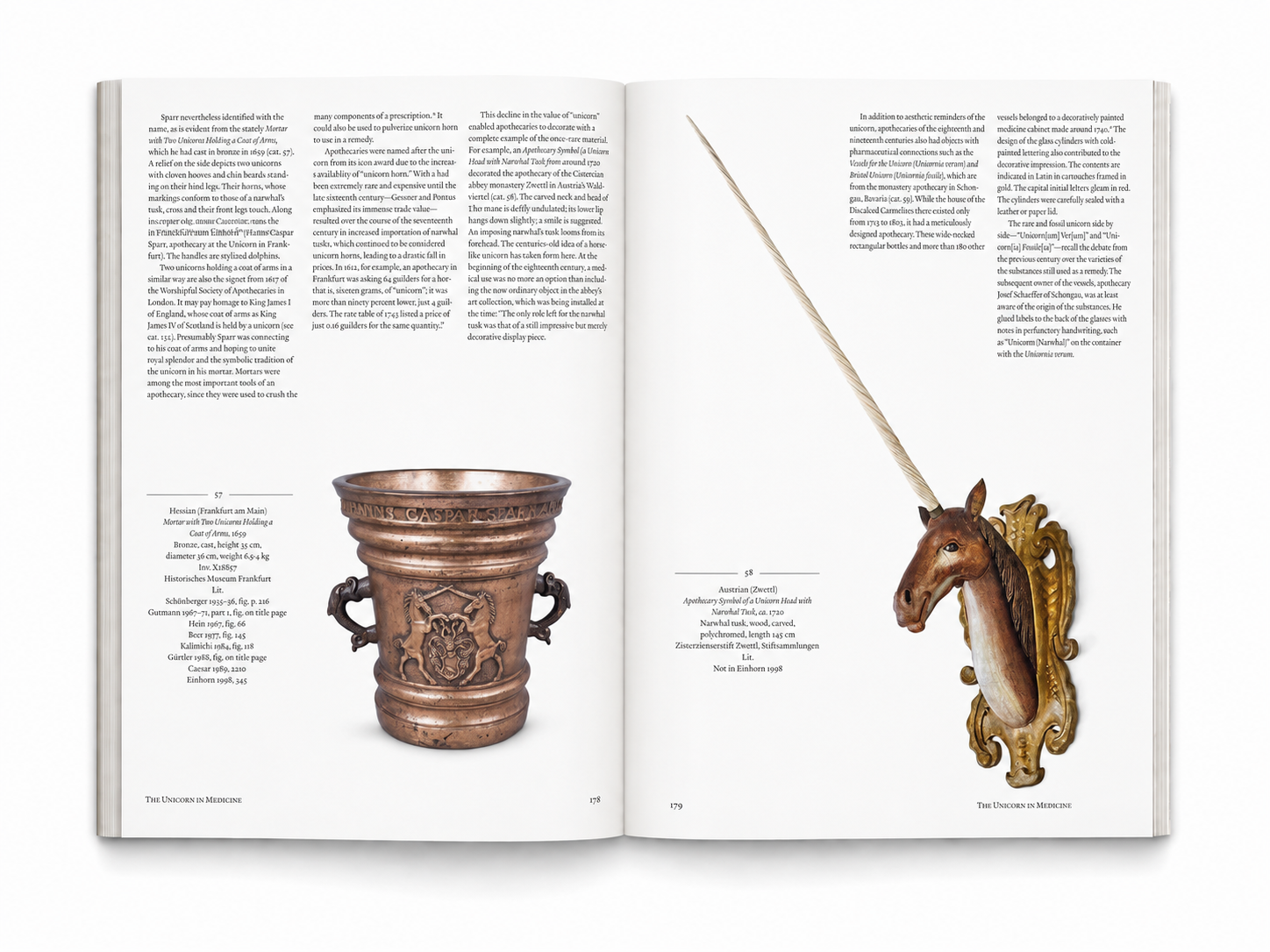
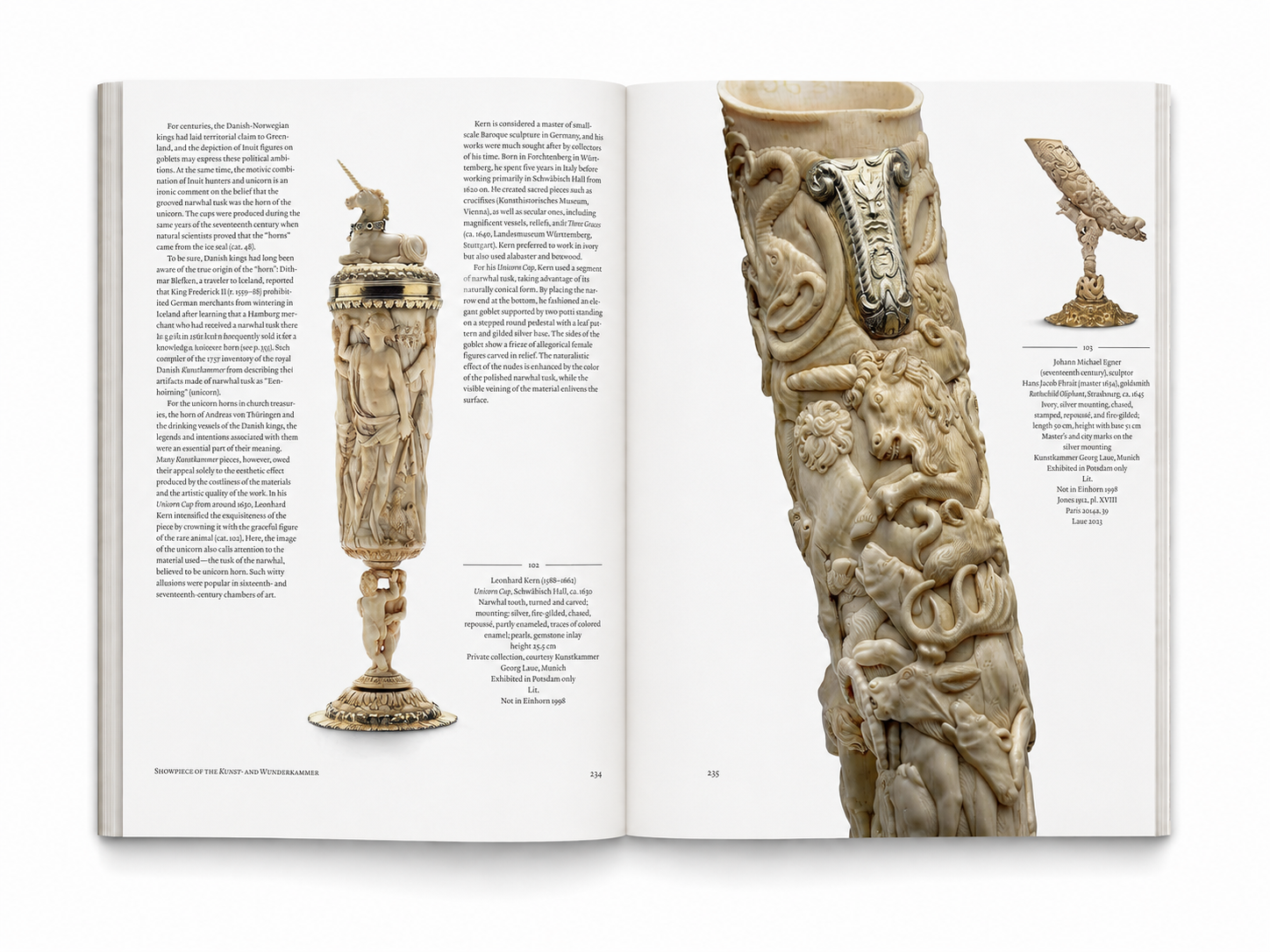
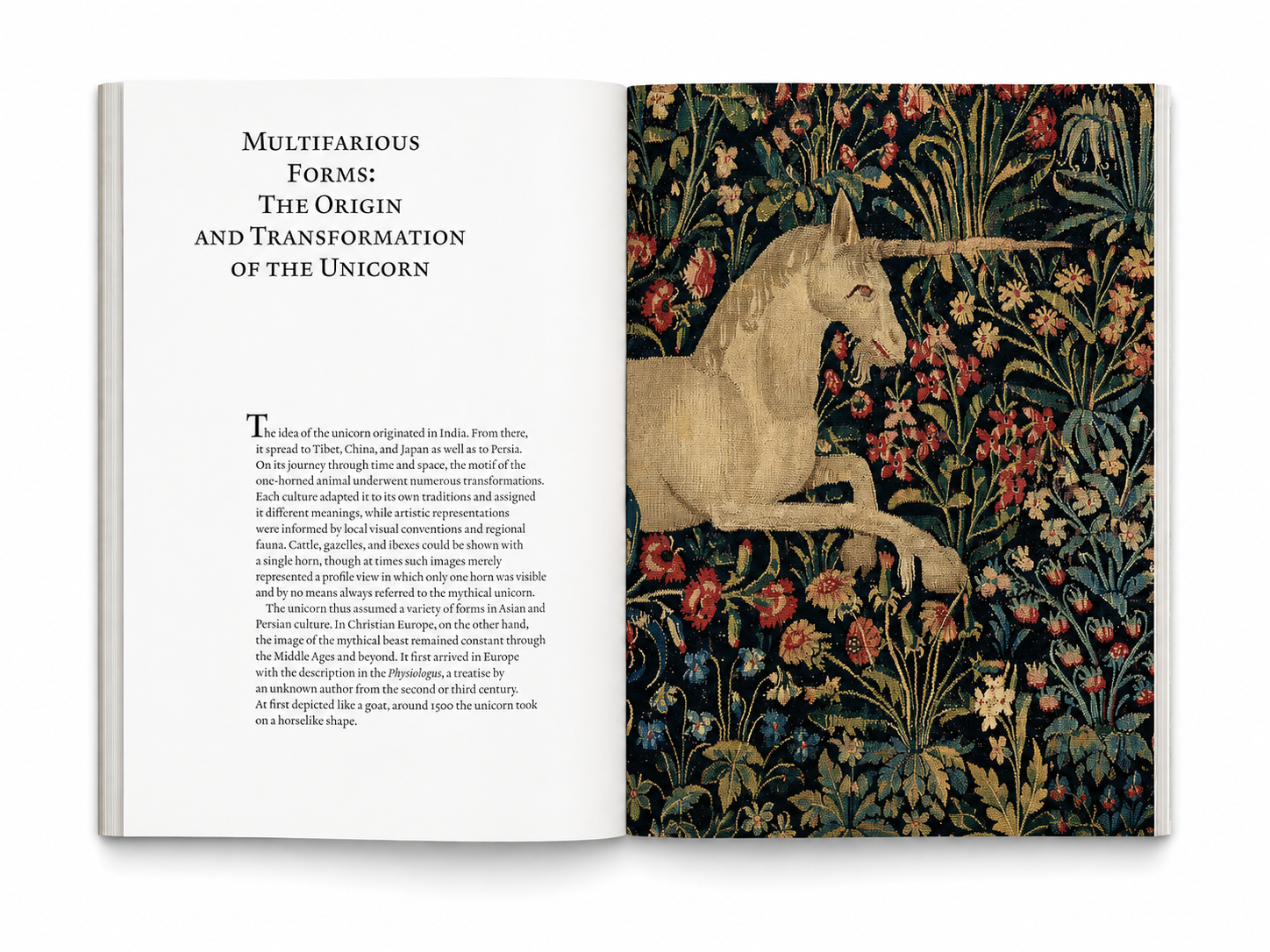
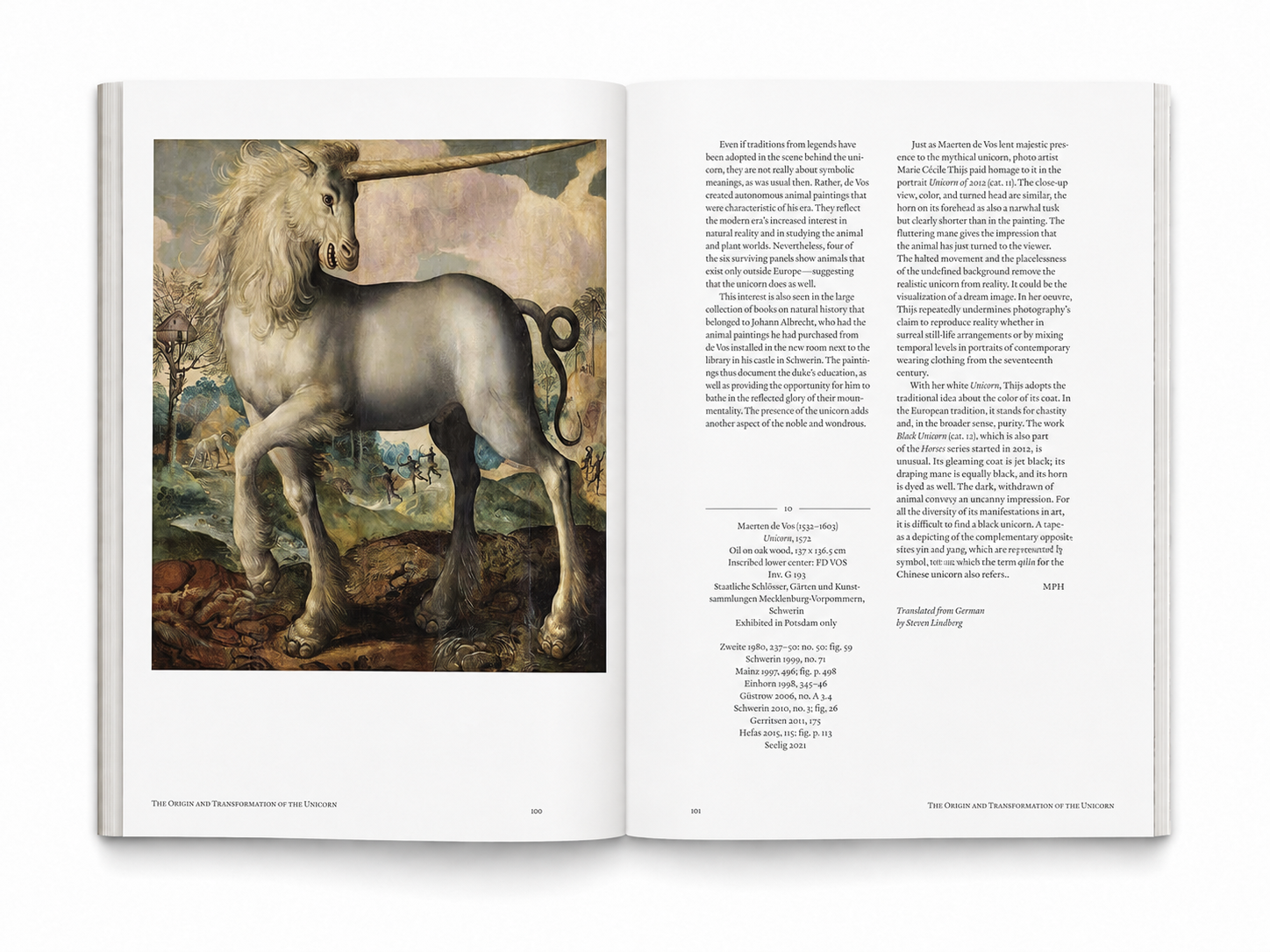
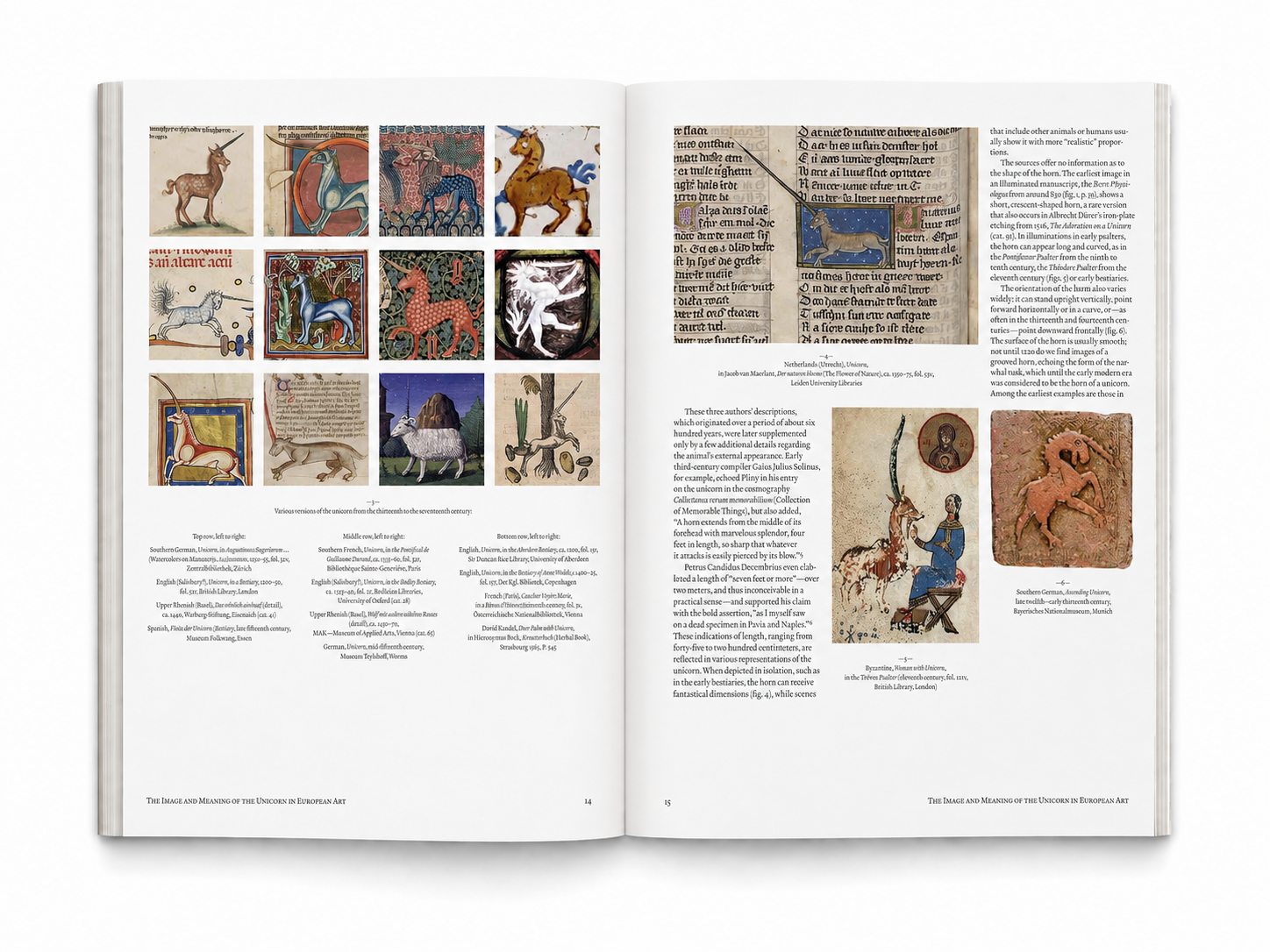
The unicorn familiar to us today is usually imagined as a white horse with a spiraling horn on its forehead, but this image emerged only after a long process of transformation. At different times, people envisioned the creature as resembling a goat, antelope, deer, or other hybrid animal, while travelers and naturalists seriously debated where it might actually live. Even the “unicorn horns” treasured in churches and royal collections were once believed to possess the power to detect poison and cure illness, before they were gradually identified as the tusks of narwhals. Myth, religion, natural knowledge, and science remained intertwined around this legendary creature for centuries.
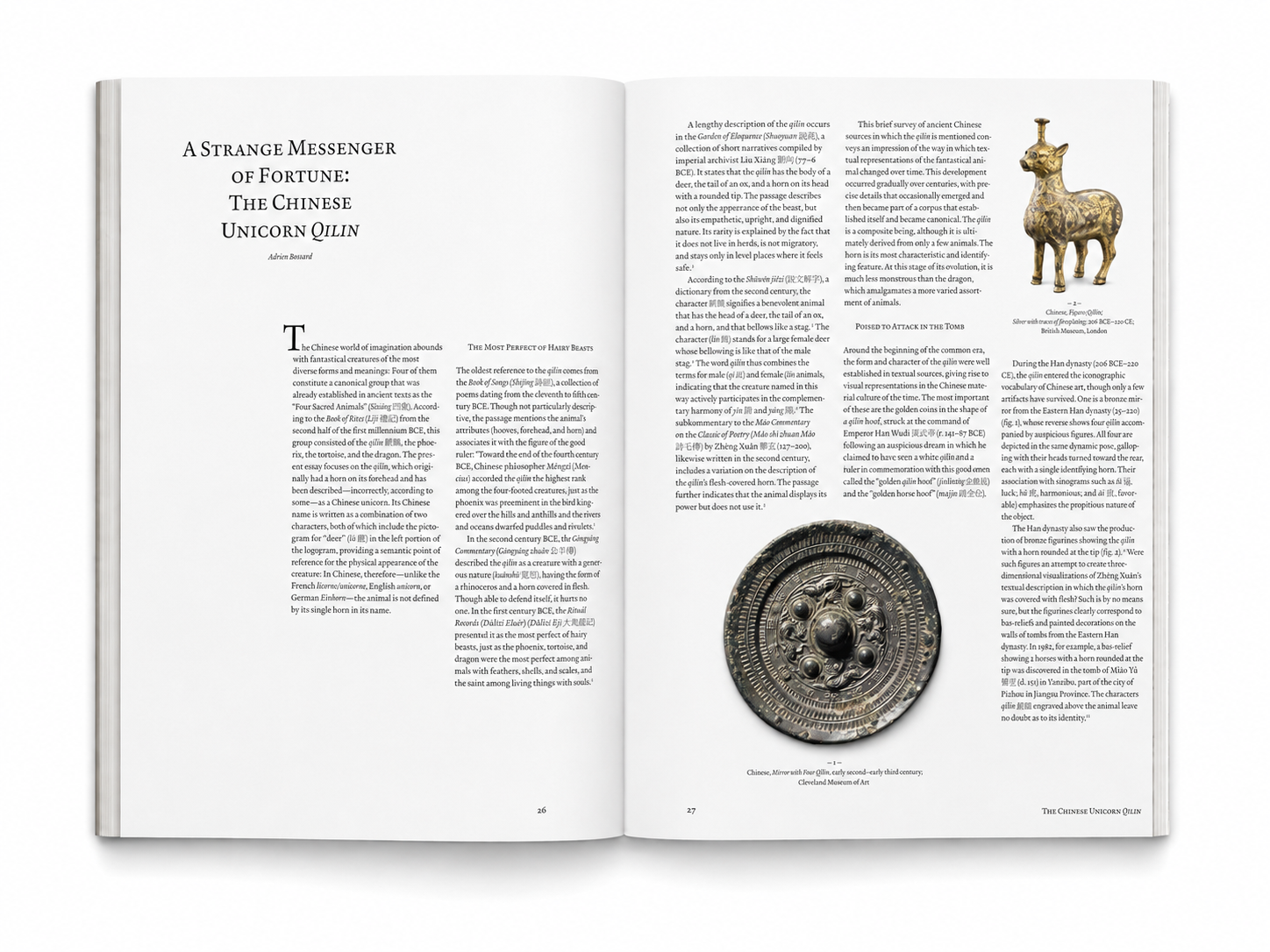
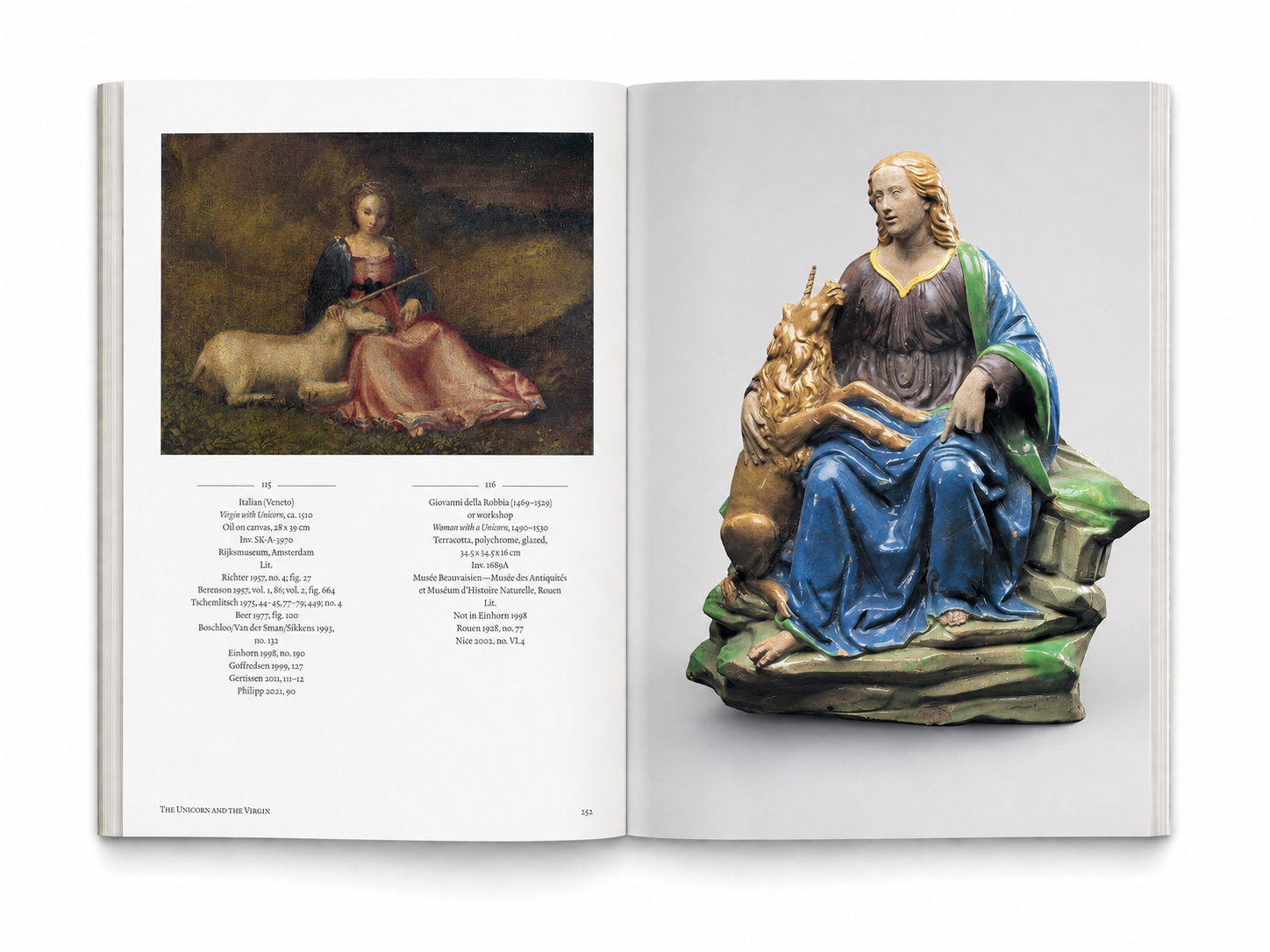
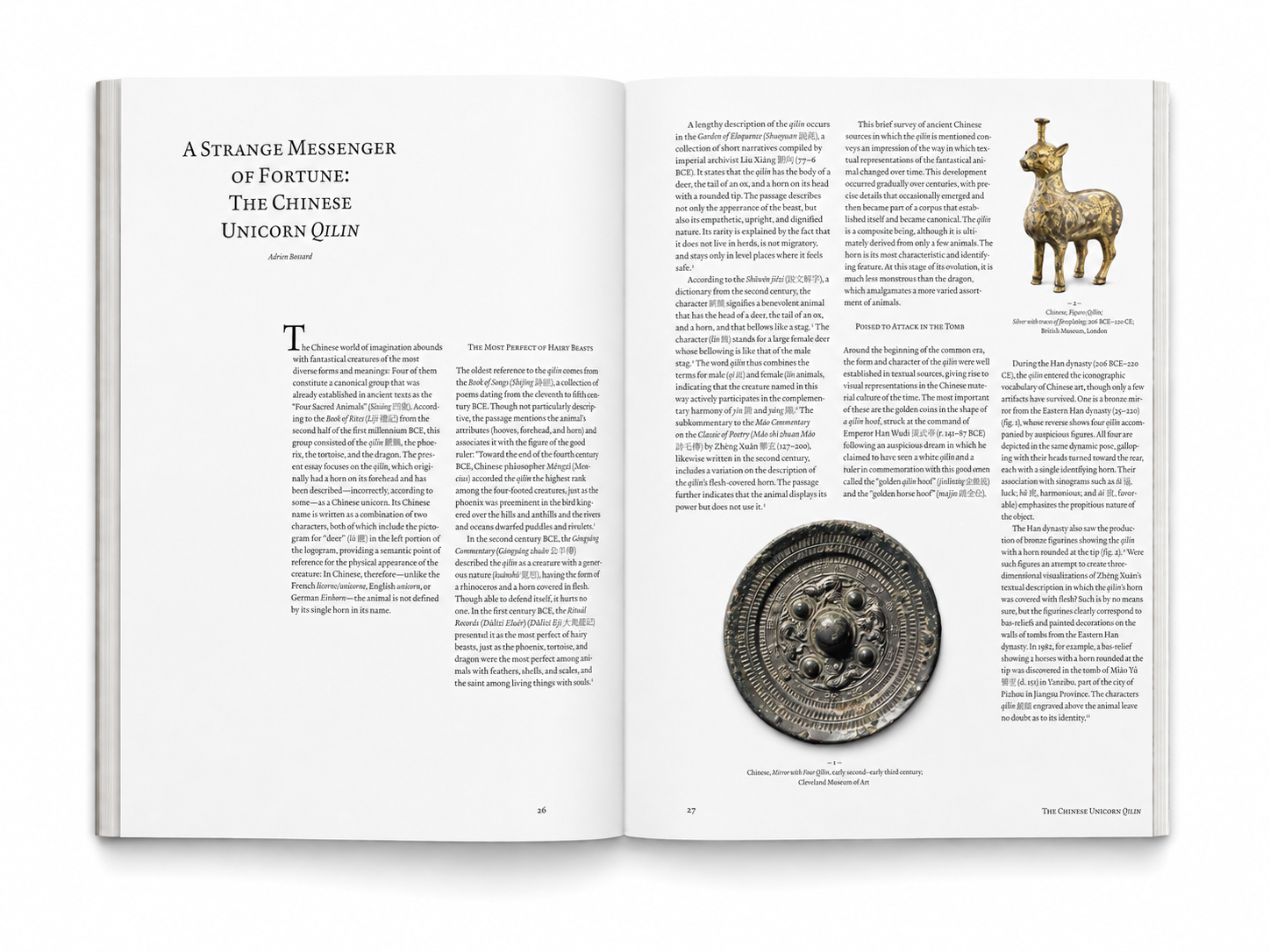
Within the medieval Christian world, the unicorn acquired another set of meanings. It became associated with Christ, the Virgin Mary, purity, and chastity, while enduring images such as the maiden and the unicorn developed into visual traditions that lasted for centuries. The book examines celebrated medieval tapestries, religious art, and systems of symbolism, while also extending its scope to one-horned mythical creatures from other cultures, including the Chinese qilin. In doing so, it reveals how this imaginary animal continually acquired new identities through cultural exchange and reinterpretation.
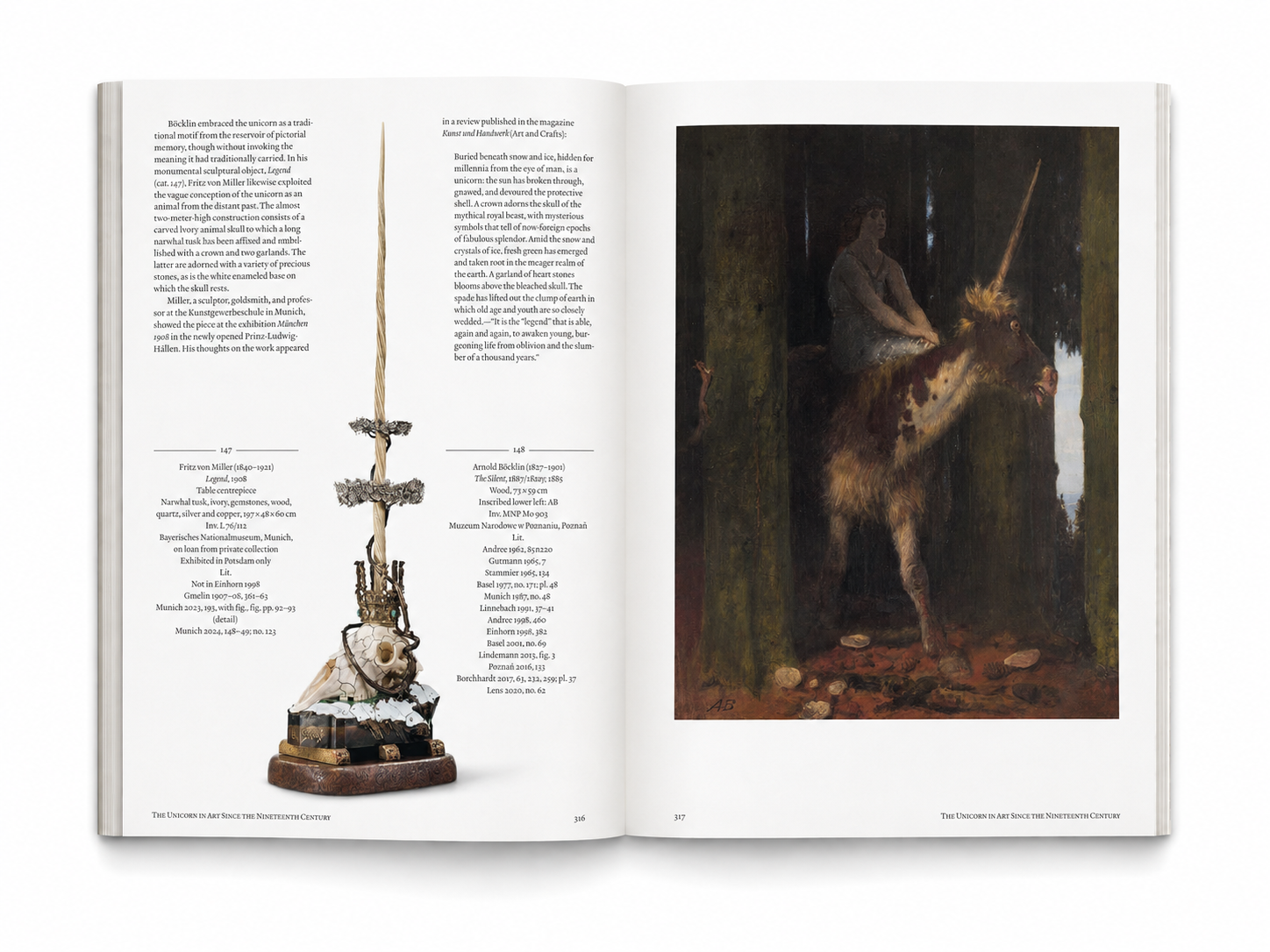
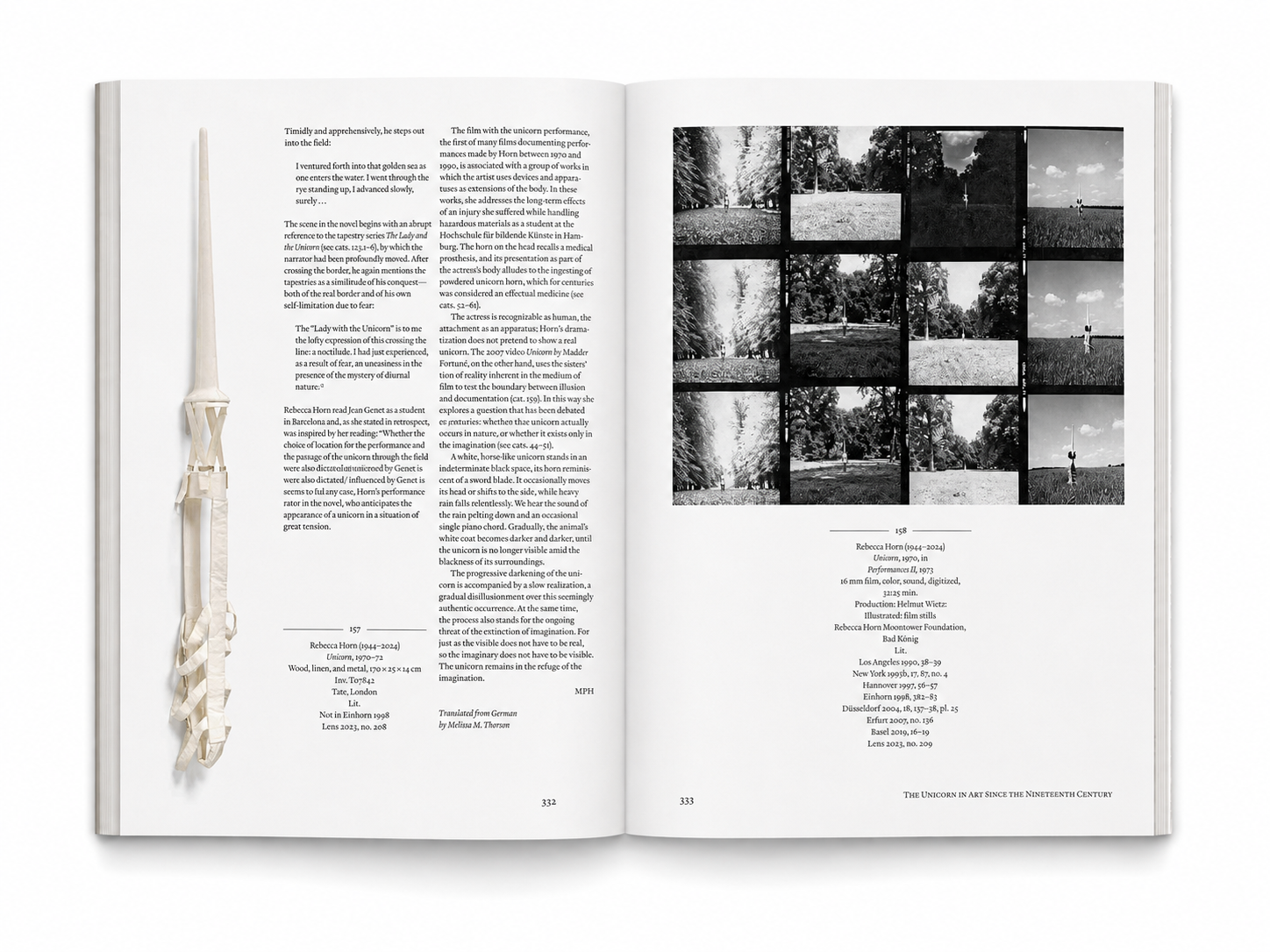
When modern science gradually established that unicorns did not exist, they did not disappear from art. On the contrary, during the nineteenth, twentieth, and twenty-first centuries, the unicorn moved away from natural history and religion and became a symbol of desire, fantasy, identity, freedom, and untamability. From Symbolism and Surrealism to contemporary art, artists have continued to reinvent this ancient image, transforming it from an animal once believed to exist into a medium through which people project their inner worlds.
Approaching the subject through art history, religion, natural history, medicine, collecting culture, and contemporary art, the book combines extensive imagery spanning many periods with in-depth scholarly essays. On the surface, Unicorn: The Mythical Beast in Art is a book about a mythical creature; in reality, it traces how human beings confront the unknown, construct beliefs, create symbols, and continue to preserve imagination even as science and rational thought advance. Once we know that the unicorn does not exist, perhaps the question that matters is no longer whether it is real, but why, even today, we still need it.
Details
Editors: Béatrice de Chancel-Bardelot, Séverine Lepape, Michael Philipp, Nerina Santorius, Ortrud Westheider
Publisher: Prestel
Publication Year: 2026
Size: 30 × 24 cm
Format: Hardcover