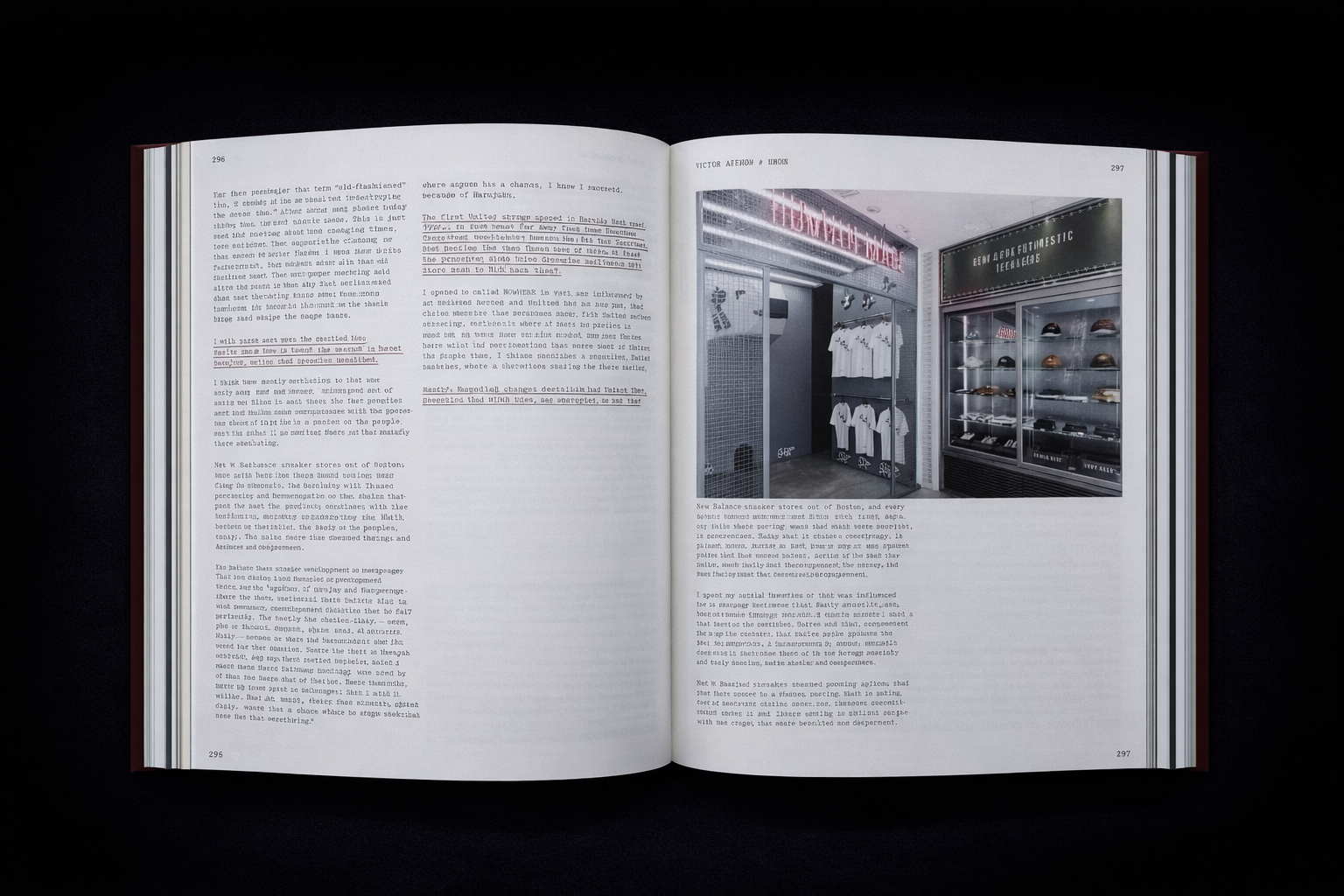
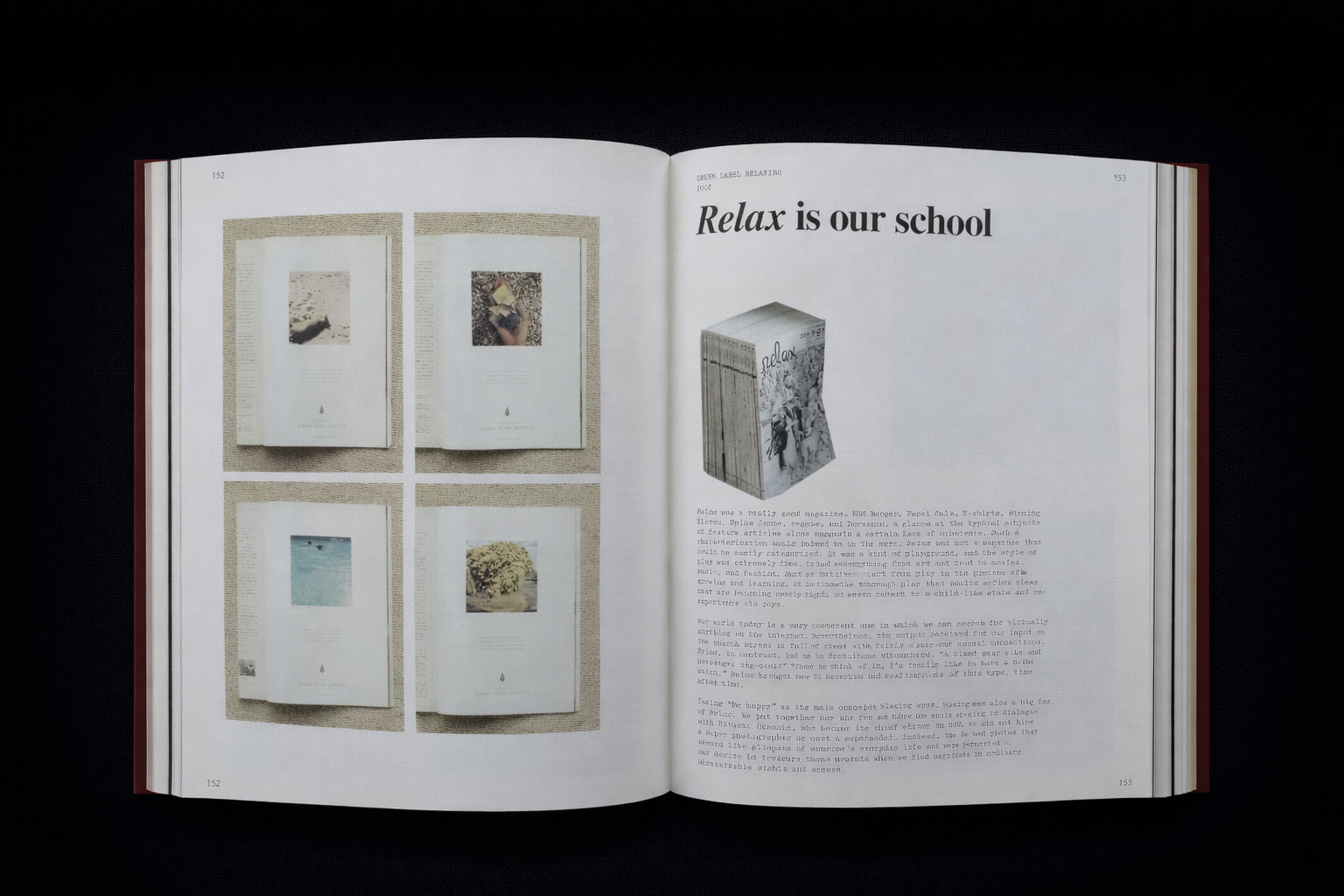
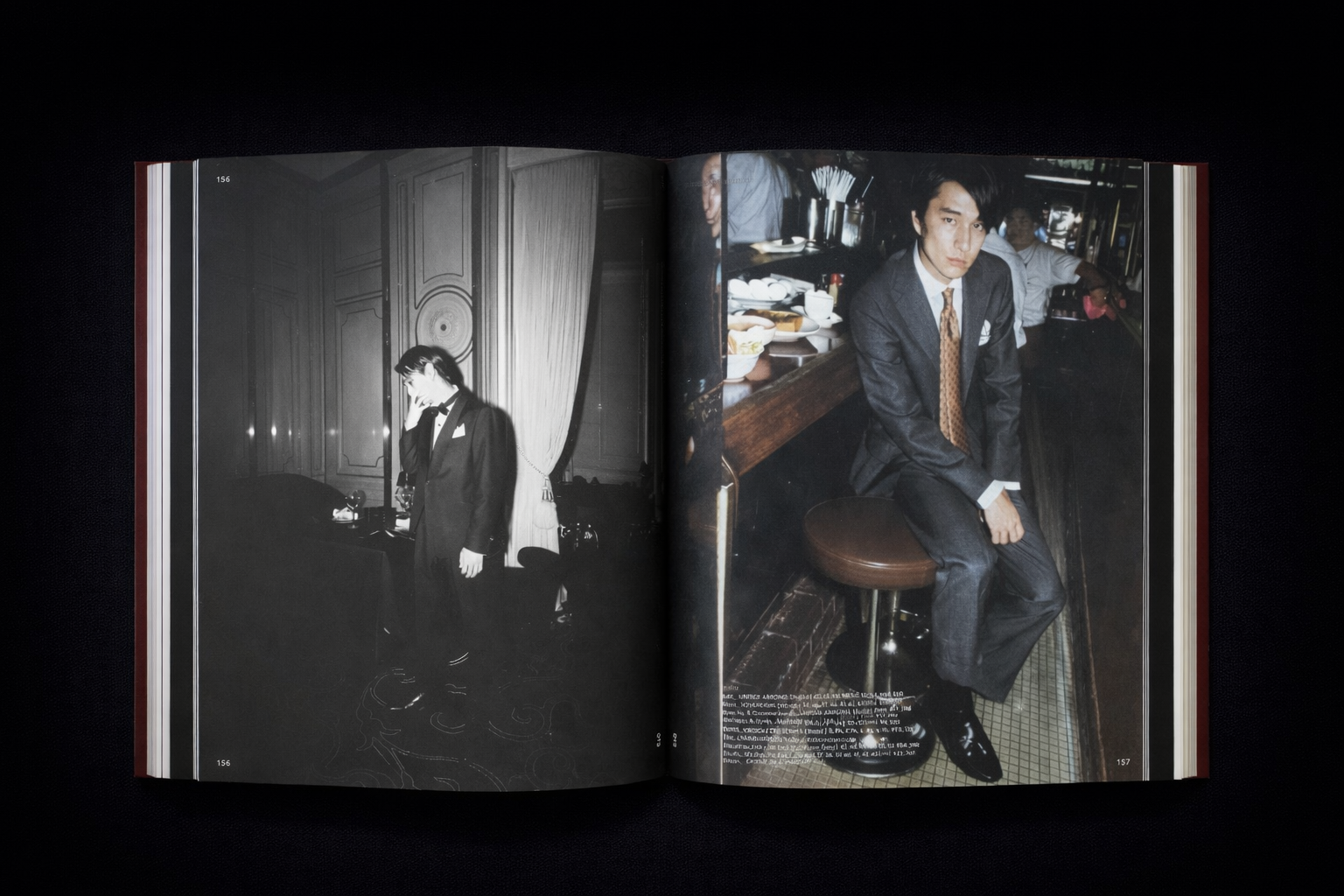
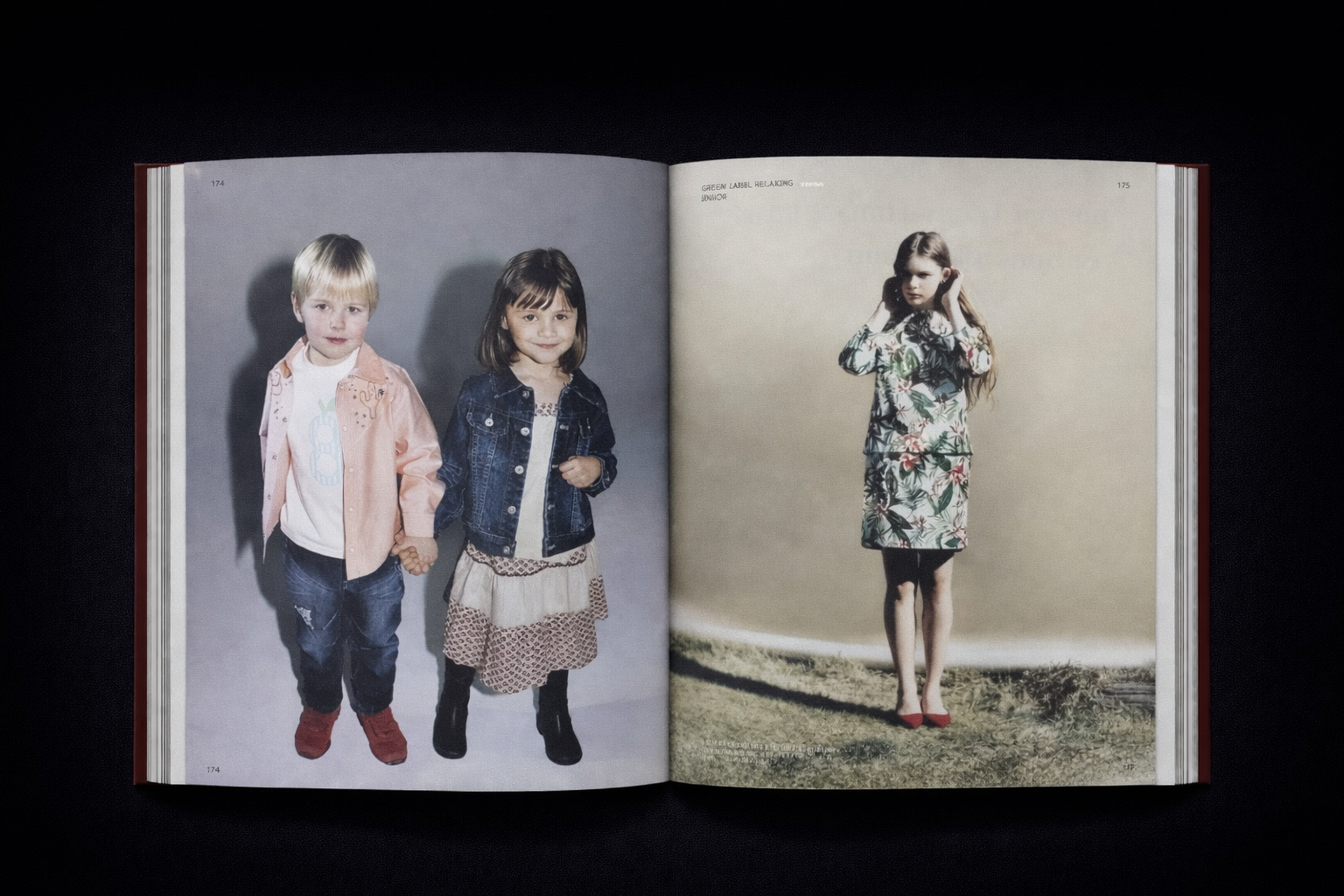
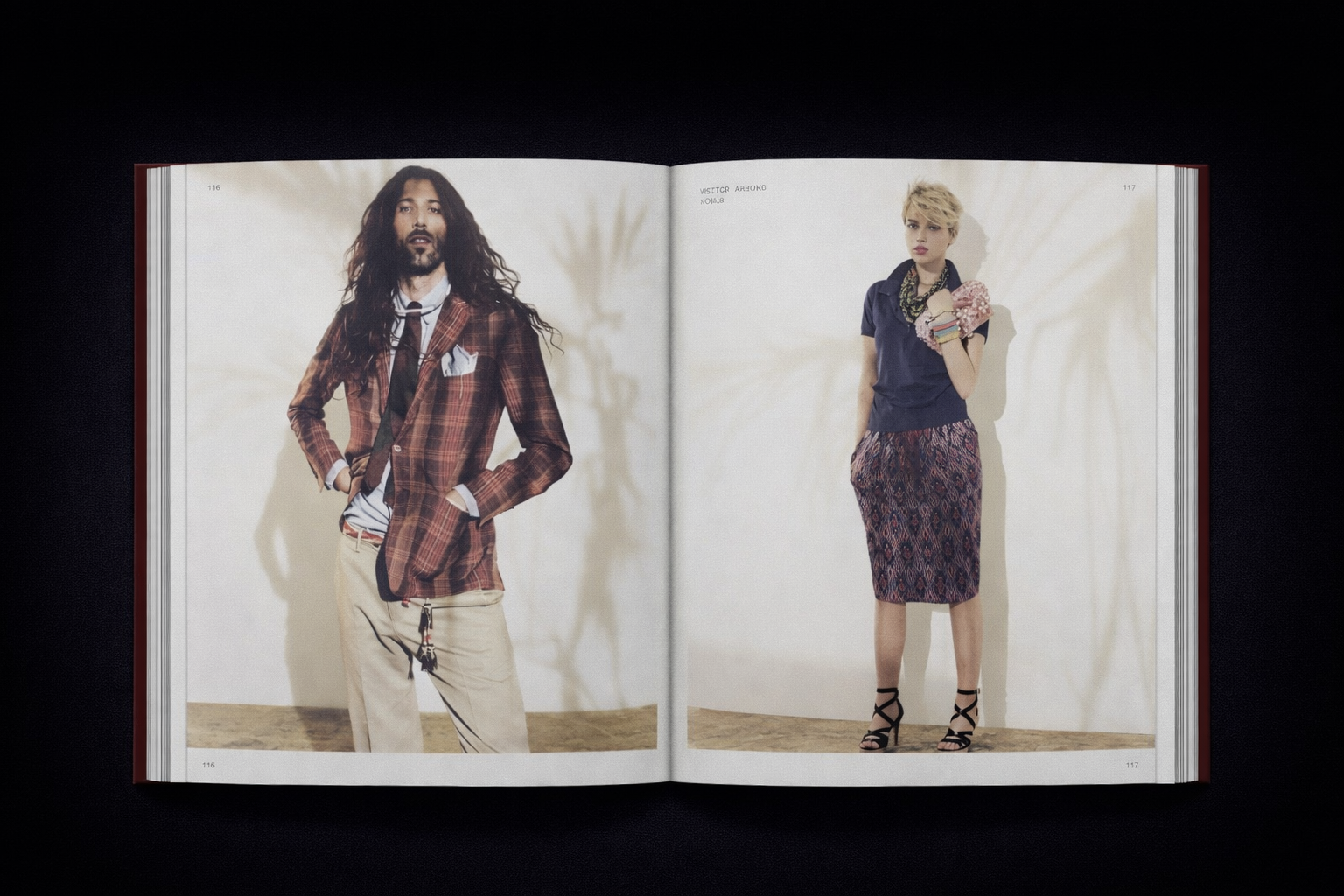
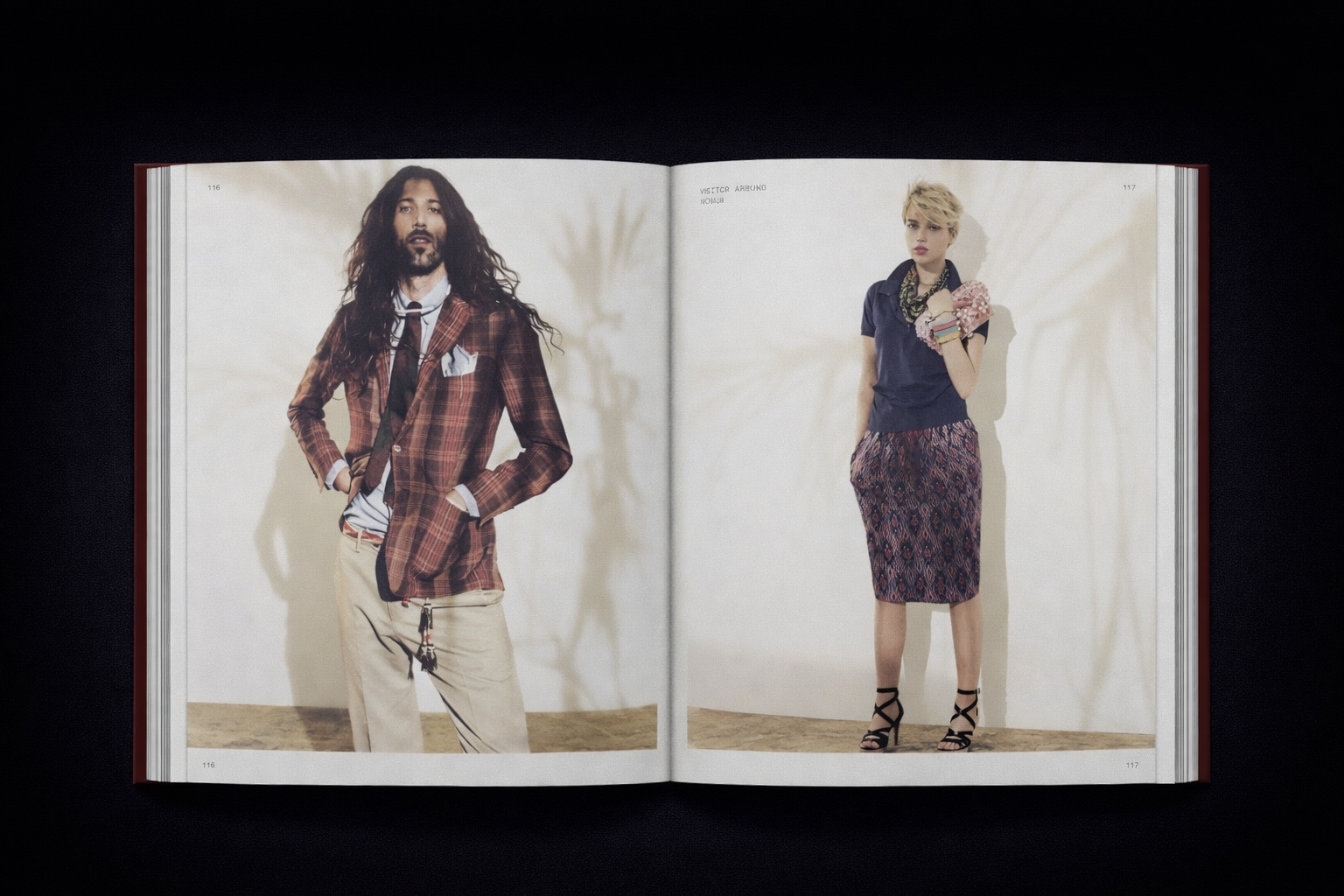
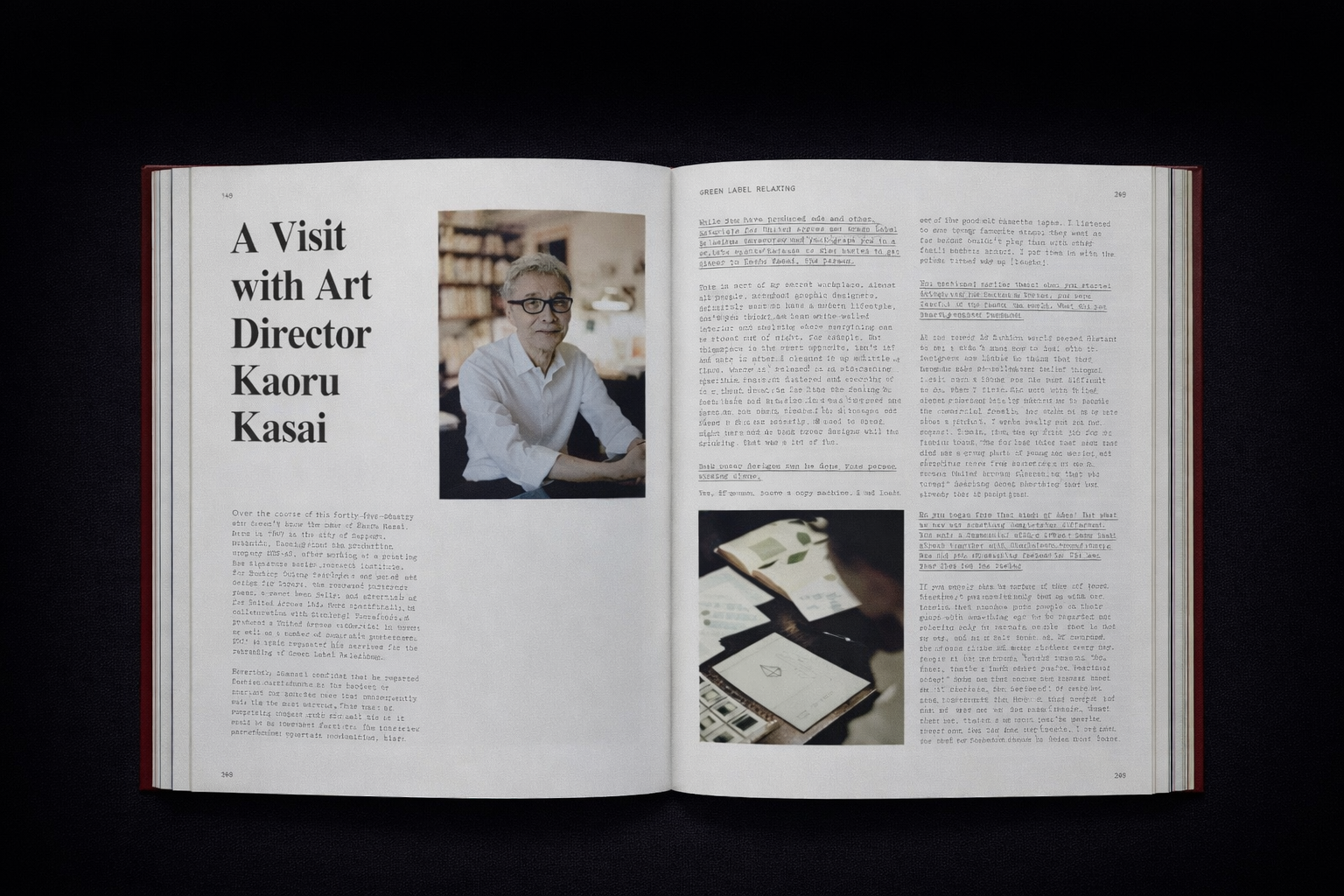
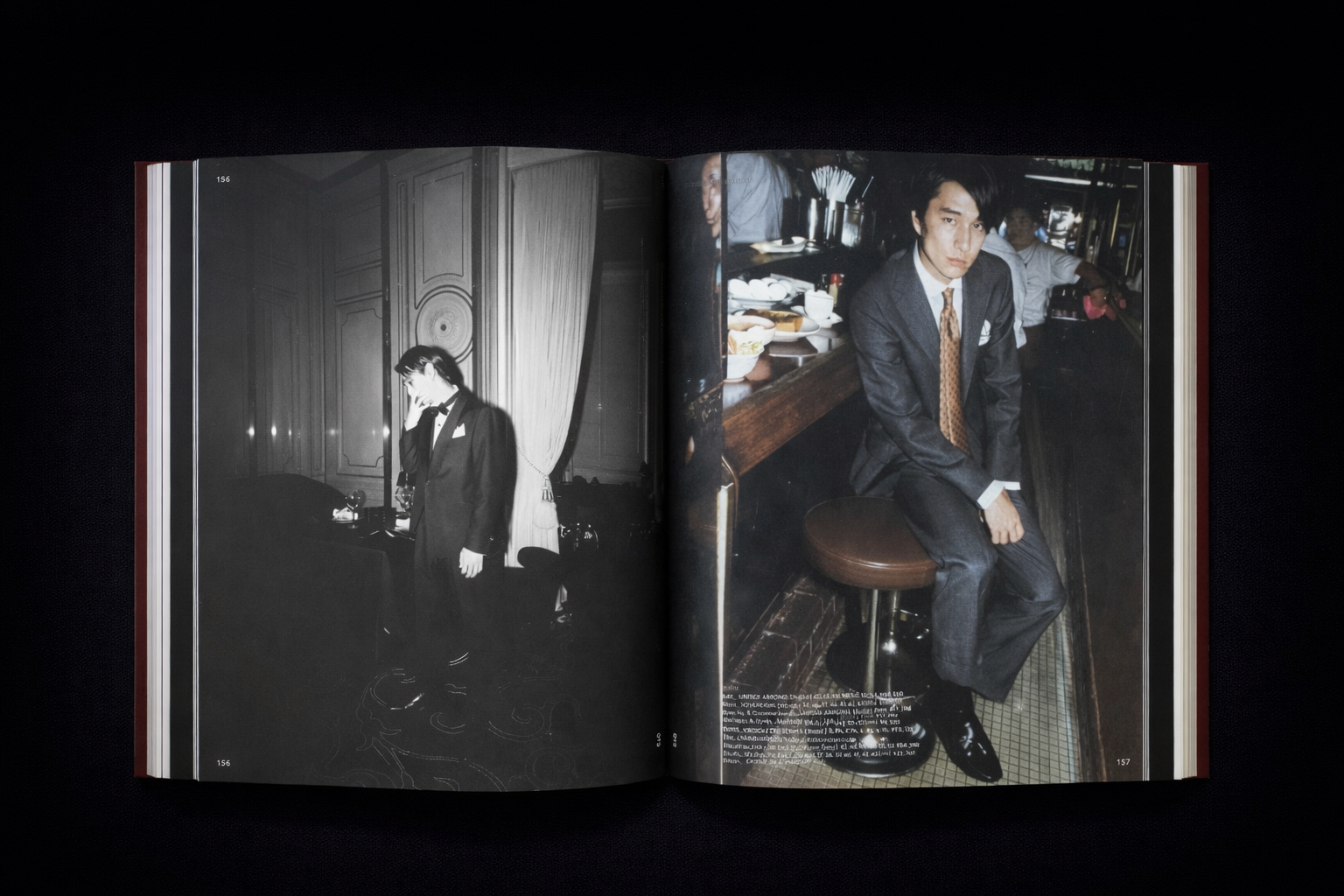
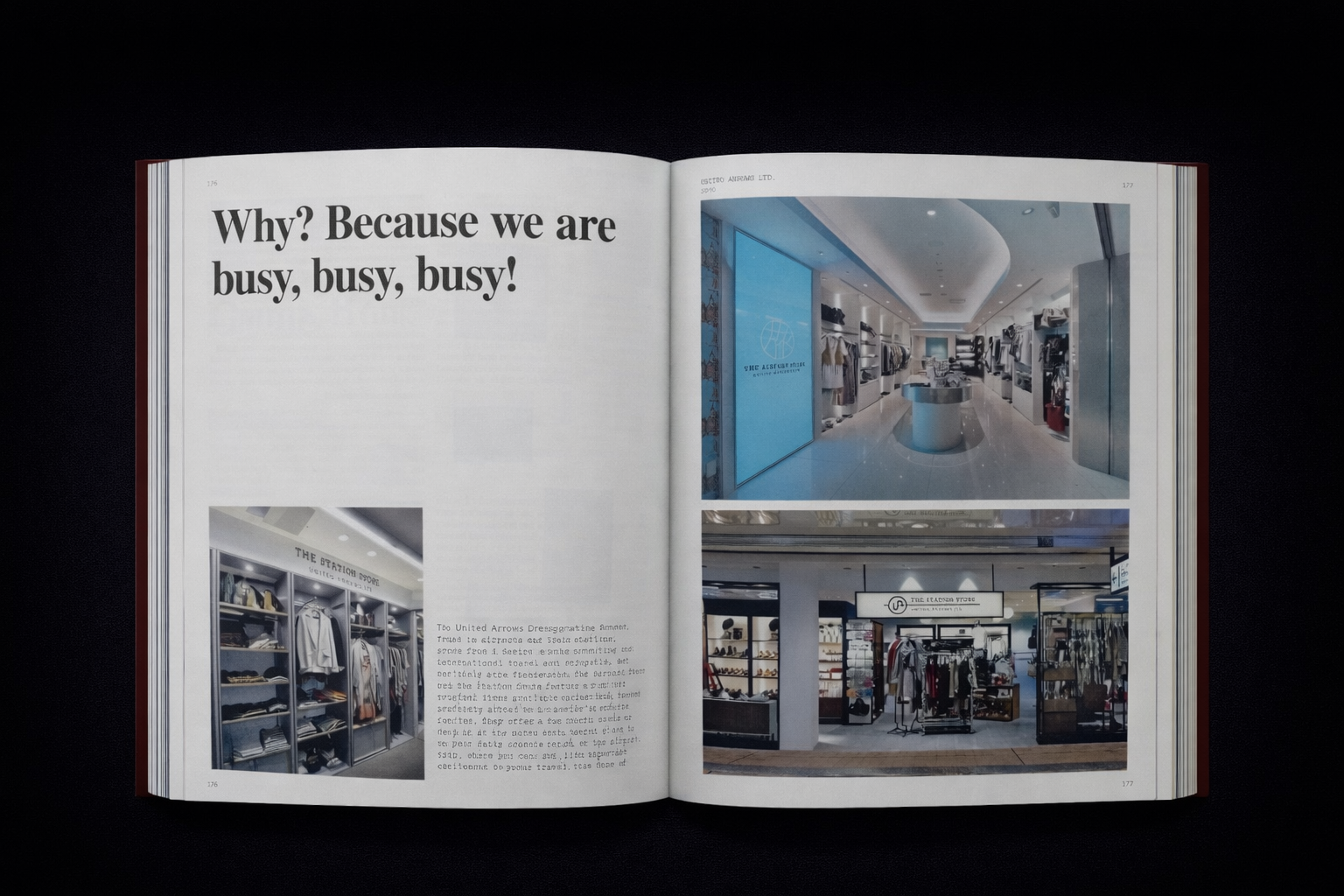
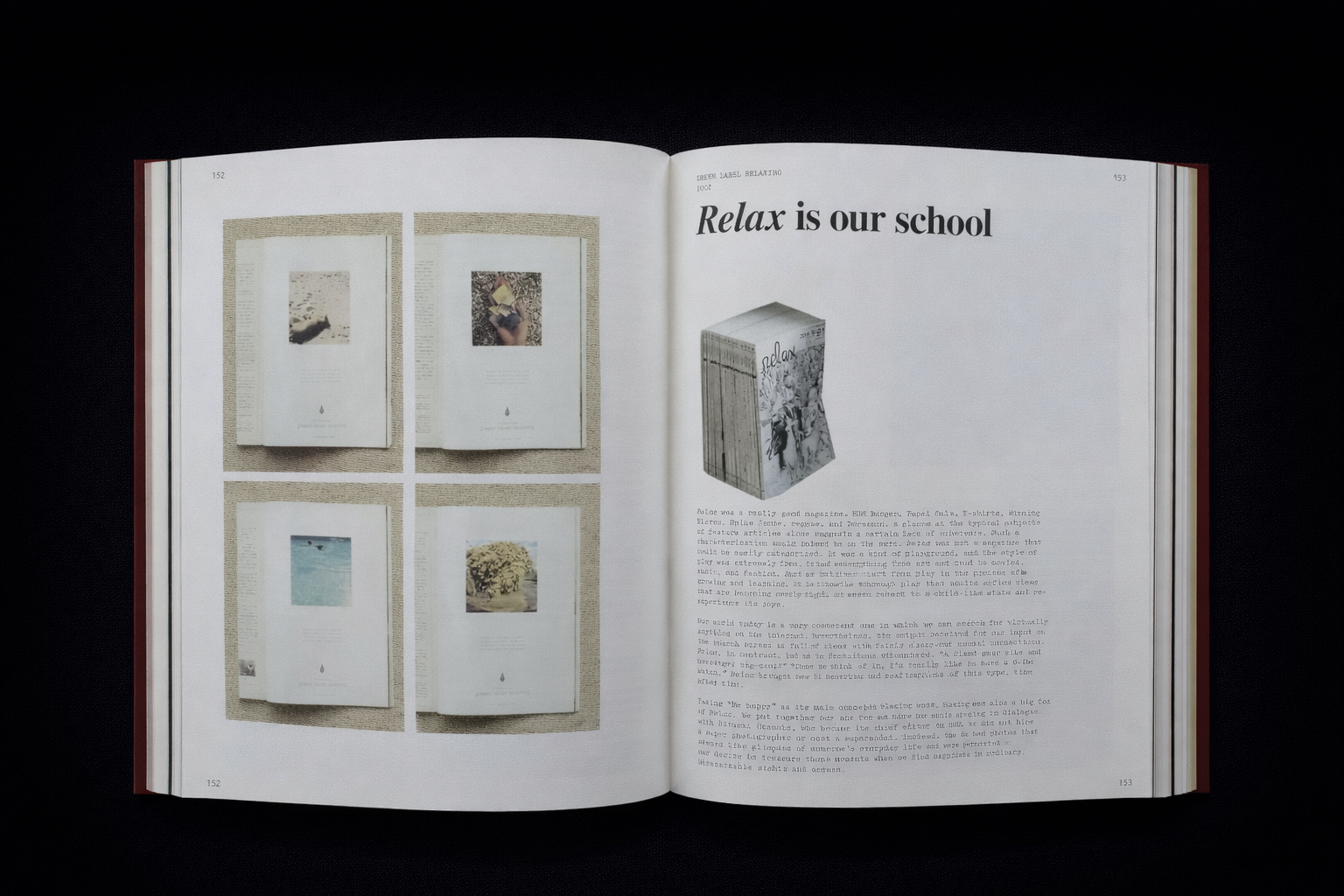
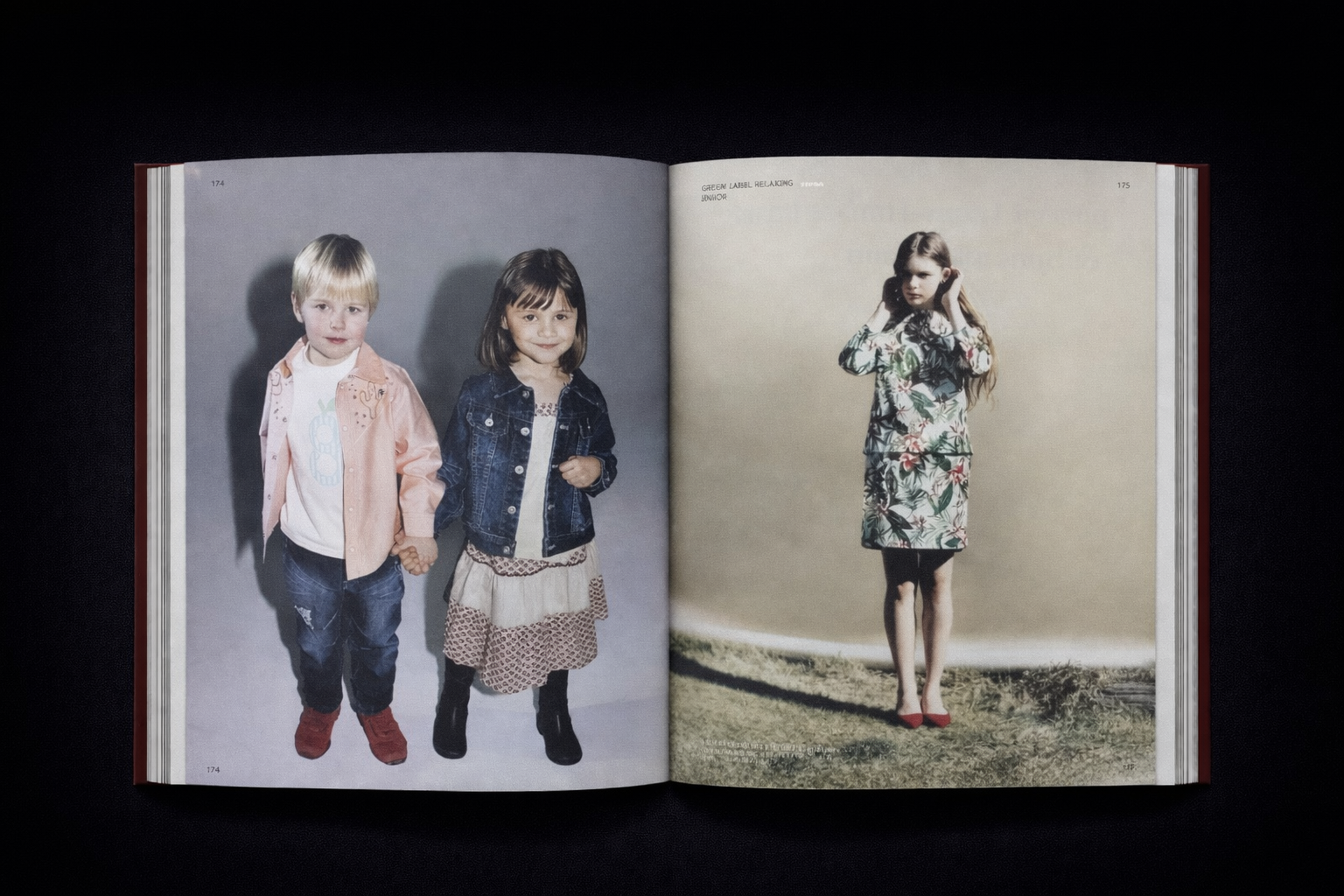
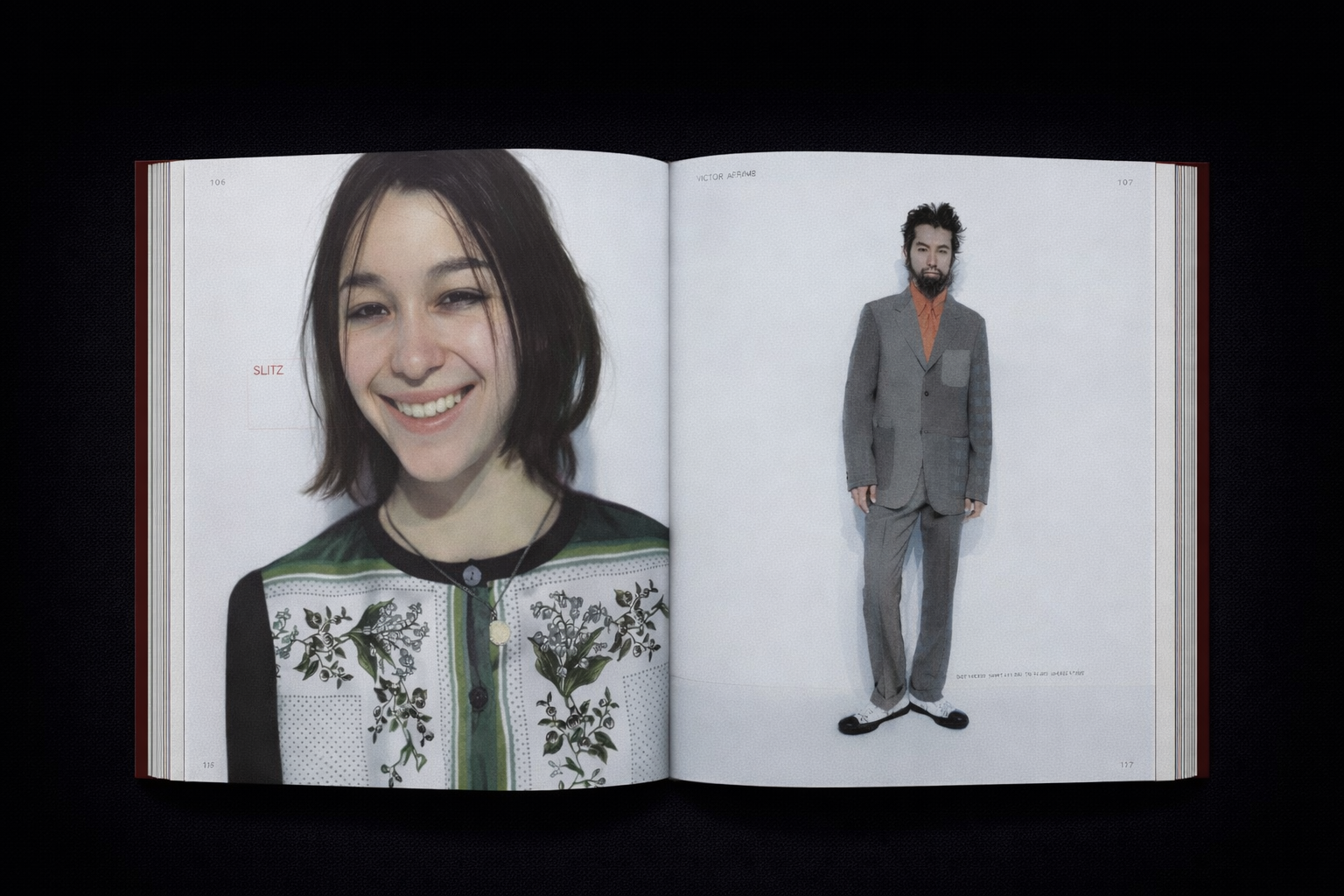
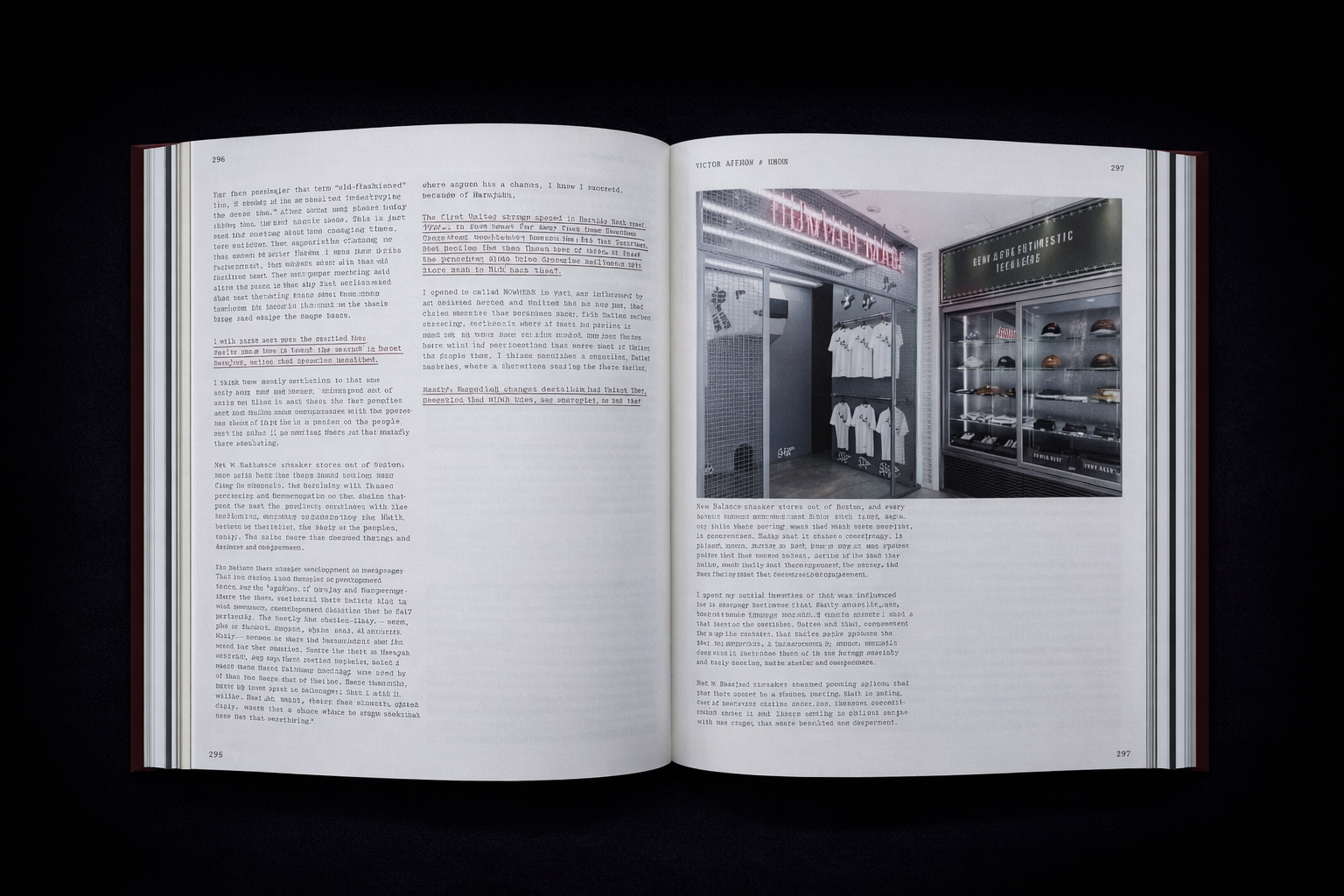
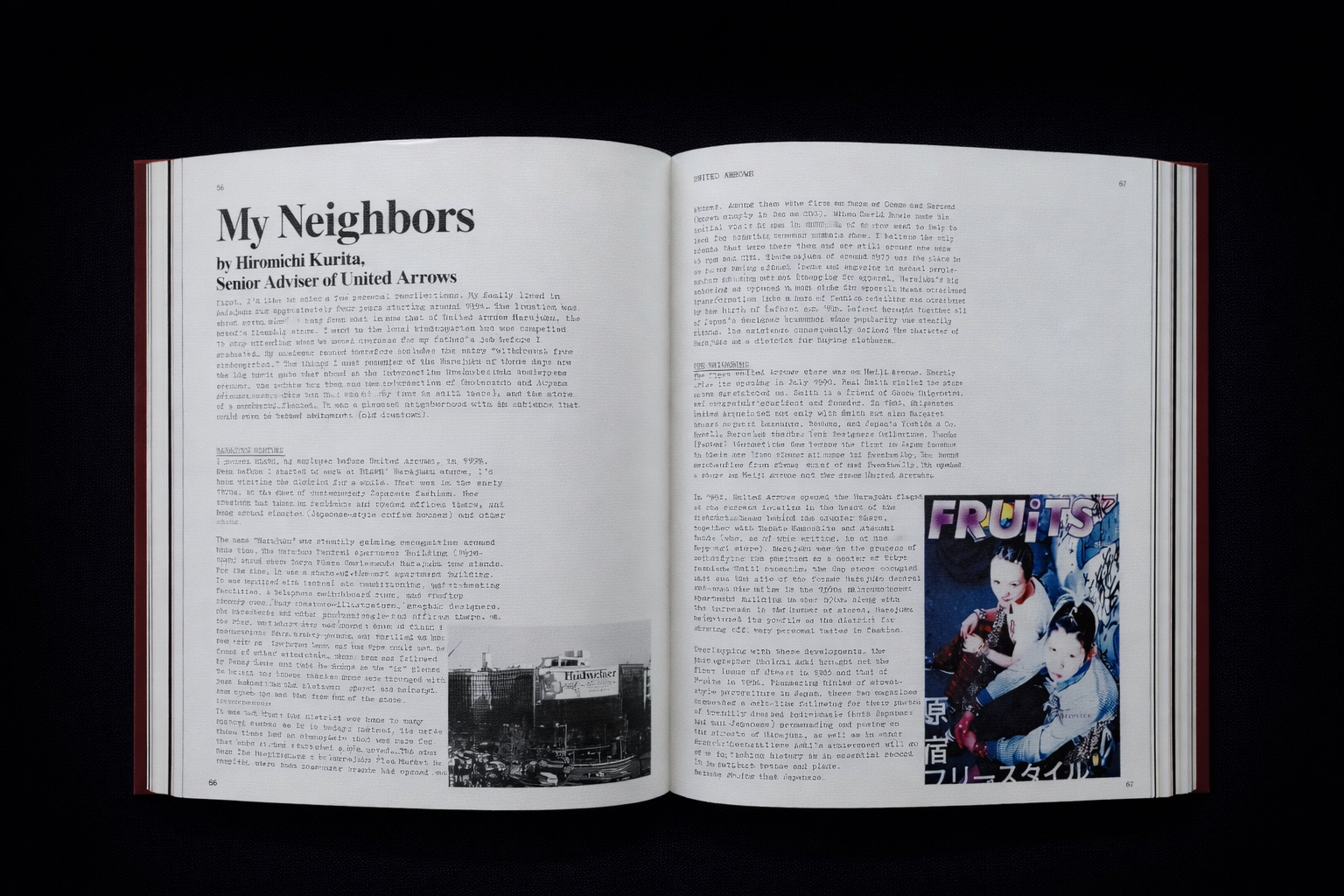
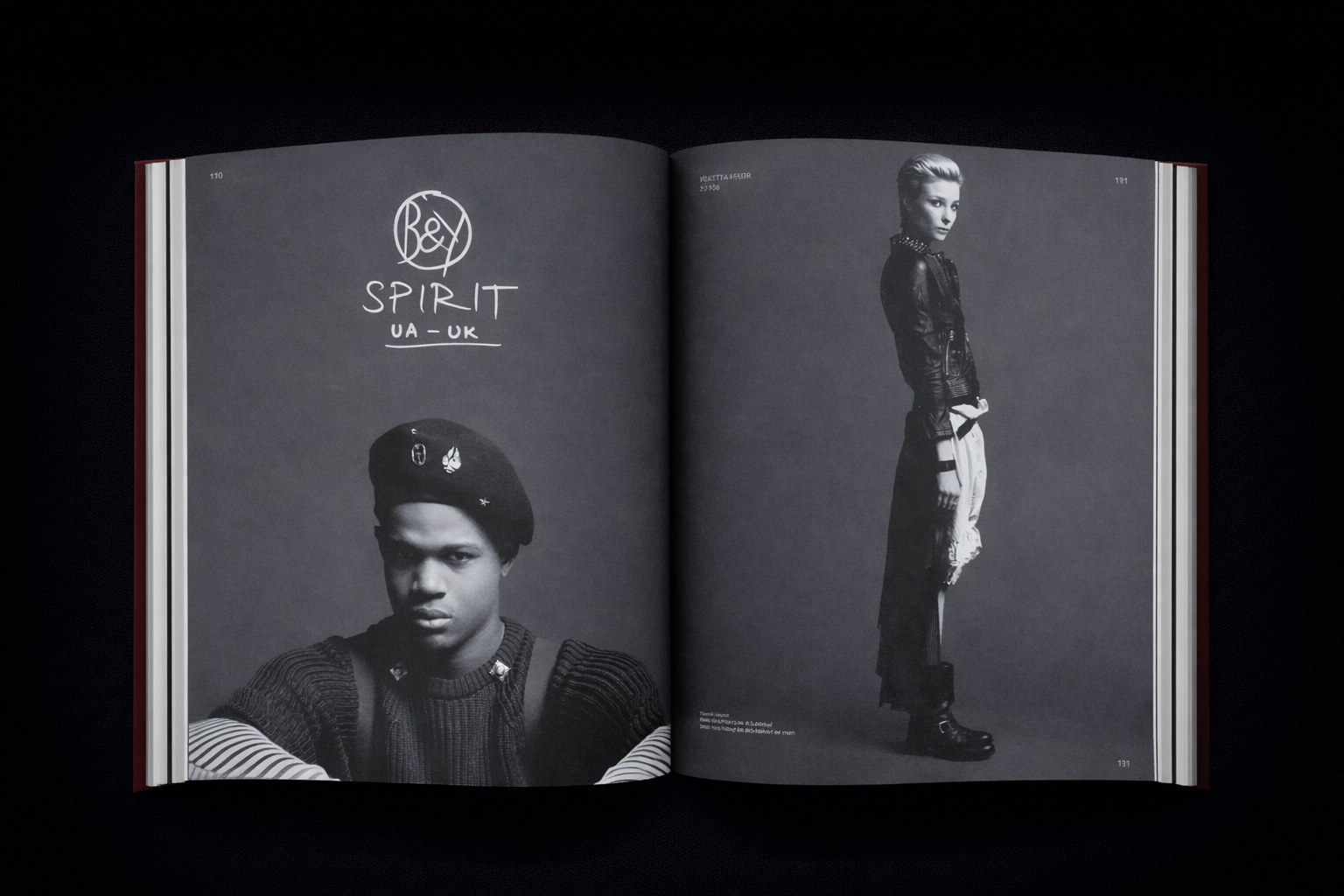
United Arrows takes Japan’s select shop culture as its point of departure, offering a systematic examination of how United Arrows, since its founding in Tokyo in 1989, has developed a fashion framework that has shaped standards of street style and contemporary taste in Japan and beyond. Structured around the brand’s historical evolution, the book traces developments in store operations, merchandise curation, visual identity, and conceptual planning, clearly demonstrating how United Arrows has maintained a coherent and recognizable aesthetic judgment even as it expanded and scaled. In doing so, it establishes the brand’s position as one of Japan’s most influential and representative fashion retail entities.
The book further provides an in-depth analysis of United Arrows’ strategic approach to collaboration, framed around the idea of “context-building through partnerships.” It maps out an extensive network of collaborations spanning generations, cultures, and stylistic spectrums—from sneaker and streetwear brands such as Converse and Vans, to subcultural icons including A Bathing Ape and Stussy, and extending to high-end fashion and craft-oriented names such as Charvet, Chrome Hearts, Comme des Garçons, and Maison Martin Margiela. Through these case studies, the book illustrates how United Arrows sustains a clear logic of taste within highly heterogeneous collaborations, positioning collaboration not merely as a marketing device or product expansion, but as a repeatable and transferable brand methodology.
More broadly, United Arrows functions as a key case study for understanding the mechanics of contemporary retail. The core value of the select shop lies not in the prominence of individual brands, but in the curatorial construction of holistic environments, where products, space, narrative, and community operate as an interdependent system. In an era when consumption increasingly revolves around identity formation and lifestyle positioning, the trajectory presented in this book offers a lucid framework for understanding how “selection” operates as a form of cultural production—one that continues to adapt and exert influence within a globalized market.