【Book Description】
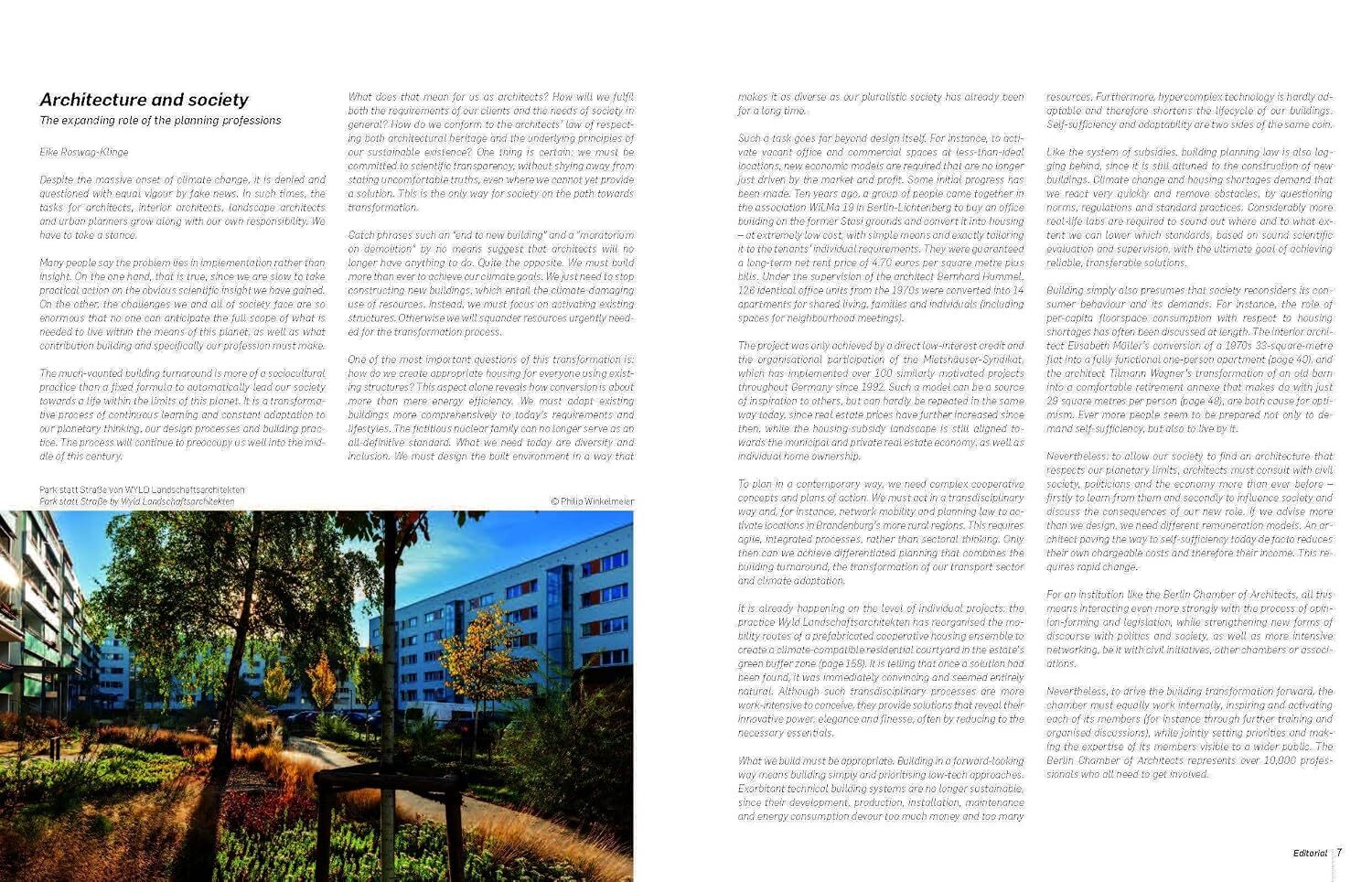
How can a city rethink the role of architecture while confronting climate change, limited resources, and rapidly shifting social structures?
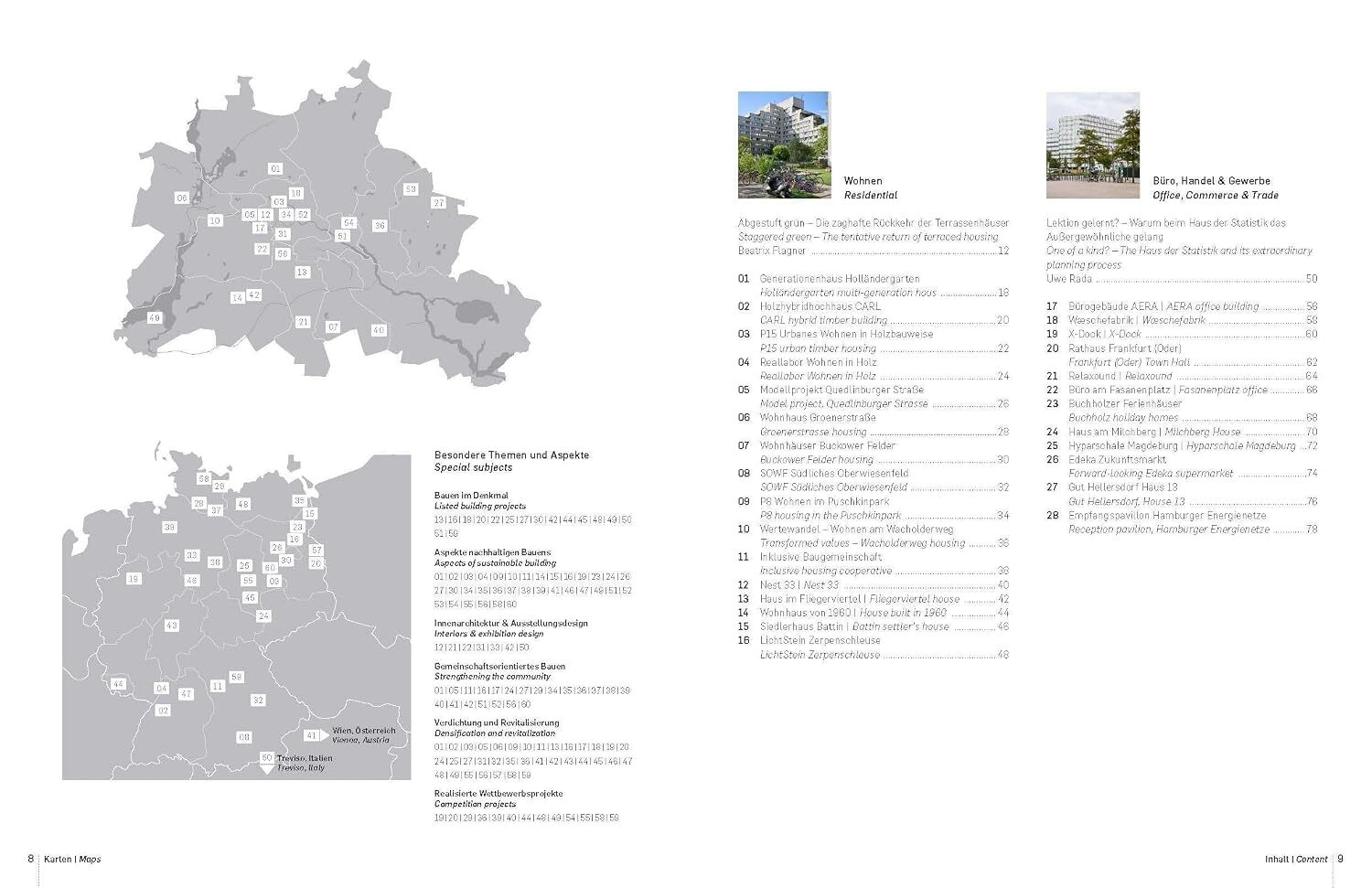
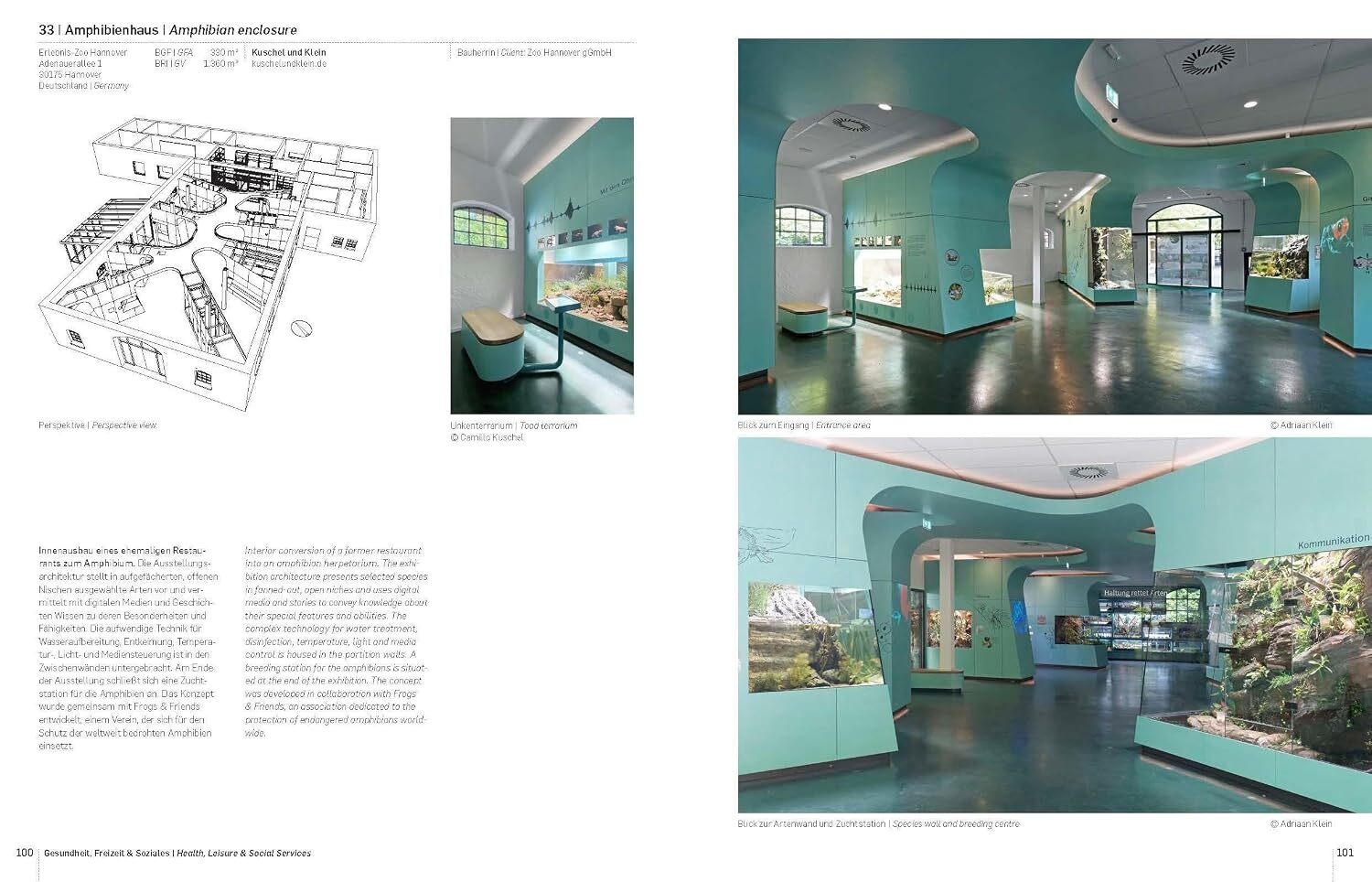
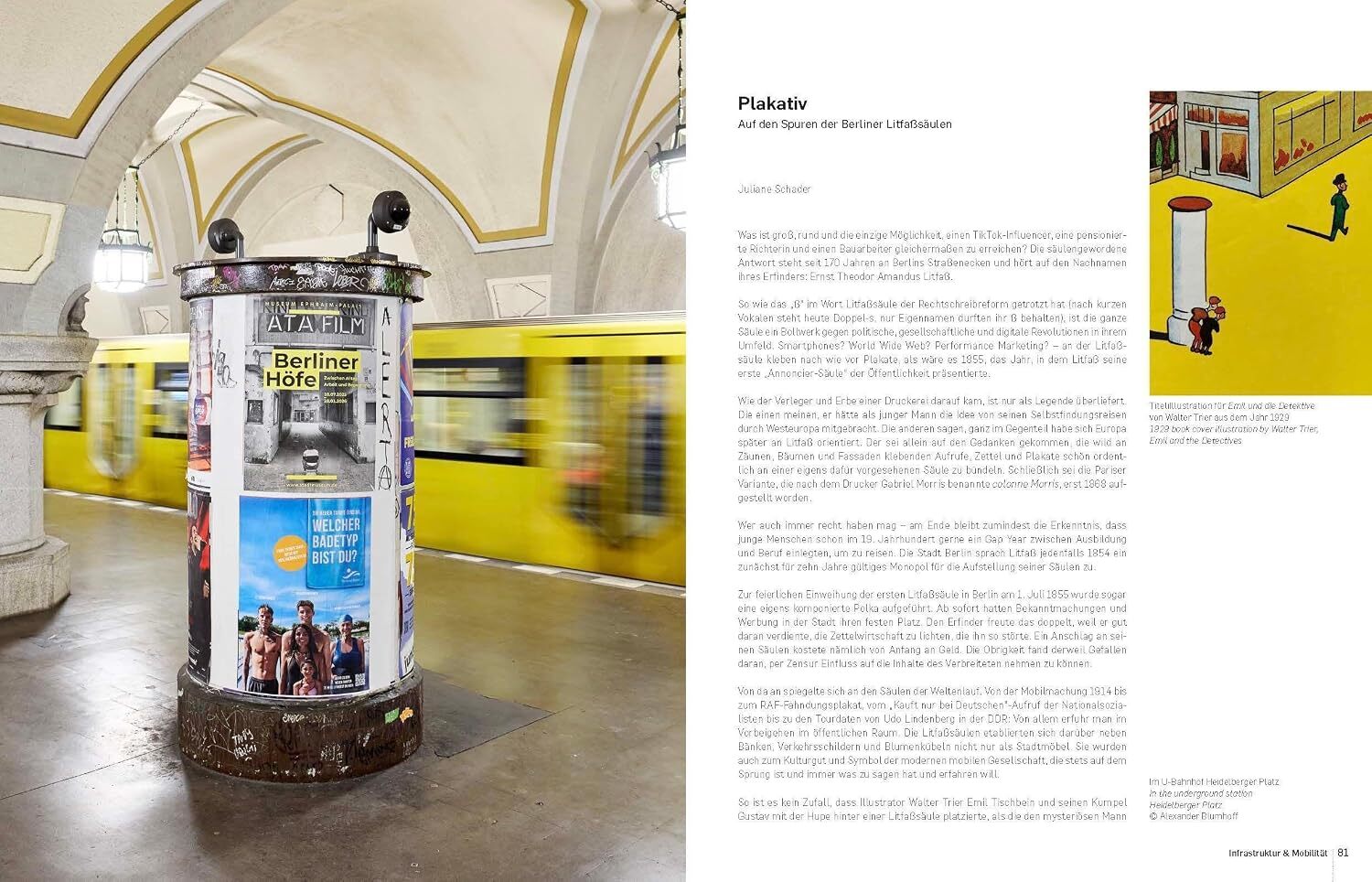
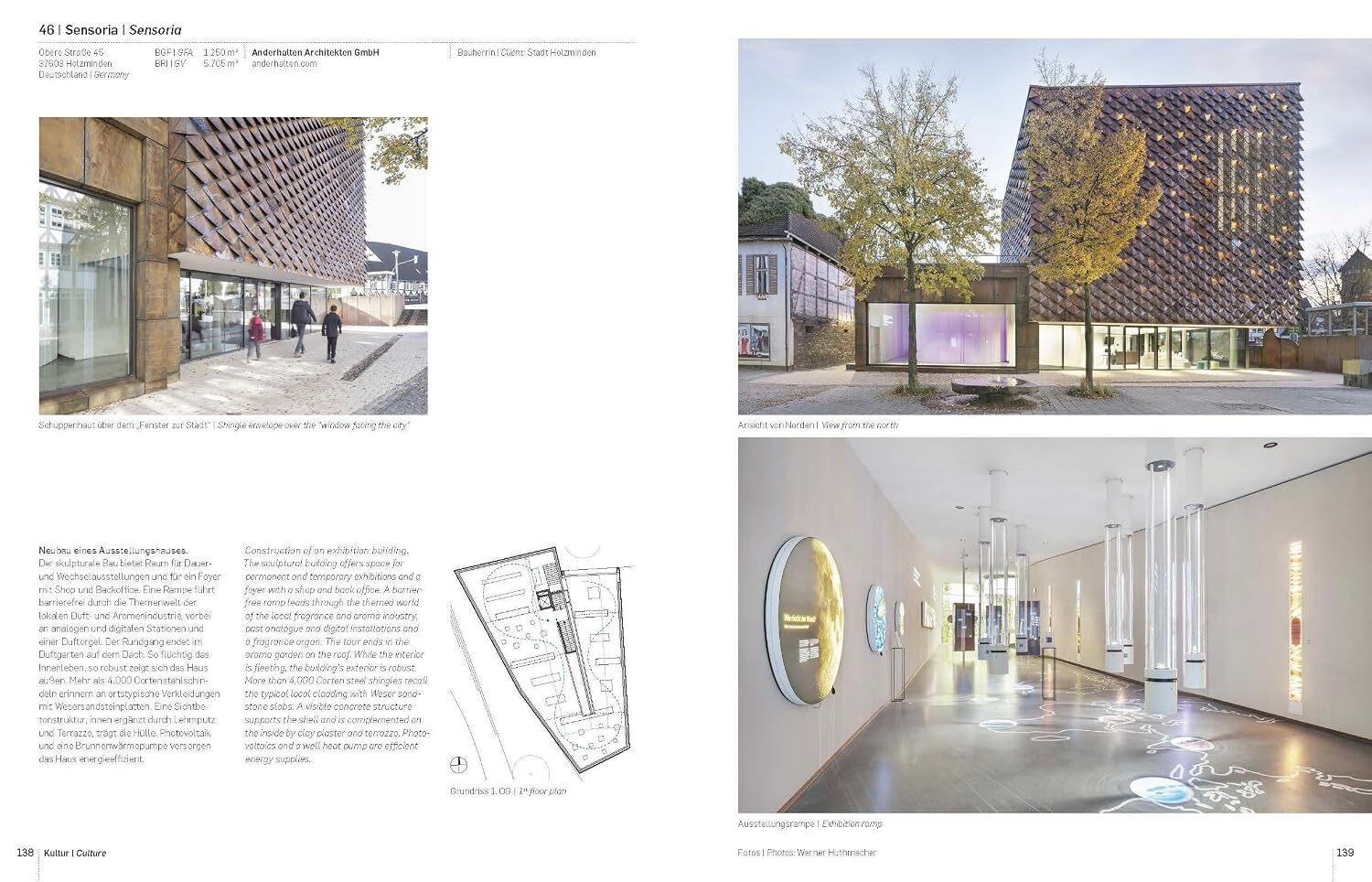
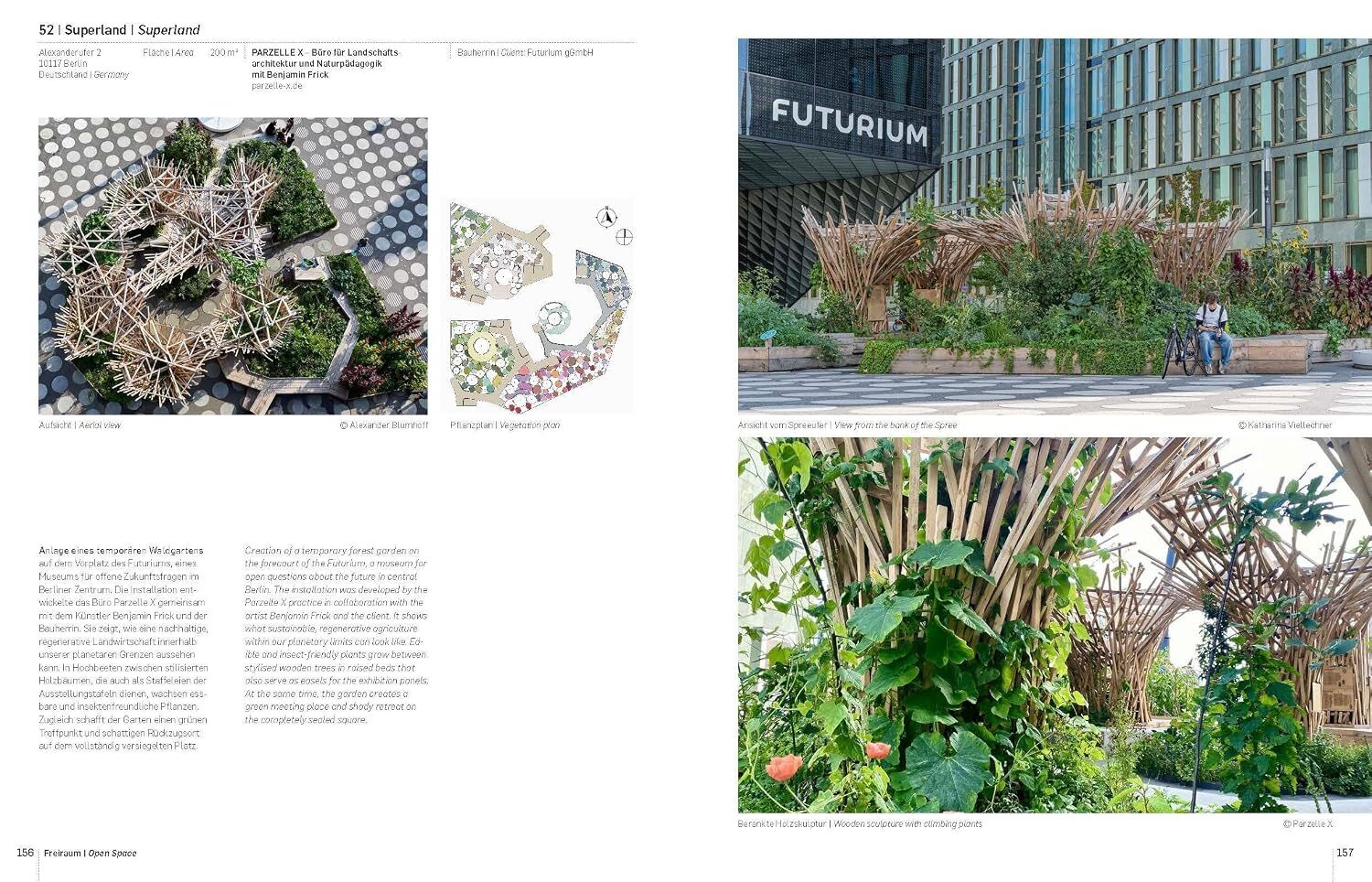
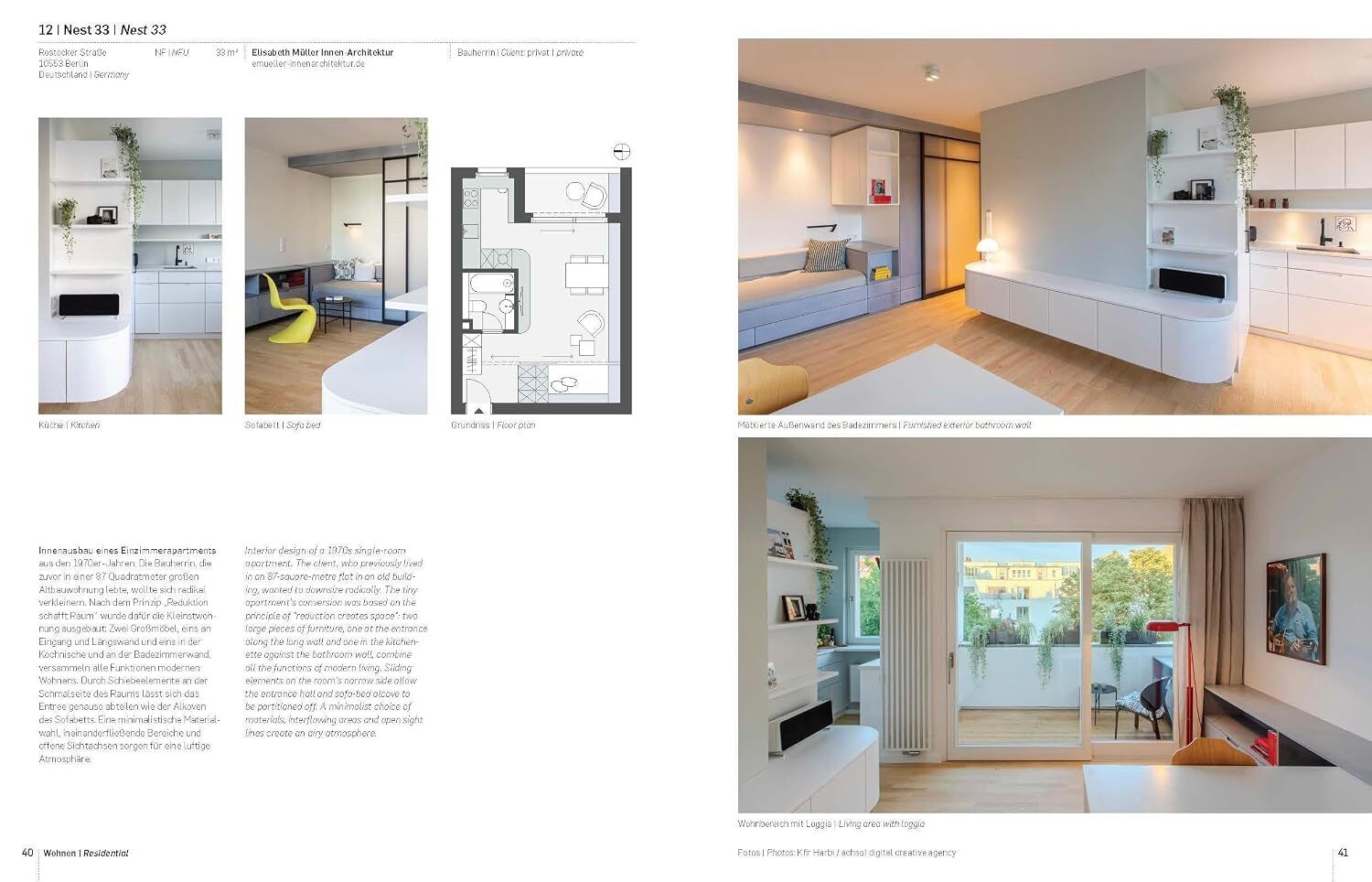
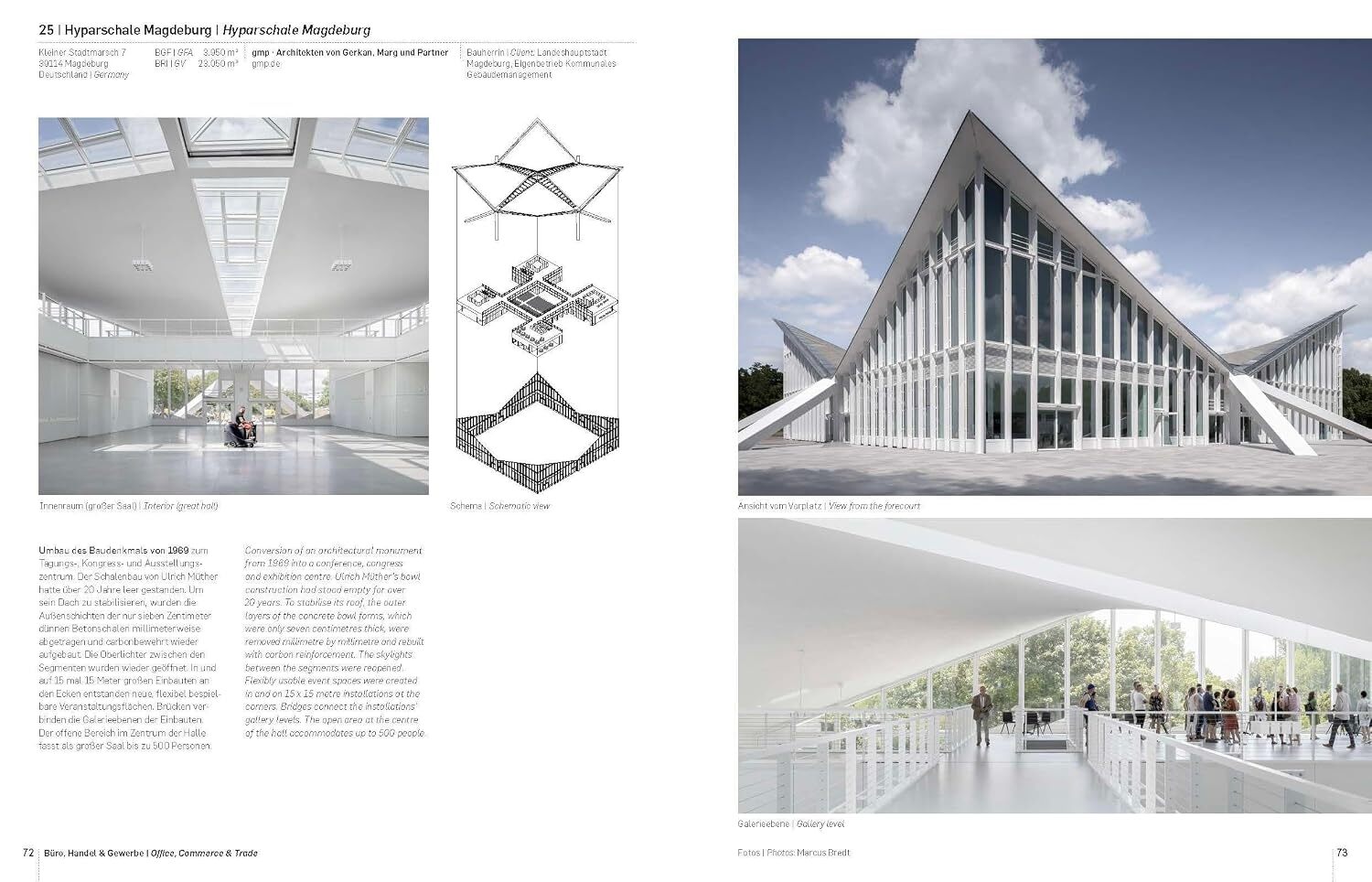
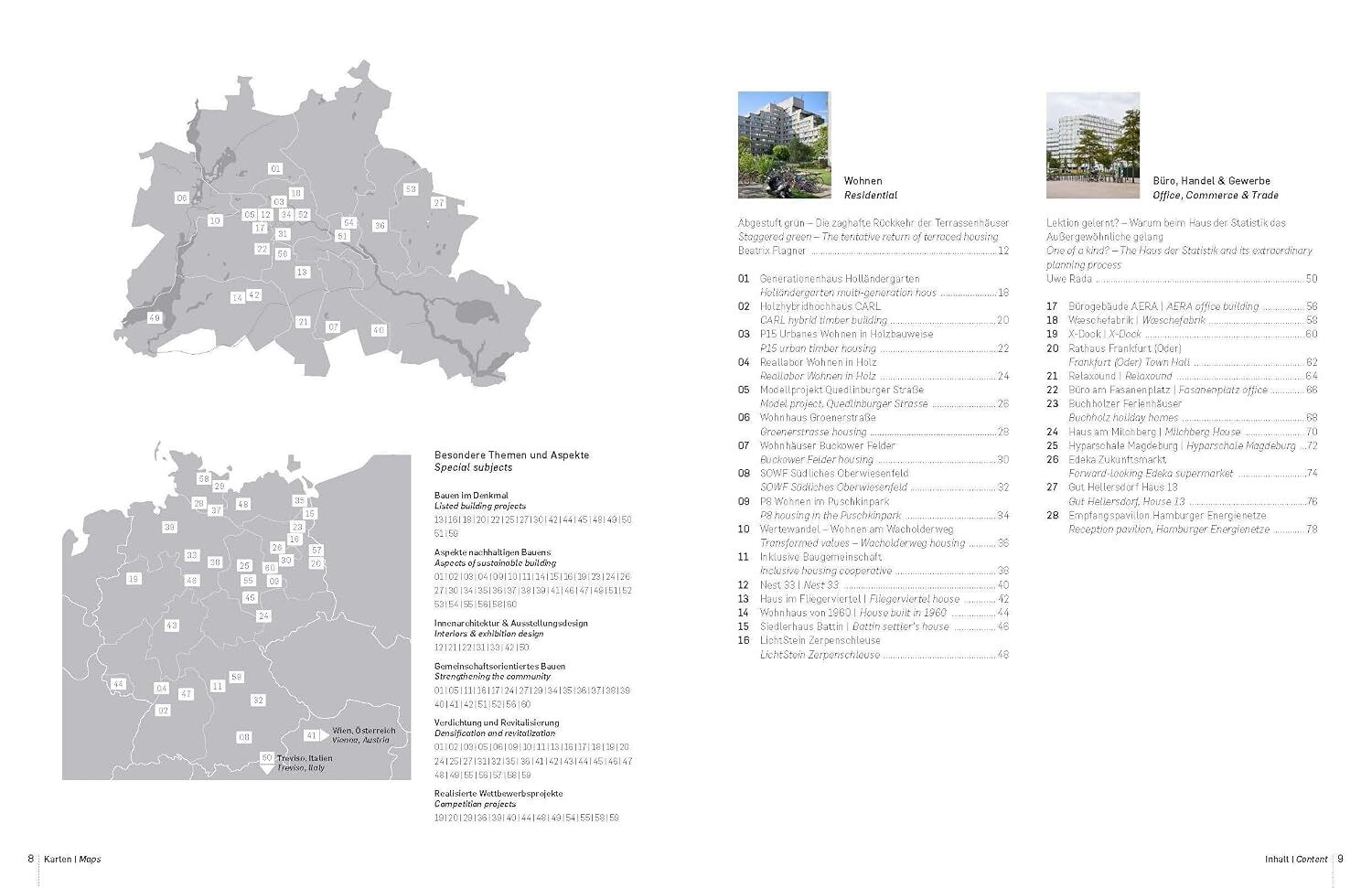
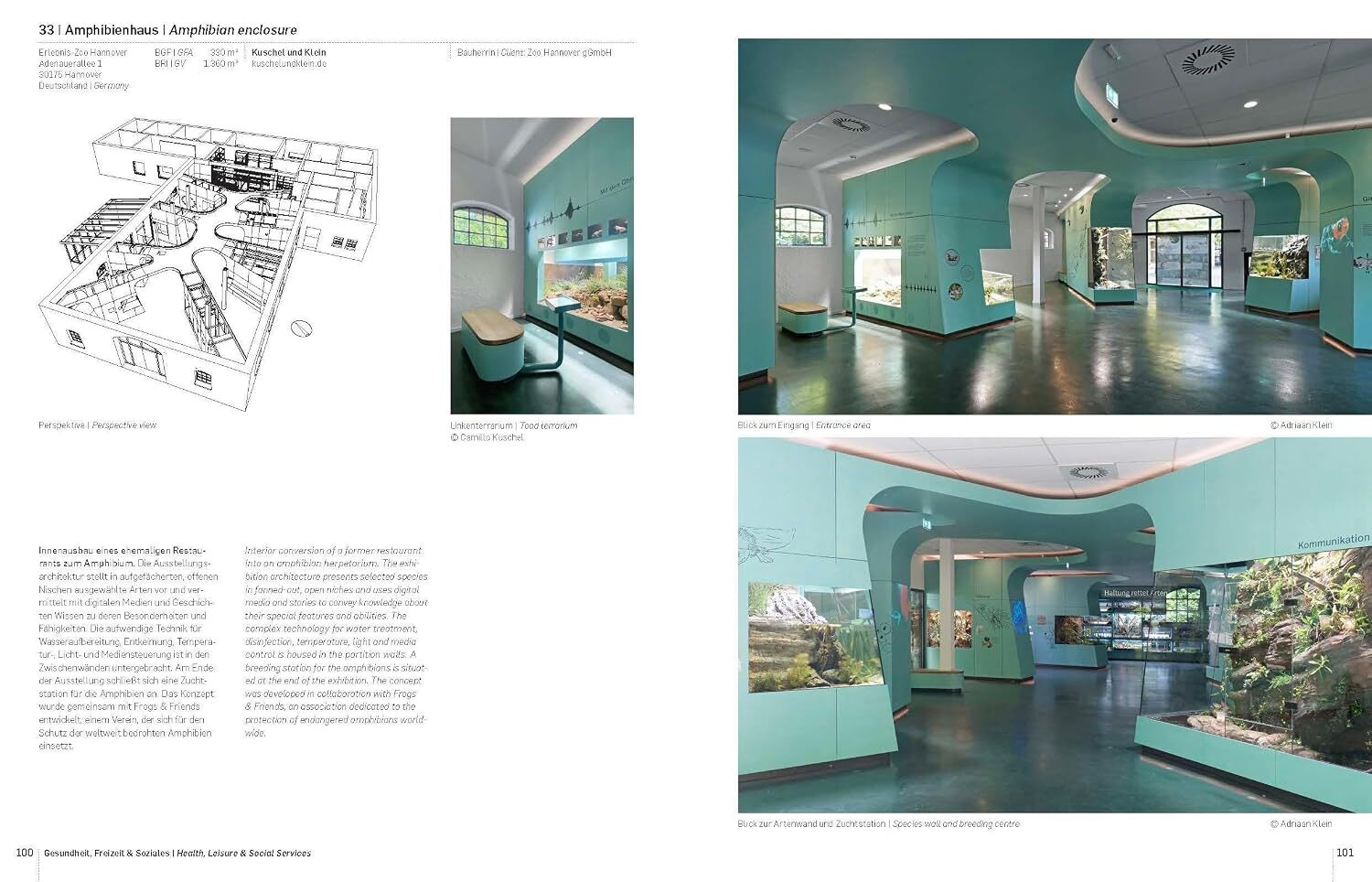
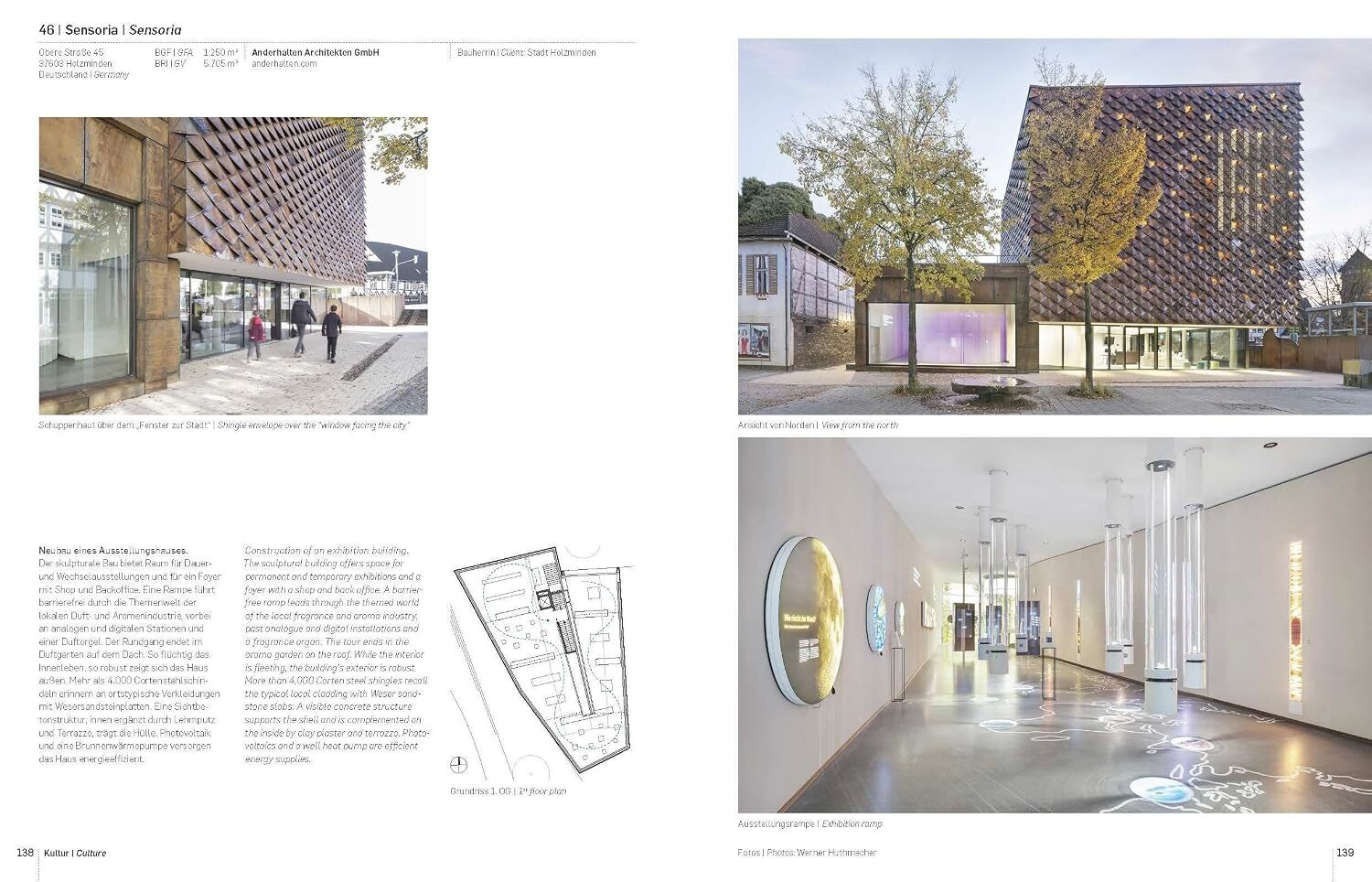
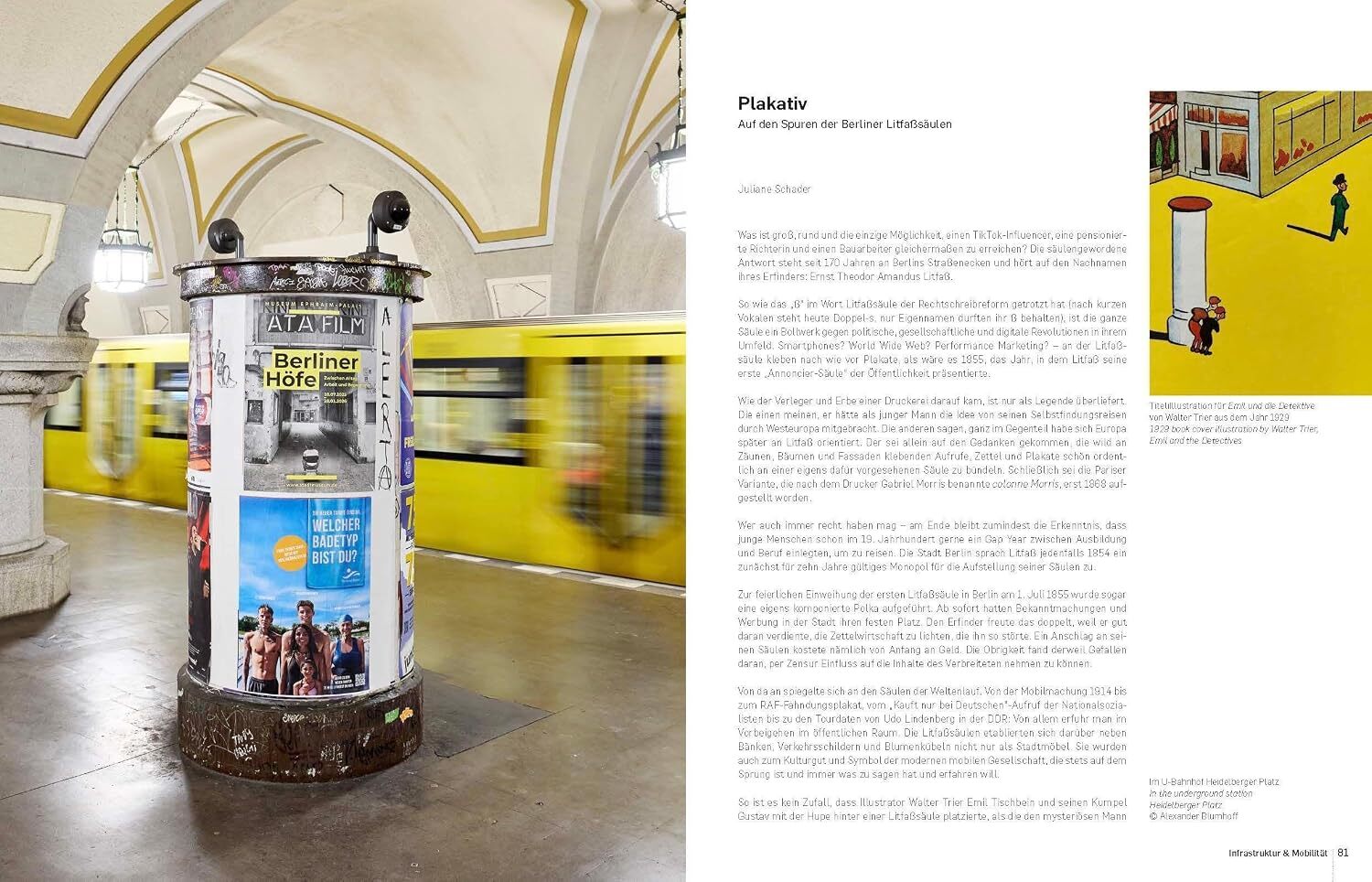
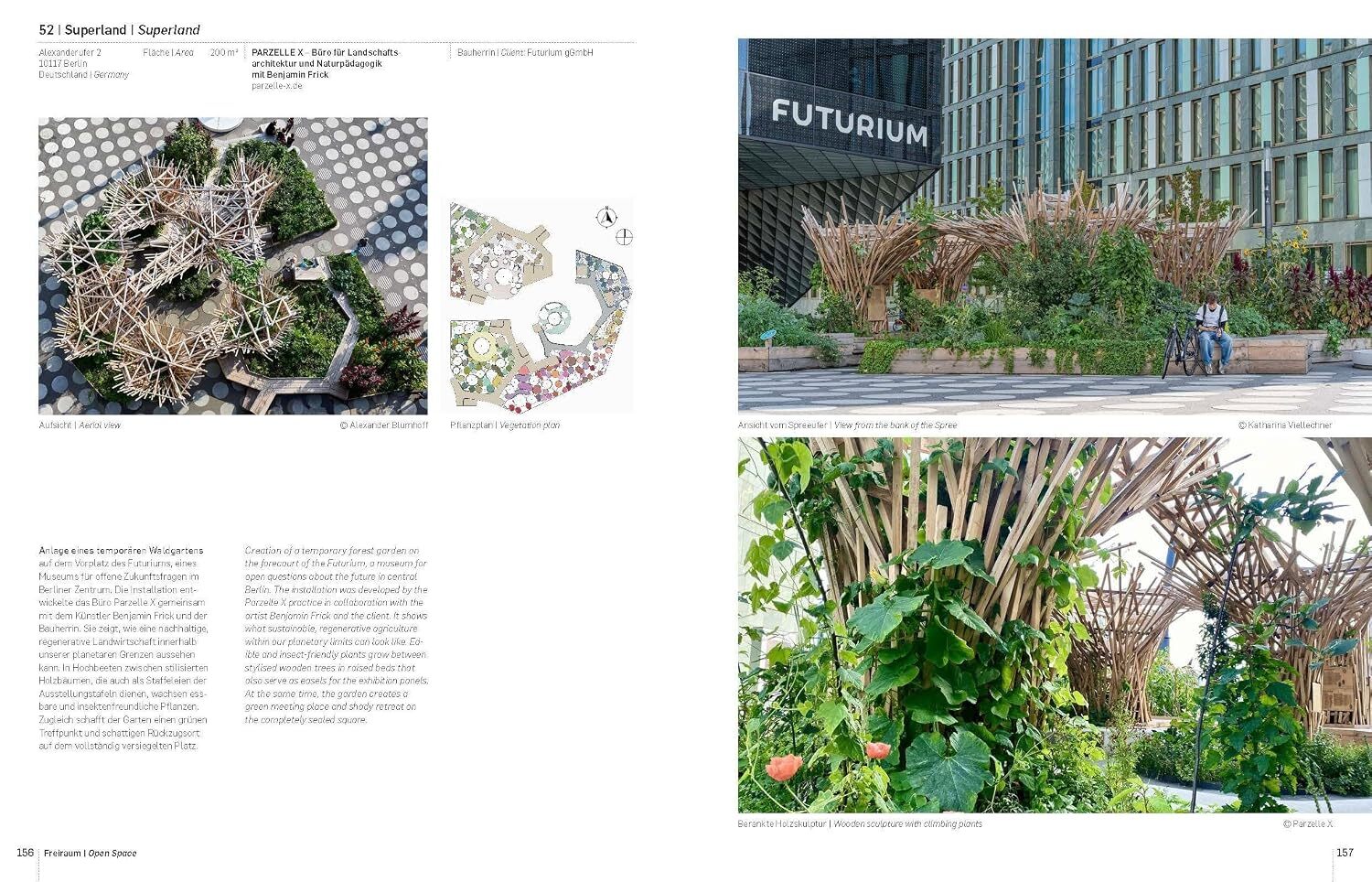
Centered on Berlin, this book presents 60 contemporary architectural projects in and from the city, selected by an independent panel of experts together with members of the public. Ranging from the transformation of existing buildings and public spaces to housing, infrastructure, and city-scale sustainability strategies, these projects reveal the changes currently taking place within Berlin’s building culture while offering a collection of practical examples of how contemporary cities can respond to environmental and social challenges.
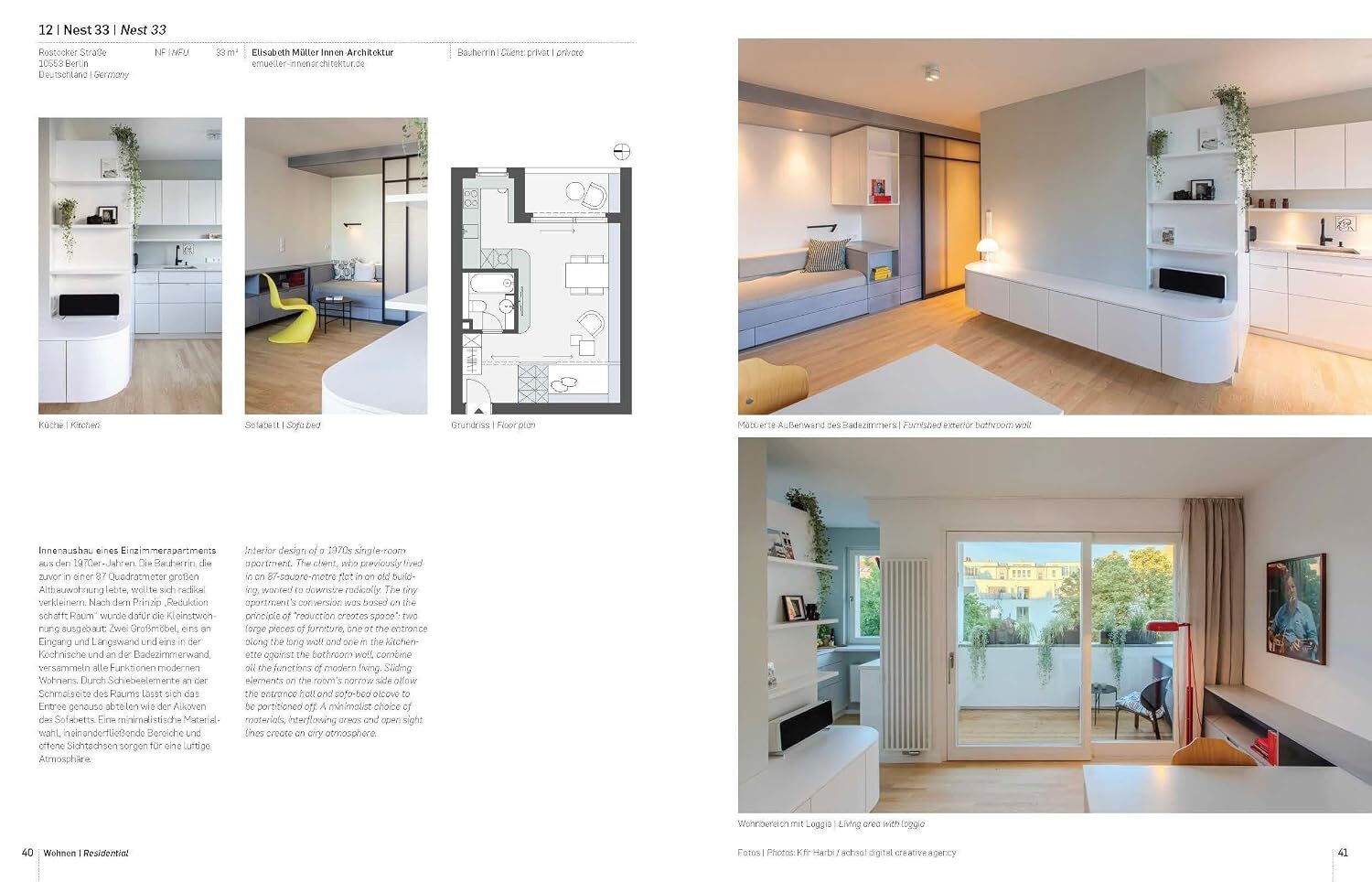
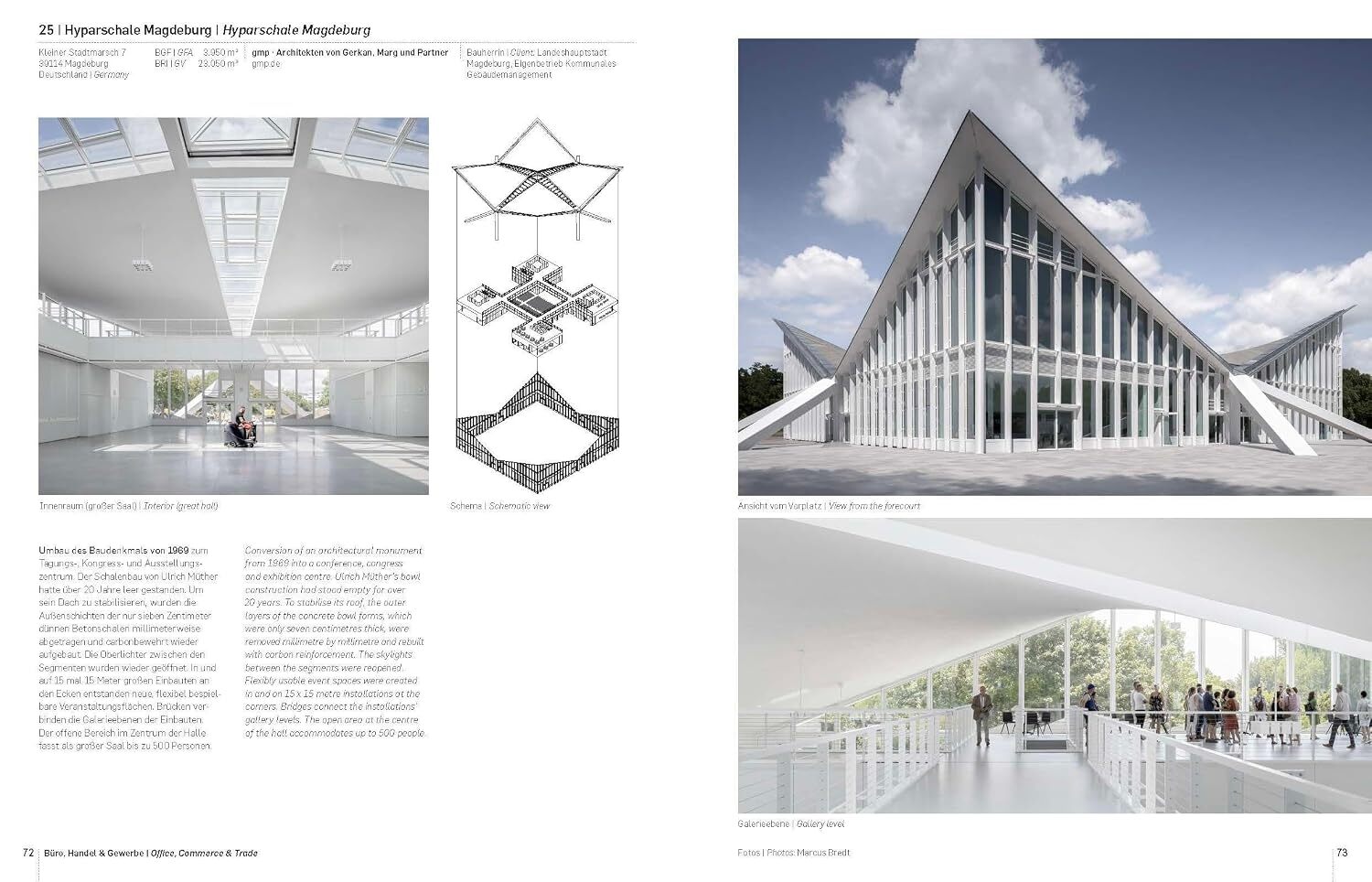
A particular focus of the book is the question of how we can continue to use what has already been built. Rather than demolishing existing structures and starting again, many architects are choosing to work with what is already there—through renovation, adaptive reuse, transformation, and changes in function. These approaches extend the life cycle of buildings while reducing resource consumption and environmental impact, and at the same time reconsider the relationship between economic efficiency, changing needs, and the historical fabric of the city.
Sustainability, however, is not simply a matter of energy efficiency, materials, or technology. The book places architecture within the broader relationship between people and the city: How can an architectural project strengthen communities? How can the experience and knowledge of residents become an active part of urban development? What kind of public infrastructure does Berlin need? And where within the city does untapped spatial potential remain?
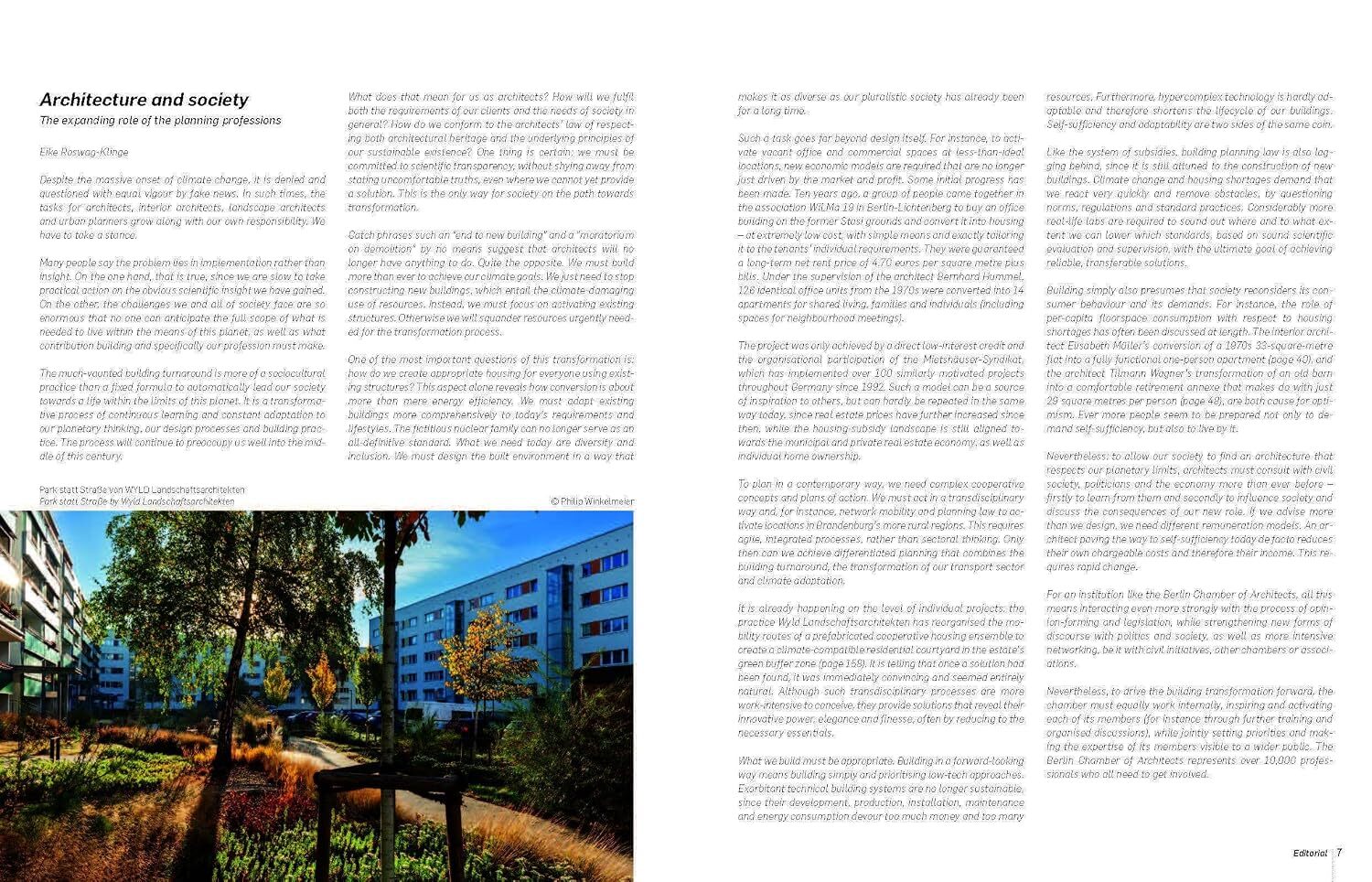
Alongside the 60 featured projects, contributions by renowned authors provide further perspectives and background, exploring resilient cities, public participation, interdisciplinary collaboration, and the emergence of a new architectural aesthetic. When sustainability is no longer treated as an additional requirement but becomes the starting point of design, it begins to reshape architectural form, material choices, construction methods, and even the ways architects collaborate with residents, governments, and professionals from other fields.
This book is therefore more than a collection of contemporary architecture in Berlin. It can also be read as an observation of how the next generation of cities might be built. Through the experiments and practices currently taking place across Berlin, it reveals an emerging building culture that places greater emphasis on existing resources, collective participation, and long-term responsibility.
Beginning with Berlin, the questions and approaches presented here extend far beyond the German capital: How can we create cities that remain resilient, responsible, and livable in a constantly changing world?
【Details】
Editor: Architektenkammer Berlin
Publisher: Braun
Publication Year: 2026
Dimensions: 27 × 21 cm
Binding: Paperback
Pages: 184