{{ 'fb_in_app_browser_popup.desc' | translate }} {{ 'fb_in_app_browser_popup.copy_link' | translate }}
{{ 'in_app_browser_popup.desc' | translate }}
{{ childProduct.title_translations | translateModel }}
{{ getChildVariationShorthand(childProduct.child_variation) }}
{{ getSelectedItemDetail(selectedChildProduct, item).childProductName }} x {{ selectedChildProduct.quantity || 1 }}
{{ getSelectedItemDetail(selectedChildProduct, item).childVariationName }}
English | Hardcover | 2015 | 352 pages | 30×24 cm
Publisher Thames and Hudson Ltd
Author Denise Y. Arnold, Elvira Espejo
ISBN 9780500517925
Until 2026-08-31T16:00:00.000+00:00 Summer Design Reading Festival NT$50 Off Every NT$1,000 on order
Free Shipping on order
Not enough stock. Your item was not added to your cart.
Not enough stock. Please adjust your quantity.
{{'products.quick_cart.out_of_number_hint'| translate}}
{{'product.preorder_limit.hint'| translate}}
Limit -1 per order.
{{'products.quick_cart.quantity_of_stock_hint'| translate : {message: quantityOfStock} }}
Book Description
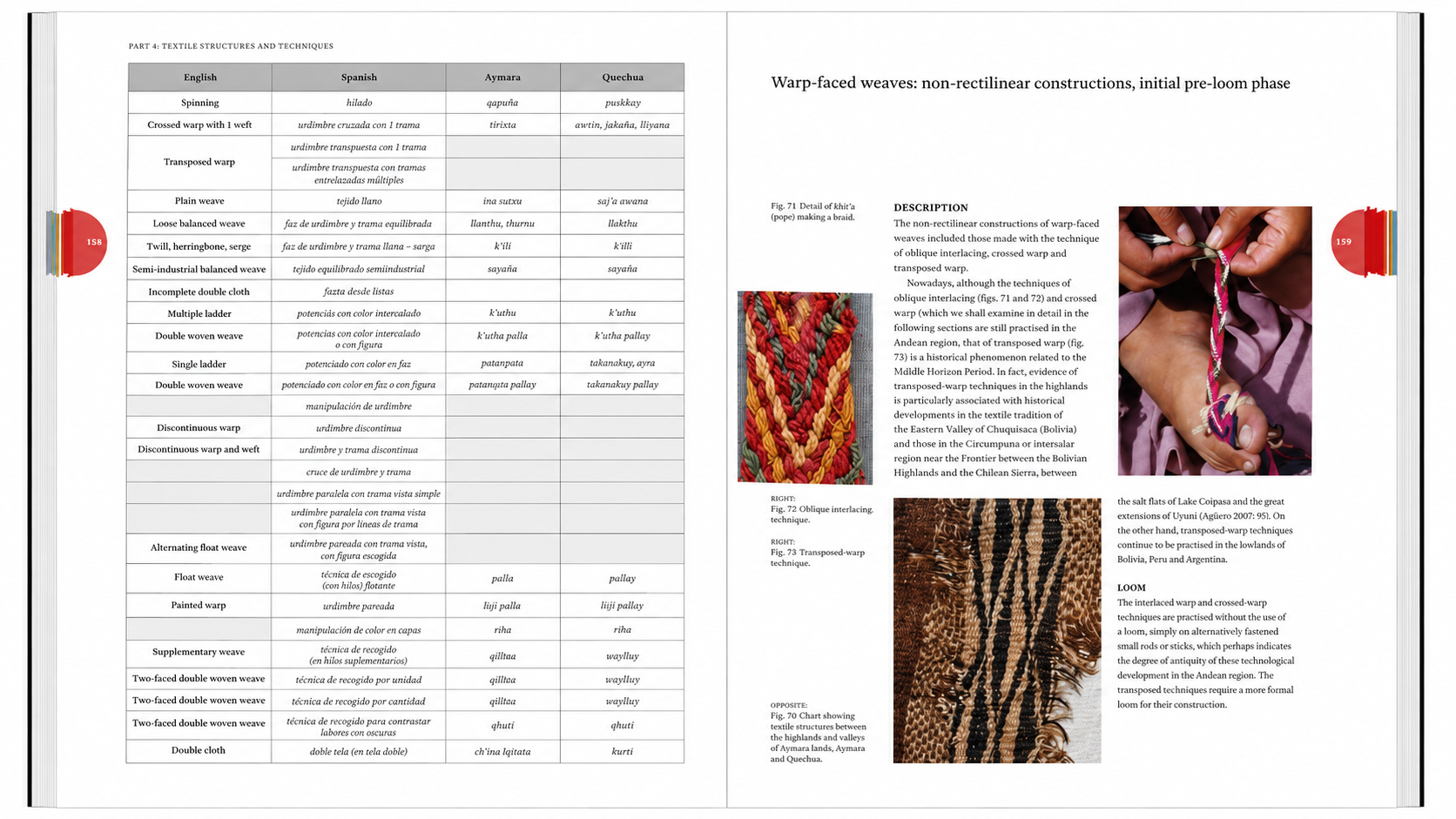
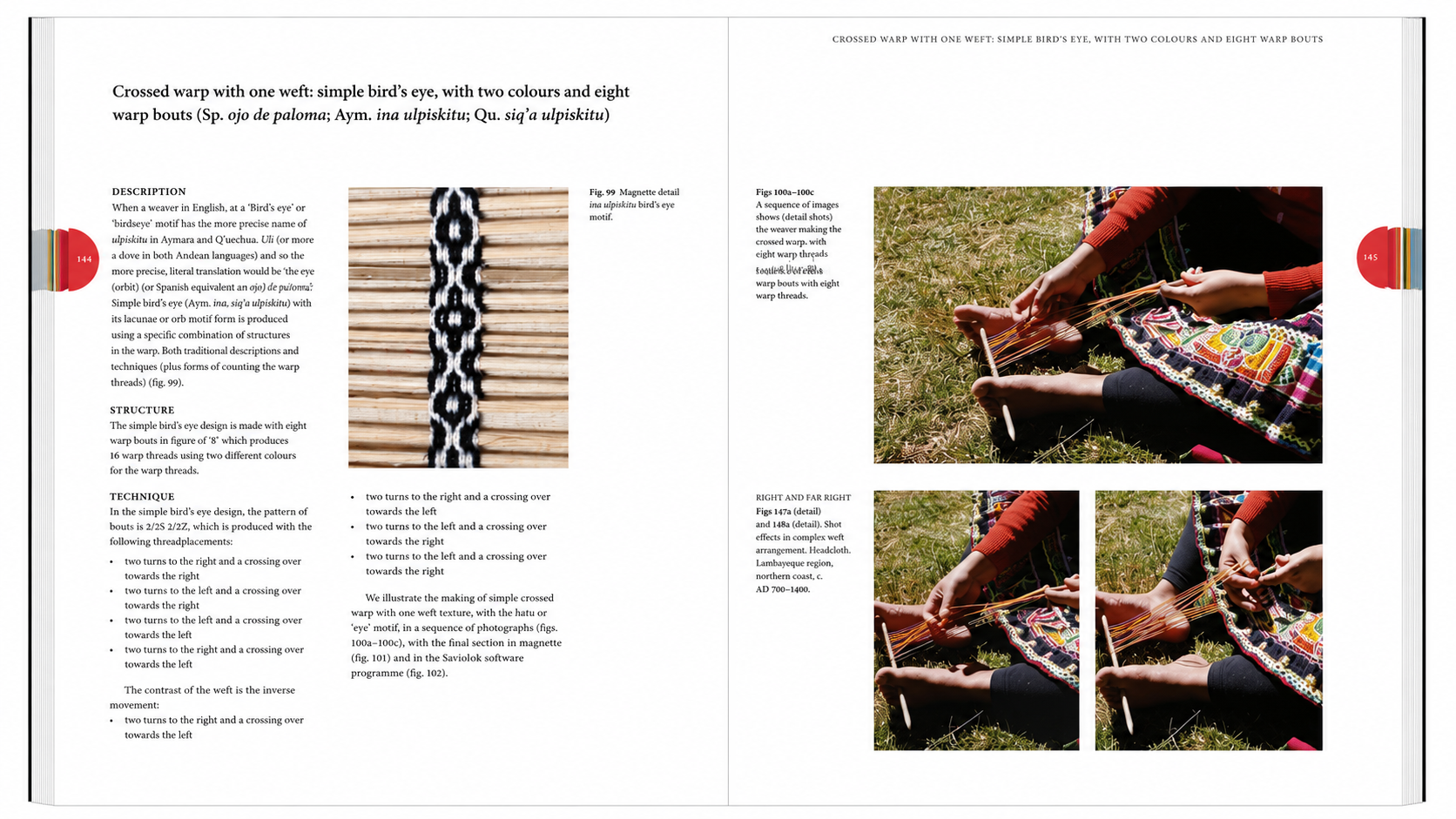
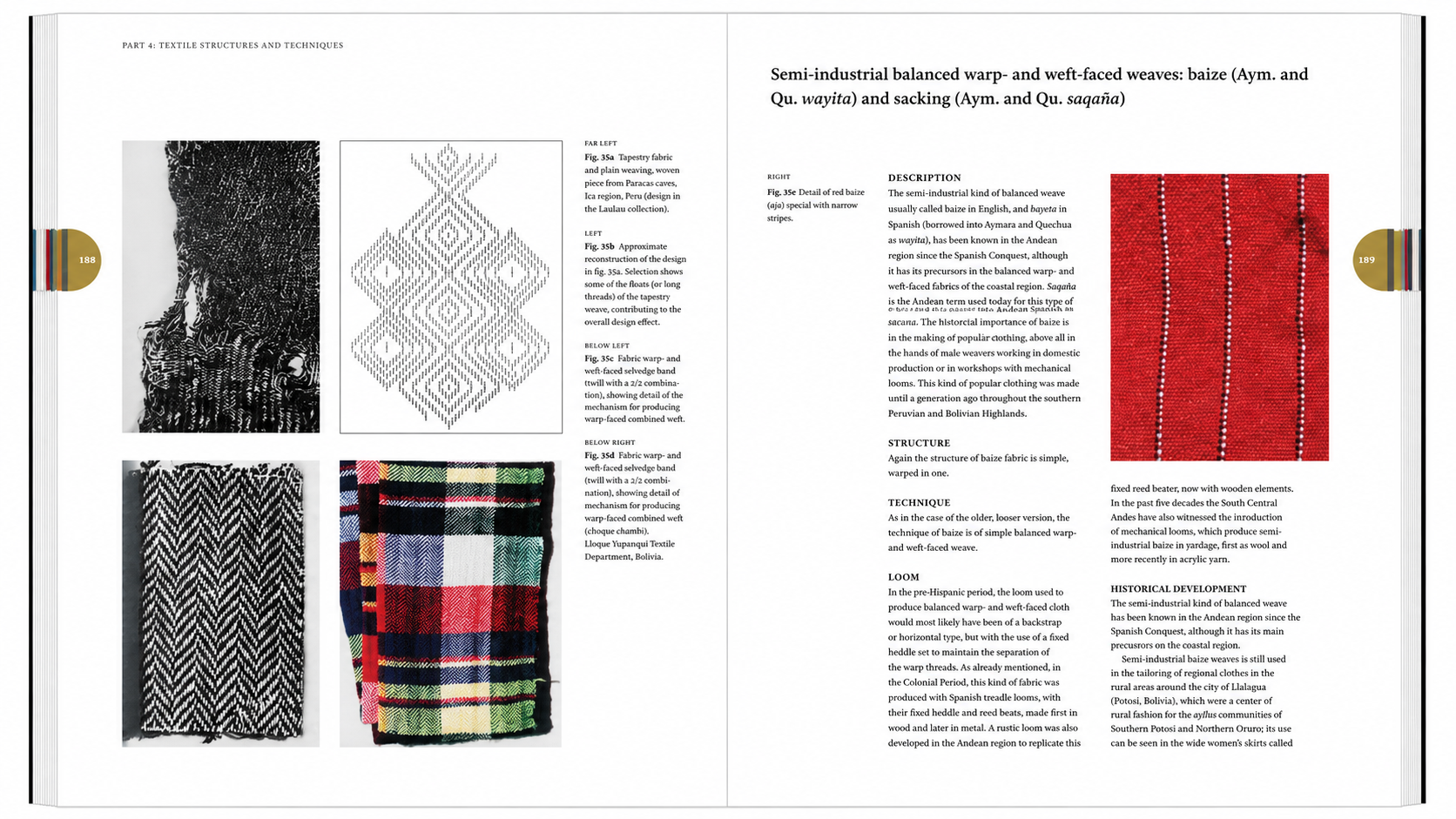
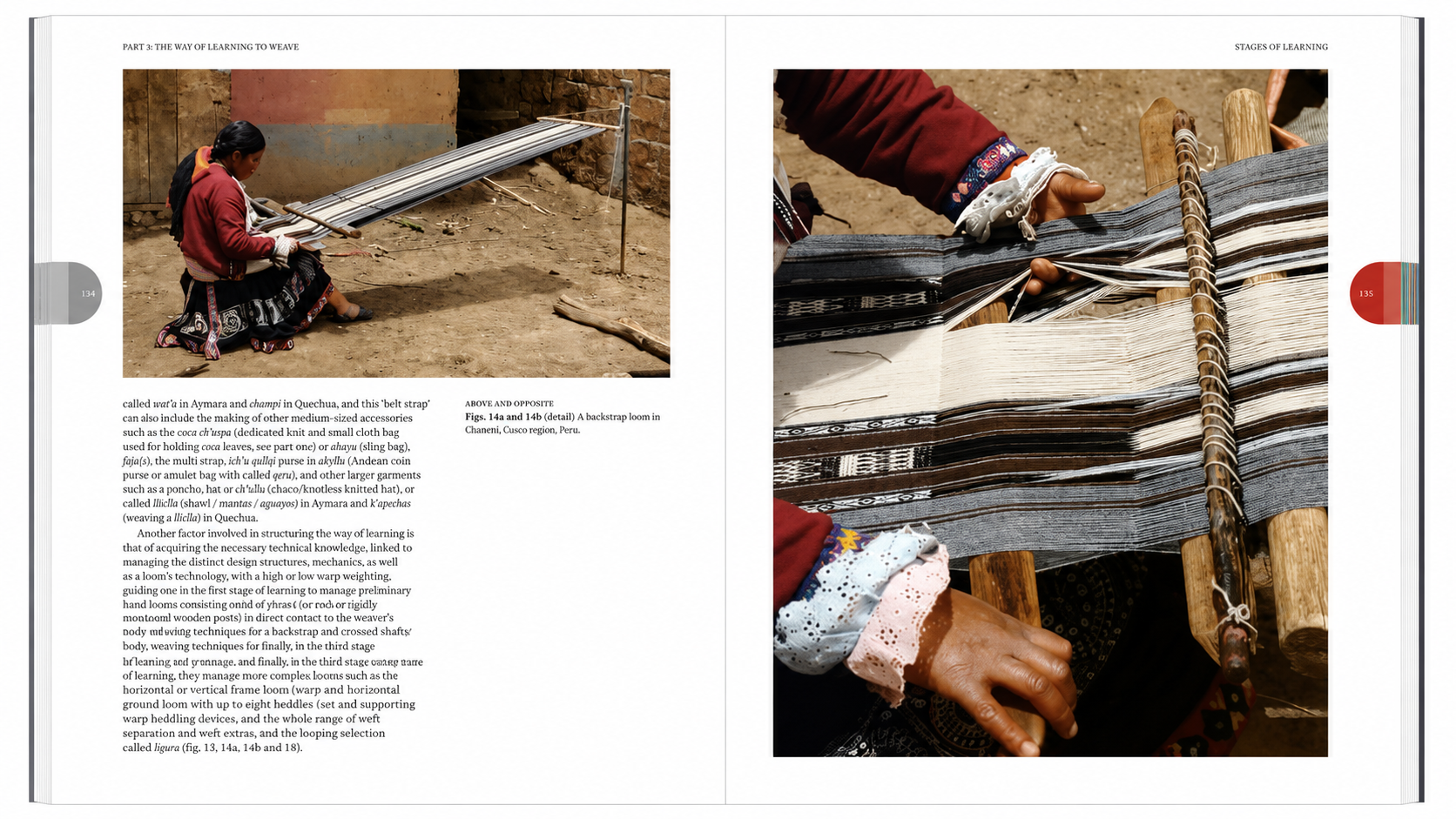
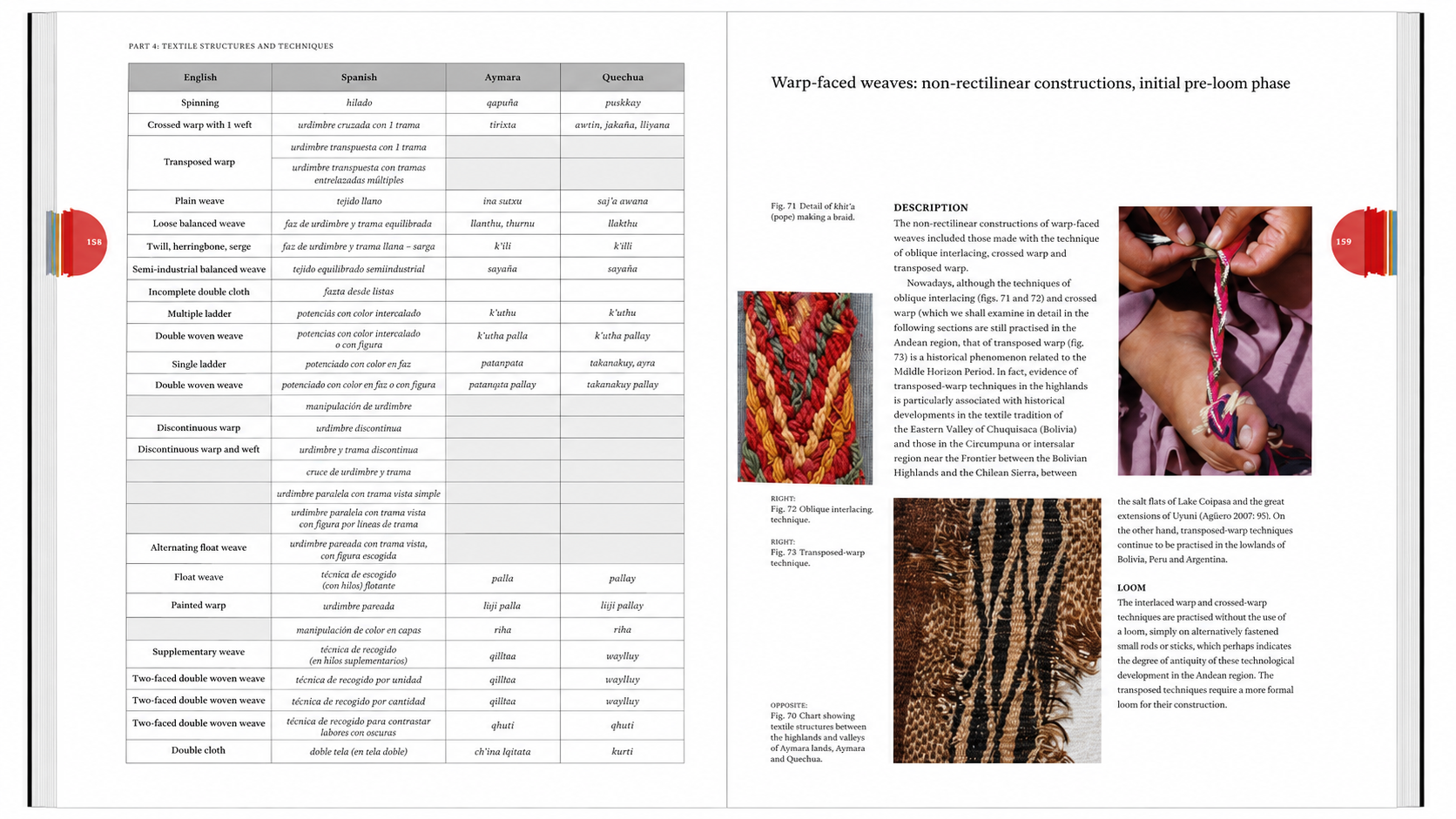
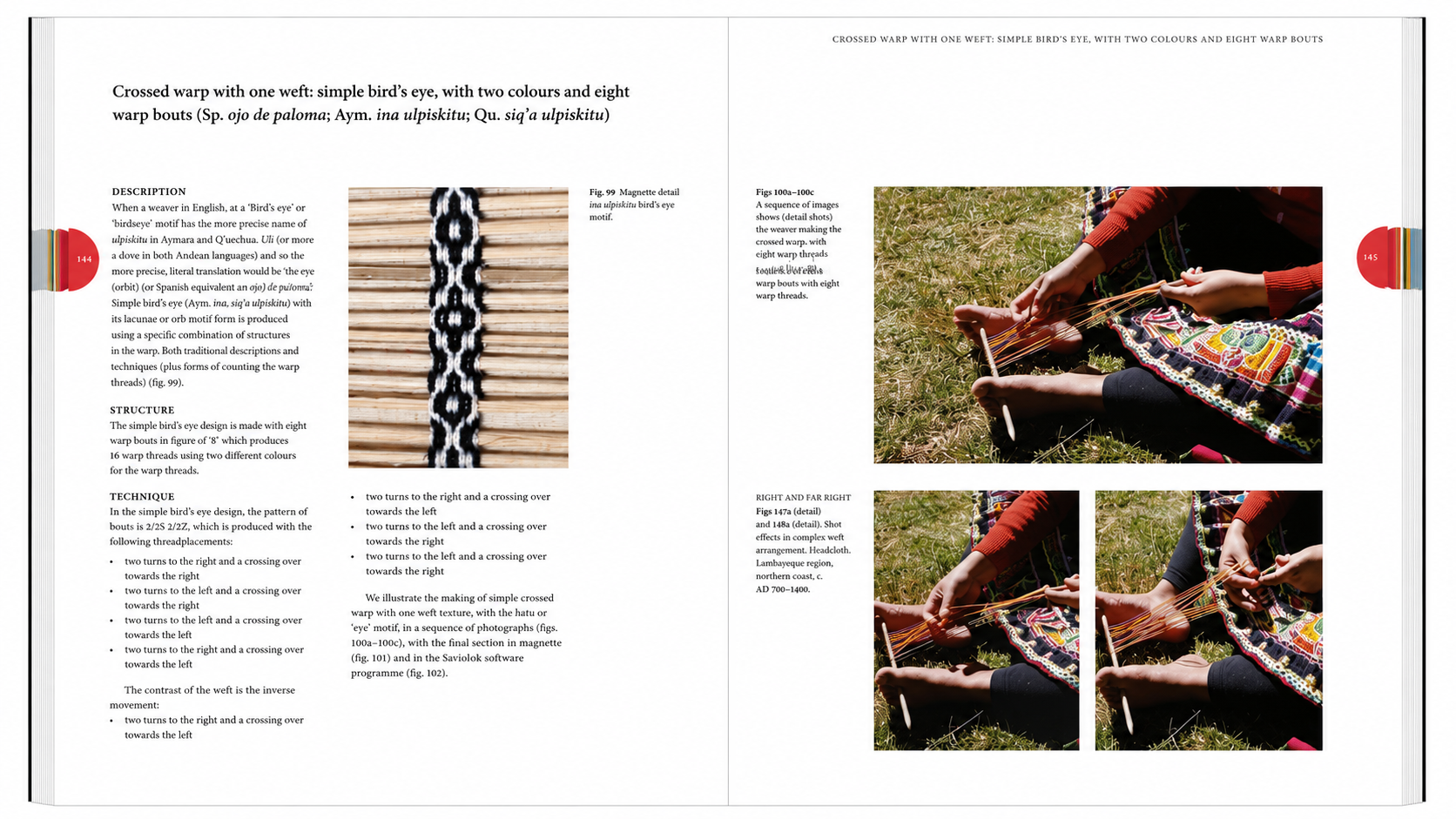
Within anthropology, textiles have long been studied as cultural objects or craft traditions, serving as markers of ethnicity, geography, and aesthetic style. The Andean Science of Weaving: Structures and Techniques of Warp-faced Weaves, however, proposes a fundamentally different perspective: weaving itself is a complete system of knowledge. Co-authored by anthropologist Denise Y. Arnold and Andean weaver and researcher Elvira Espejo, this groundbreaking volume moves beyond textile classifications rooted in European traditions and instead reconstructs the technical taxonomy of Andean warp-faced weaving through the language, concepts, and practices of Aymara and Quechua weavers. In doing so, it establishes Indigenous knowledge not merely as an object of study, but as a vital theoretical framework for understanding culture.
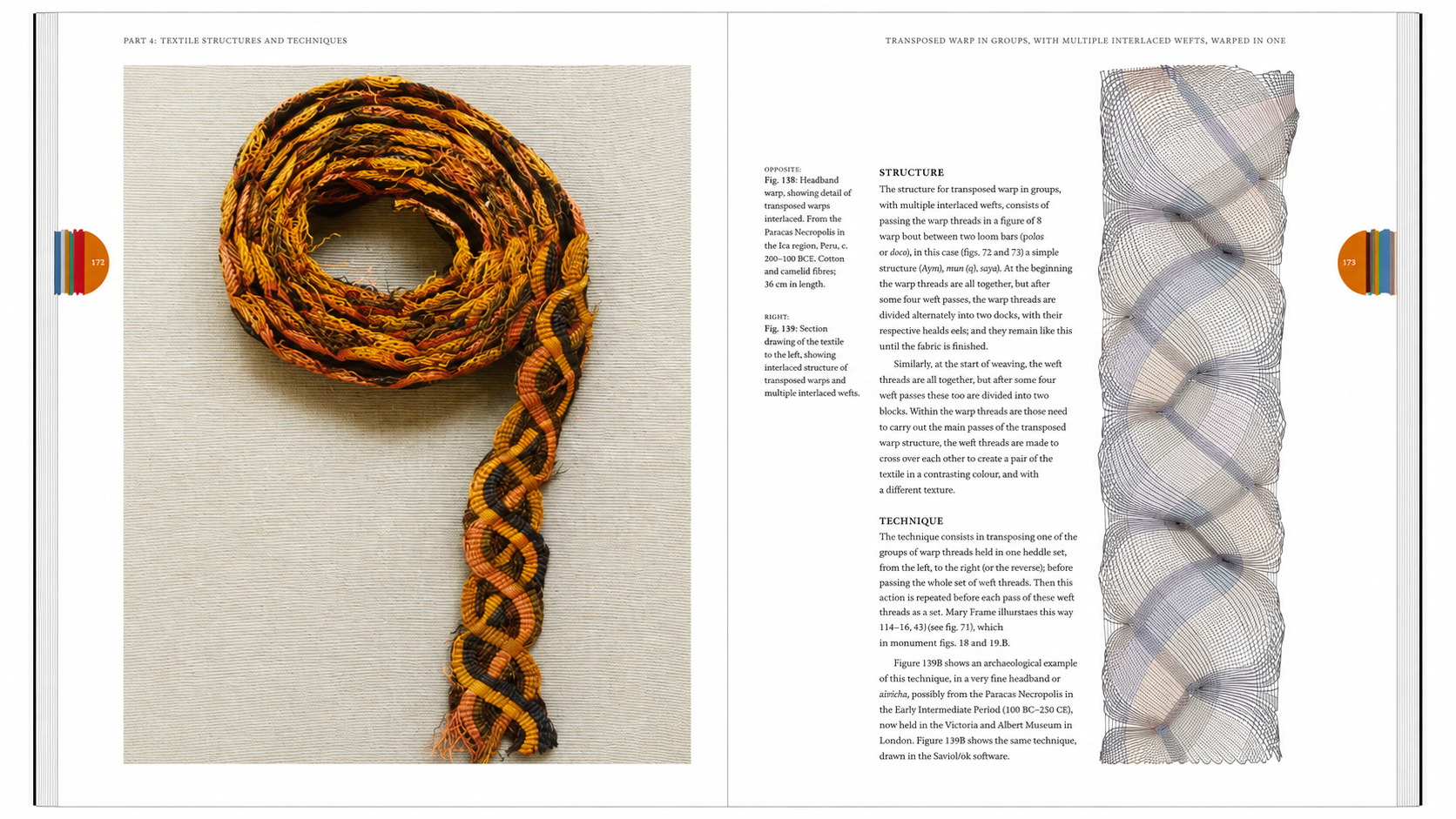
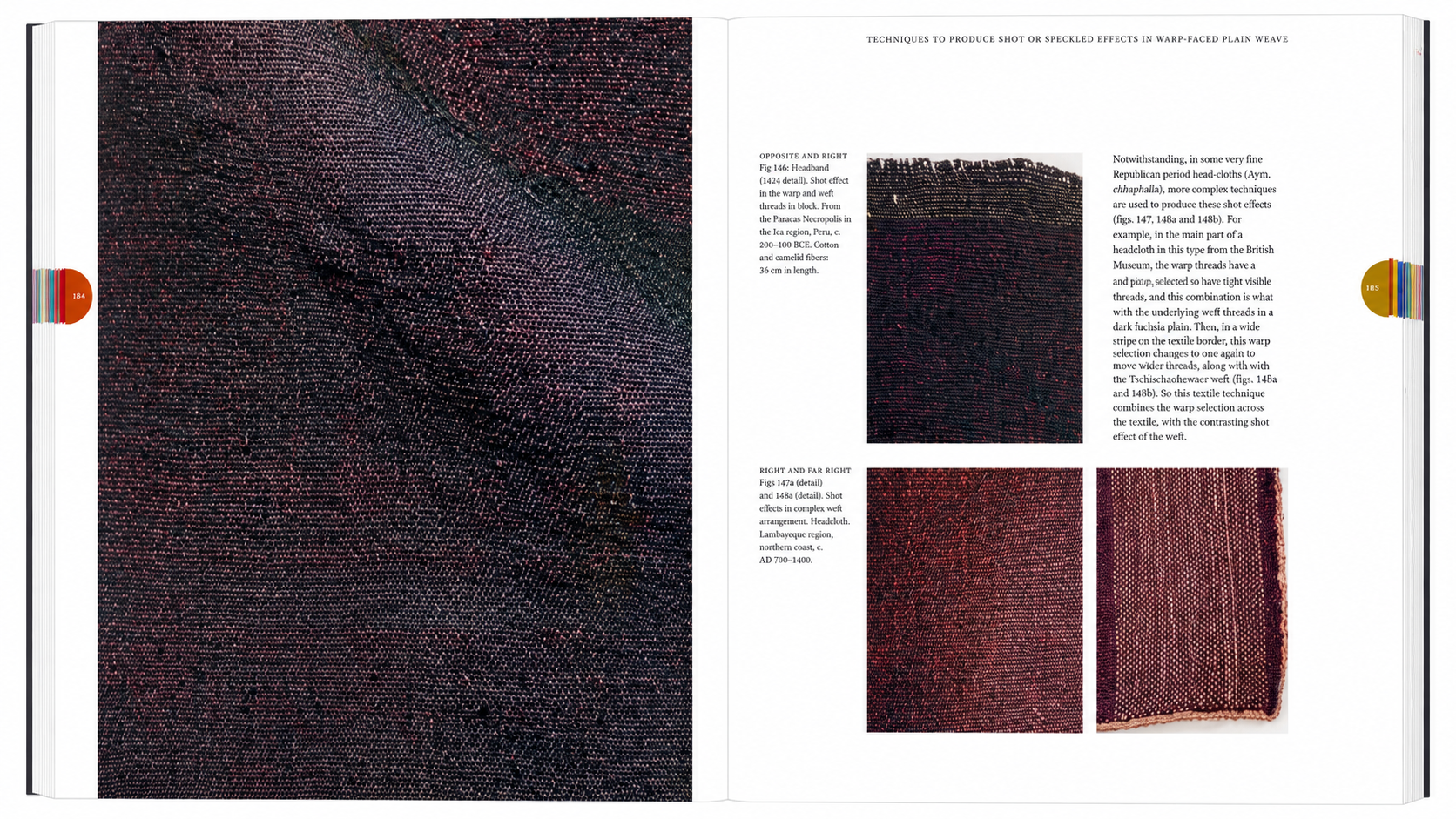
The word Science in the title does not refer to the natural sciences, but to the highly systematic body of knowledge embedded within Andean weaving. Drawing upon extensive structural analysis, ethnographic research, and the comparative study of more than 700 ancient and contemporary textiles, the authors reveal the sophisticated logic underlying warp arrangements, layered constructions, colour organization, and geometric structures. Every weaving technique and every Indigenous term represents far more than a technical procedure—it embodies generations of accumulated cultural memory, cosmological understanding, and social relationships. In this context, weavers emerge not simply as skilled artisans, but as creators, custodians, and transmitters of knowledge.
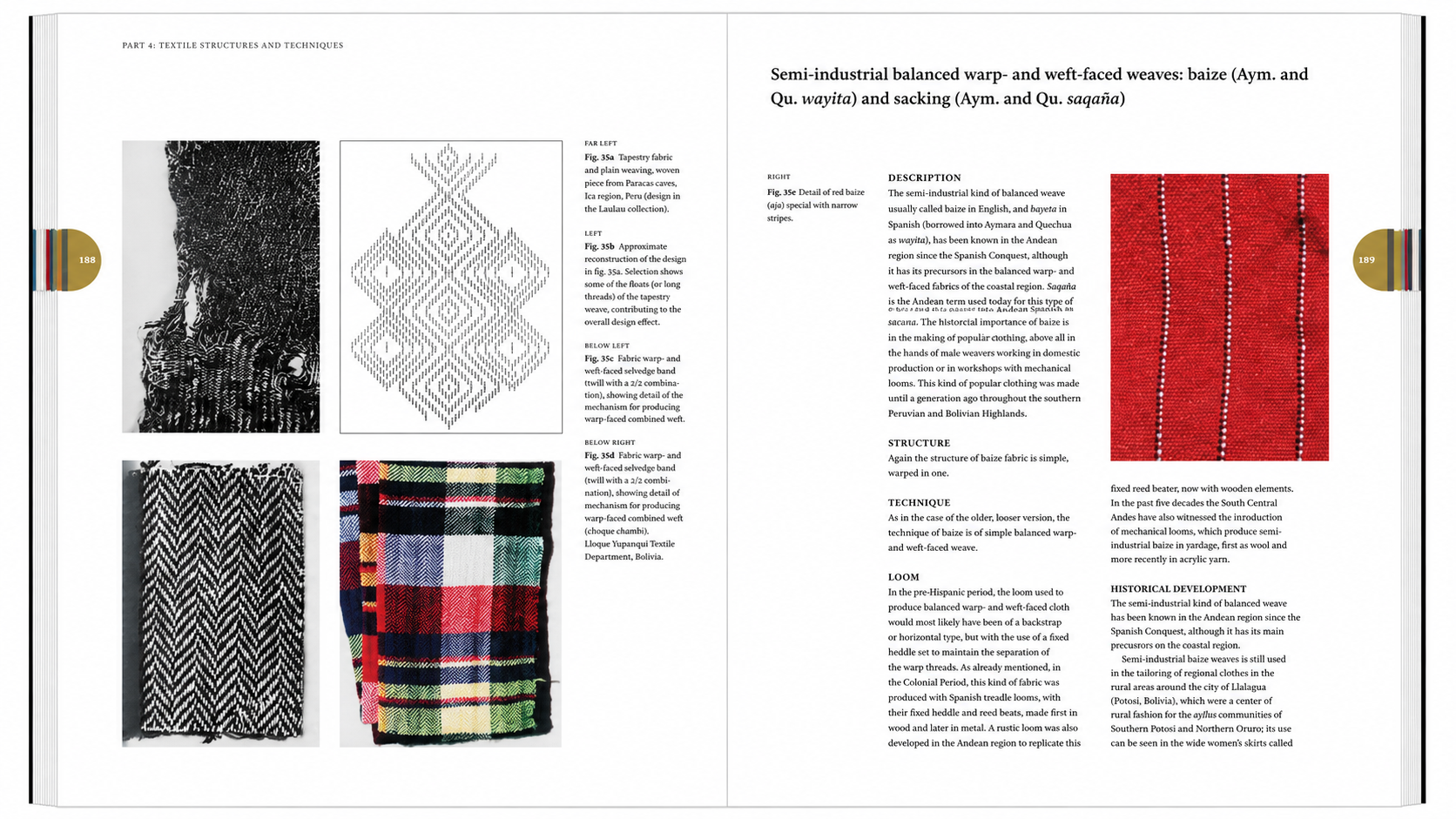
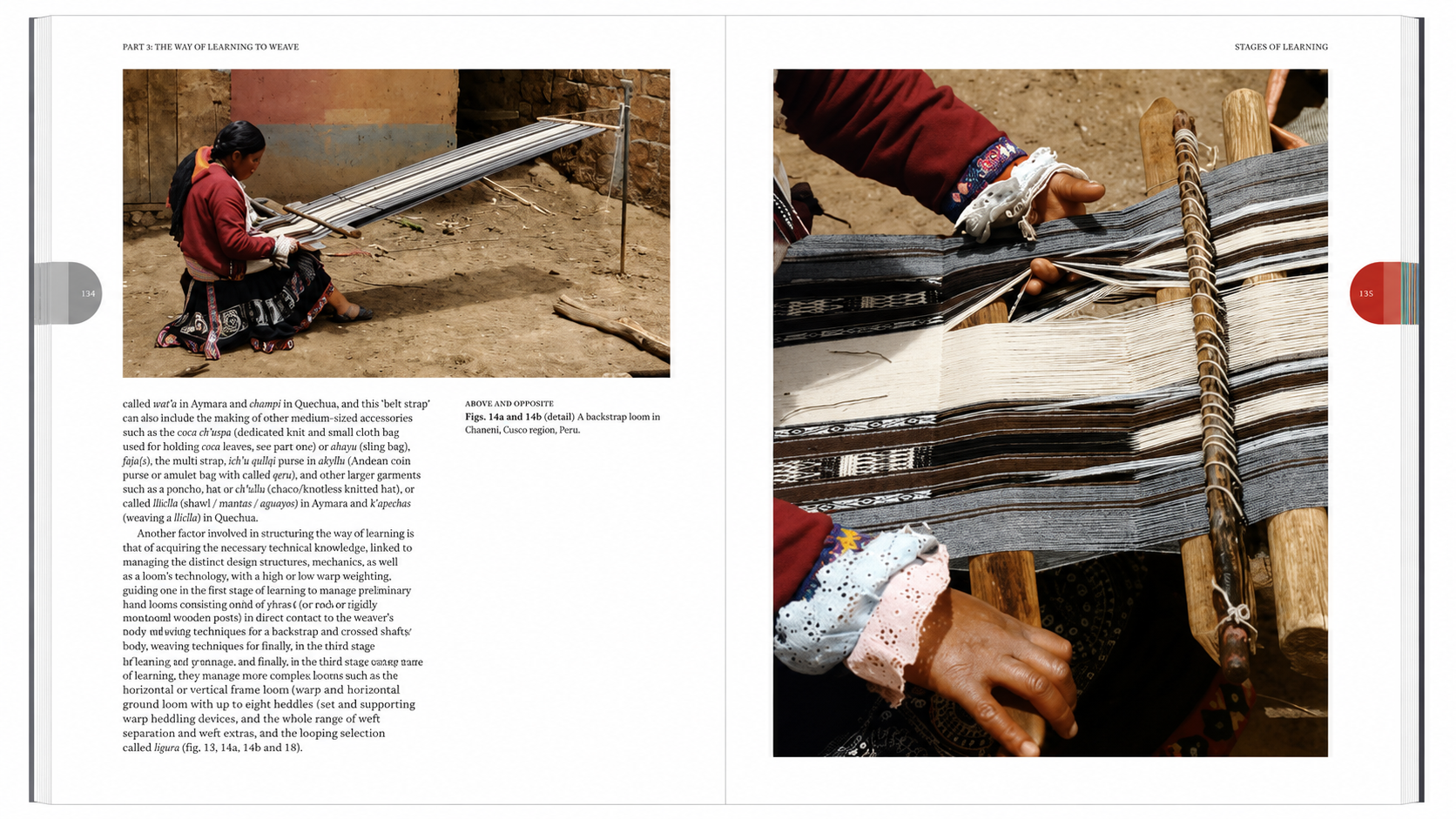
One of the book's greatest contributions lies in its integration of contemporary weaving practices with museum collections, archaeological evidence, and field research, demonstrating that weaving is not a static cultural heritage but a living and evolving knowledge system. At the same time, the authors challenge museums and research institutions to reconsider conventional methods of cataloguing textiles. When objects are classified solely by chronology, place of origin, or decorative style while overlooking their structural and technical characteristics, invaluable cultural knowledge risks being lost. Technique, the authors argue, is not secondary to artistic expression—it is one of the primary vehicles through which culture is preserved and transmitted.
Far more than a technical manual on textile production, The Andean Science of Weaving fundamentally reshapes the study of Andean weaving while contributing to broader anthropological discussions surrounding Indigenous knowledge systems and material culture. Through the everyday practice of weaving, the book demonstrates that a piece of cloth is not merely a cultural artifact, but a means of preserving history, constructing identity, and understanding the world. Ultimately, what deserves preservation is not only the textile itself, but also the living knowledge and wisdom that continue to reside in the hands, language, and daily lives of the people who create it.
Details
Authors: Denise Y. Arnold, Elvira Espejo
Publisher: Thames & Hudson Ltd
Publication Year: 2015
Dimensions: 30 × 24 cm
Binding: Hardcover
Pages: 352 pages